
Vietnam Surpasses Indonesia in Per Capita Output
Vietnam is set to overtake Indonesia in gross domestic product per capita in 2026, marking a significant milestone in Southeast Asia’s economic landscape. According to figures from the International Monetary Fund’s October World Economic Outlook, Vietnam’s nominal output per person is projected to reach $5,259, up 8.9% from the previous year. This represents a nearly twofold increase from a decade ago. Last year, Vietnam trailed Indonesia by about $250, and the IMF’s April outlook still projected Indonesia staying ahead in 2026. Instead, Vietnam will climb to fifth place among ASEAN members, trailing only Singapore, Brunei, Malaysia, and Thailand.
Vietnam is poised to overtake Indonesia in nominal gross domestic product (GDP) per capita this year, as rapid economic expansion, foreign investment and rising exports strengthen its position among Southeast Asia’s fastest-growing economies.The International Monetary Fund…
The Bottom Line:
- Vietnam’s nominal GDP per capita is projected to reach $5,259 in 2026, edging past Indonesia’s $5,153 and reversing prior IMF forecasts.
- Indonesia remains Southeast Asia’s largest economy by far, with a projected GDP of $1.48 trillion this year against Vietnam’s $542 billion, supported by a population of about 290 million compared to Vietnam’s 100 million.
- Vietnam’s economy expanded 9.95% in the third quarter, its fastest pace in four years, while Indonesia’s growth is forecasted at 5.1% for 2026.
Manufacturing Shift and Infrastructure Drive Growth
The economic convergence is driven primarily by Vietnam’s rapid expansion as a high-tech manufacturing alternative to China. Nikkei Asia linked the shift to the relocation of electronic component and semiconductor supply chains, noting that Taiwan’s Hon Hai Group and South Korea’s Samsung Electronics are expanding production and export operations within the country. In the first nine months of this year, Vietnam’s exports reached $434.3 billion, a 25% increase year-on-year, while foreign direct investment reached $21.1 billion, up 12% year-on-year. Registered capital surged 76% to $50.3 billion.

Domestic fiscal policy is also accelerating momentum. Mai Fujita, a senior research fellow at Japan’s Institute of Developing Economies, noted that the Vietnamese government’s public investment push is supporting economic growth. Vietnam plans to invest about $38.8 billion in 2026 on nationwide roads, airports, and infrastructure projects.
Macroeconomic Pressures and Policy Dilemmas
While short-term infrastructure spending and foreign capital inflows are fueling rapid expansion, the accelerated pace brings distinct fiscal hurdles. September saw inflation accelerate to 5.08%, exceeding the official annual target of 4.5%. This overshoot has been exacerbated by energy shocks tied to conflict in Iran, which drove up fuel costs and raised commercial banks’ funding costs. The central bank faces pressure to maintain interest rates to stabilize domestic prices and protect the exchange rate.
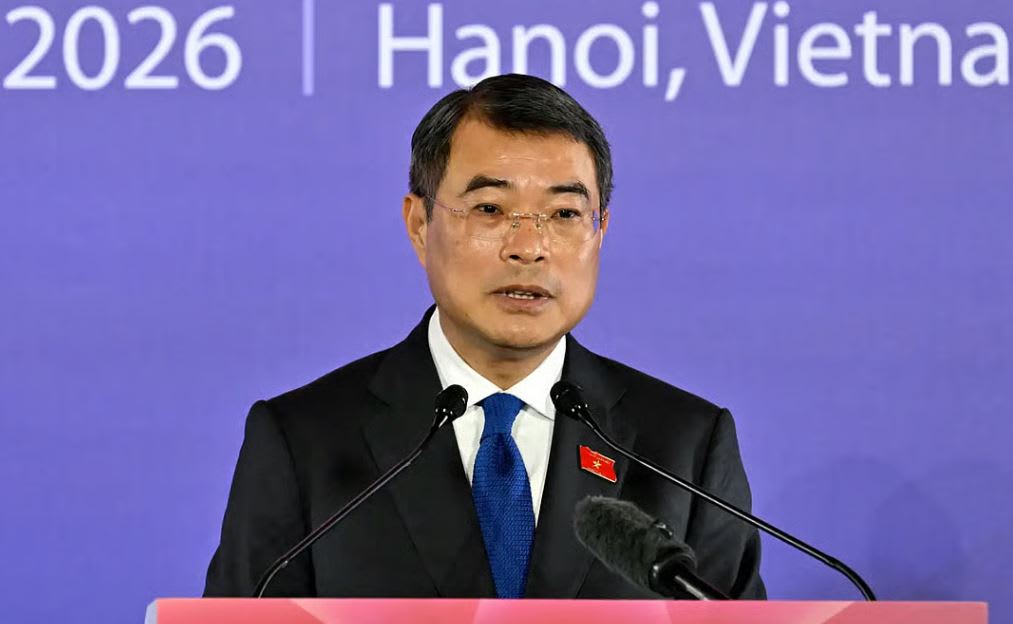
Simultaneously, Vietnam’s broader economic architecture faces domestic efficiency challenges. A socio-economic report presented at the National Conference on the Implementation of Resolution No. 4 of the 14th Central Committee noted that traditional growth drivers have not met expectations and investment capital utilization remains limited. Data from the first nine months show that while 149,700 new businesses were established, the number of businesses entering the market decreased by 3.2%, while the number of businesses completing dissolution procedures increased by 118.8%.
Comparative Regional Trajectories
The divergence between Vietnam and Indonesia highlights differing economic models within ASEAN. Despite drawing overseas capital into areas like electric vehicles, Indonesia has struggled to convert those inflows into meaningful job creation and wage gains, whereas a depreciating rupiah has constrained the expansion of its dollar-denominated nominal GDP per capita. Indonesia’s growth is forecasted at 5.1% in 2026, compared to 8.4% for Vietnam.
Looking ahead, Vietnam has targeted a GDP per capita of $8,500 by 2030, equivalent to Thailand’s current level. The IMF expects Vietnam to keep its lead over Indonesia in 2027, at $5,659 against $5,550. Mai Fujita noted that Vietnam also needs to pursue long-term growth by developing human resources and technology, alongside the infrastructure spending that lifts growth in the short term.
Disclaimer: The information provided in this article is for educational and market analysis purposes only and does not constitute financial, investment, or legal advice. Always consult with a certified financial professional before making investment decisions.
Worth a look

Wyoming Couple Who Sold Everything To Live On Cruise Ship Stranded In Cambodia
Laramie Retirees Stranded in Cambodia After Villa Vie Residences Pulls the Plug Paul and Lynn Montoya spent $450,000...

Wisconsin projected to face Alabama or Texas in major bowl game – Yahoo Sports
The Wisconsin Badgers stand just one win away from securing their second postseason bowl appearance under head coach...

This week in West Virginia history: November 1 to 7 – My Buckhannon
Tracing the Weight of Early November in West Virginia History History rarely arrives all at once. Instead, it...

Group says Sheriff Keith Swank plans anti-trans protest at Seattle Reign match
Sheriff Keith Swank Directs Group to Disrupt Seattle Reign Match with Anti-Trans Messaging Pierce County Sheriff Keith Swank...