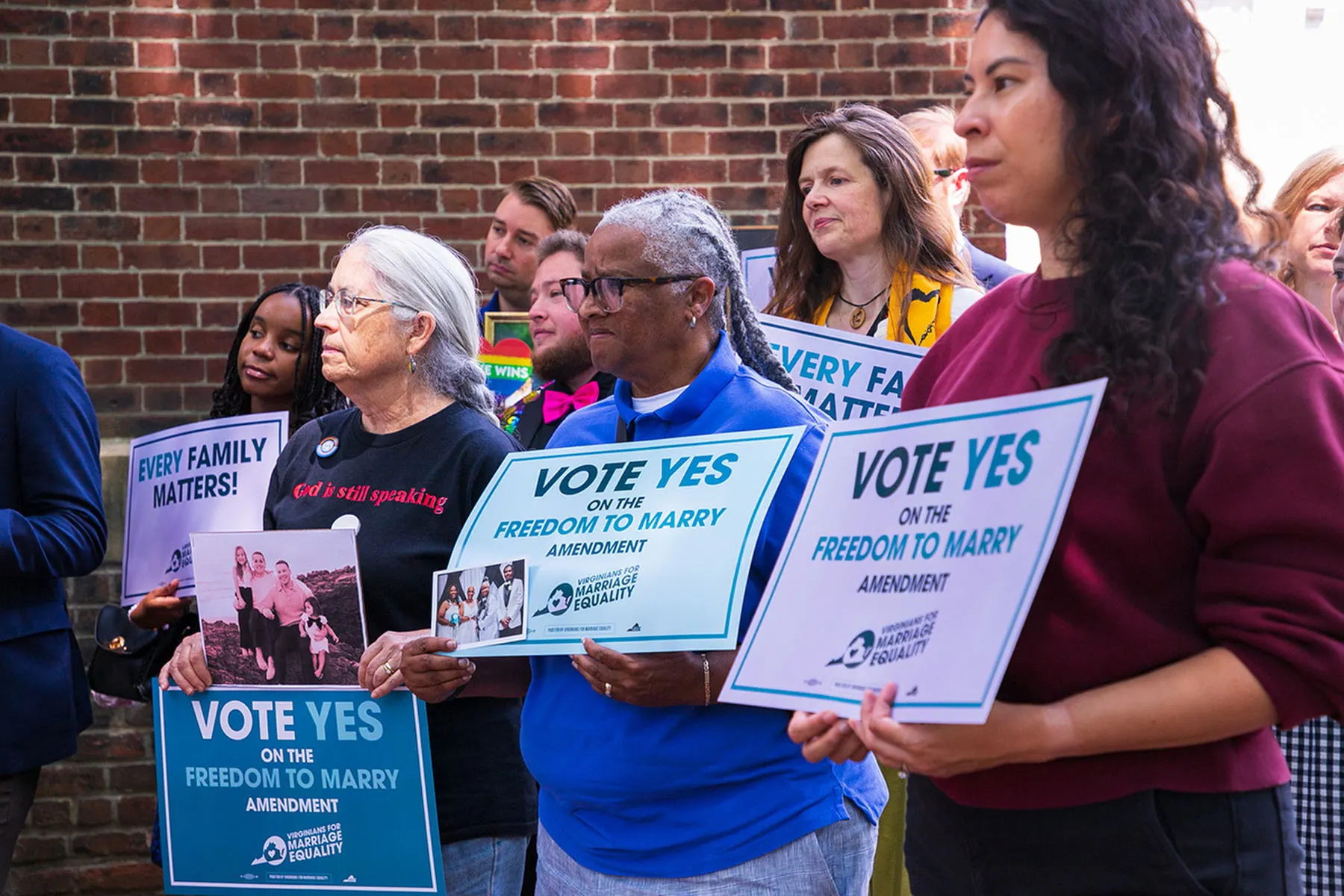
Virginia voters on Tuesday approved a constitutional amendment officially striking the state’s ban on same-sex marriage, nearly 20 years to the day after the measure passed in 2006, The 19th News reported. With more than 95 percent of the vote counted, Question 2 passed with 57 percent support, according to Decision Desk HQ — the exact same margin by which the 2006 amendment defining marriage as between “one man and one woman” won approval two decades earlier.
The repeal marks a symbolic and legal milestone for a state that has enforced marriage equality only since the Supreme Court’s 2015 Obergefell v. Hodges decision, but whose constitution still carried the defunct prohibition. Advocates spent years lobbying the General Assembly to place the measure before voters, and the amendment cleared the legislature’s final hurdle in January with support from just eight Republicans in the 140-seat body.
A Constitutional Mirror Held Up to 2006
The symmetry of the numbers — 57 percent then, 57 percent now — captures the arc of a debate that has shifted from outright prohibition to entrenched acceptance. Virginia joins Nevada, California, Colorado and Hawaii in removing anti-same-sex-marriage language from its constitution in recent years. While the 2006 ban has been unenforceable since Obergefell established a federal right to marry, LGBTQ+ rights groups argued that recent signals from the Supreme Court’s conservative majority put that precedent in jeopardy.
Justice Clarence Thomas suggested in 2022, after the court overturned Roe v. Wade, that the court “should reconsider” other rulings including Obergefell. Justice Samuel Alito, in a recently published collection of speeches, called the Obergefell decision the “decisive point in our nation’s turn against religious liberty.” The court declined last year to take up a case challenging the marriage ruling, but the constitutional cleanup in Virginia removes any ambiguity about the state’s own charter.
Who Backed It — and Who Fought It
National polling shows 65 percent of Americans support marriage equality in a June Gallup survey, down from a peak of 71 percent in 2022, with falling support among Republicans driving the overall decline. In Virginia, a 2024 survey found 68 percent of residents believed same-sex couples should be able to marry legally.
Opponents of the repeal, including former Lt. Gov. Winsome Earle-Sears, argued the measure was “radical and deceptive” and attempted to link it to other divisive ballot questions. Earle-Sears, a Republican who lost her gubernatorial bid last year, toured the state this summer urging voters to “protect the lives of babies and traditional marriage.” One conservative Virginia nonprofit claimed without evidence that the initiative would “enshrine gender ideology into our state constitution.”
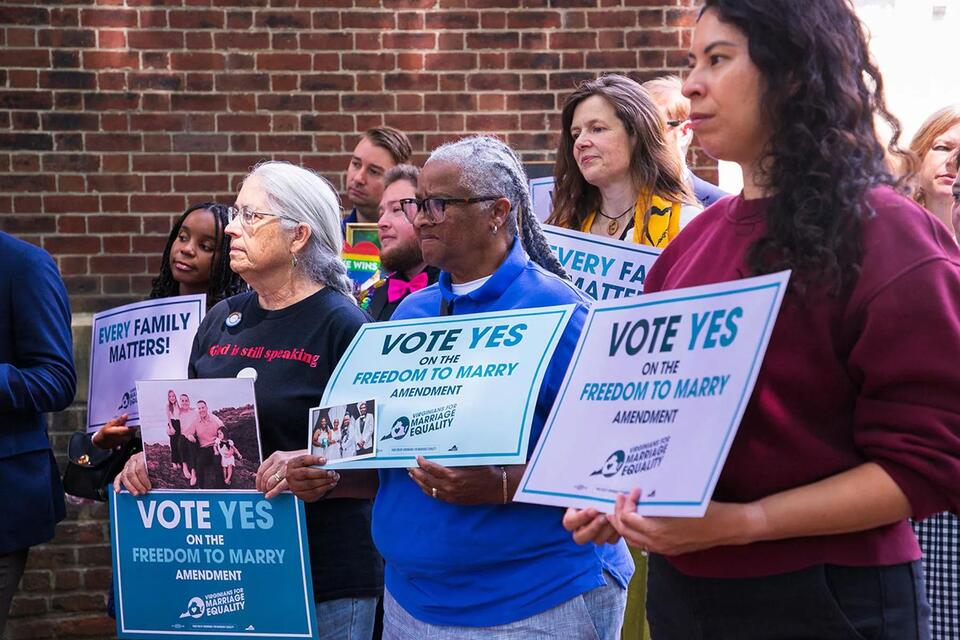
“Tonight’s victory belongs to generations of Virginians who organized, advocated and fought for equality, often without knowing whether they would live to see this day,” said Narissa Ramen, executive director of Equality Virginia and campaign manager for Virginians for Marriage Equality.
Kelley Robinson, president of the Human Rights Campaign, called the passage “a big and important win” and said, “We must work to carry this momentum across the country to ensure our marriages are protected in every state in the nation.”
What the Amendment Actually Changes
For couples like Bob Connelly and Bob Witeck, who have been together for more than 30 years, the vote confirms in the state’s highest legal document what federal law has guaranteed for a decade. The amendment does not alter day-to-day marriage law in Virginia — Obergefell already controls that — but it eliminates the constitutional text that could become operative if the Supreme Court ever revisits its marriage precedent. Virginia’s constitution requires proposed amendments to pass both chambers of the General Assembly twice before reaching voters, a procedural gauntlet that kept the question off the ballot until this year.
Today is a historic day for our Commonwealth. Virginians voted decisively to enshrine marriage equality in our Constitution and affirm that Virginia is a welcoming place for all families. I am grateful to every Virginian who has helped us take this step forward. It was just two…
More on Supreme Court
BIG NEWS in Virginia: Voters have approved Question 2, which guarantees the freedom to marry for all, making VA the first state in the South to repeal anti-marriage laws. Thank you to VA for Marriage &@EqualityVA! pic.twitter.com/FFjnZ0g8oH
Worth a look

Tennessee Supreme Court Upholds Law Capping Metro Nashville Council at 20 Members
Twenty. The Tennessee Supreme Court on Monday upheld a 2023 state law capping the Metro Nashville Council at...

South Dakota Republicans win statewide races, including secretary of state Heather Baxter
Republicans won in South Dakota on Tuesday. What happened instead was a clean sweep: the GOP finished ahead...

Yale SOM alumni win seats in Connecticut, Kentucky and Rhode Island
59% to 41%. That was the commanding margin by which Connecticut Ned Lamont won his third term on...

Charleston Voters Approve Half-Cent Transportation Sales Tax Extension
Charleston County voters have chosen to keep a half-cent transportation sales tax in place, with the extension projected...