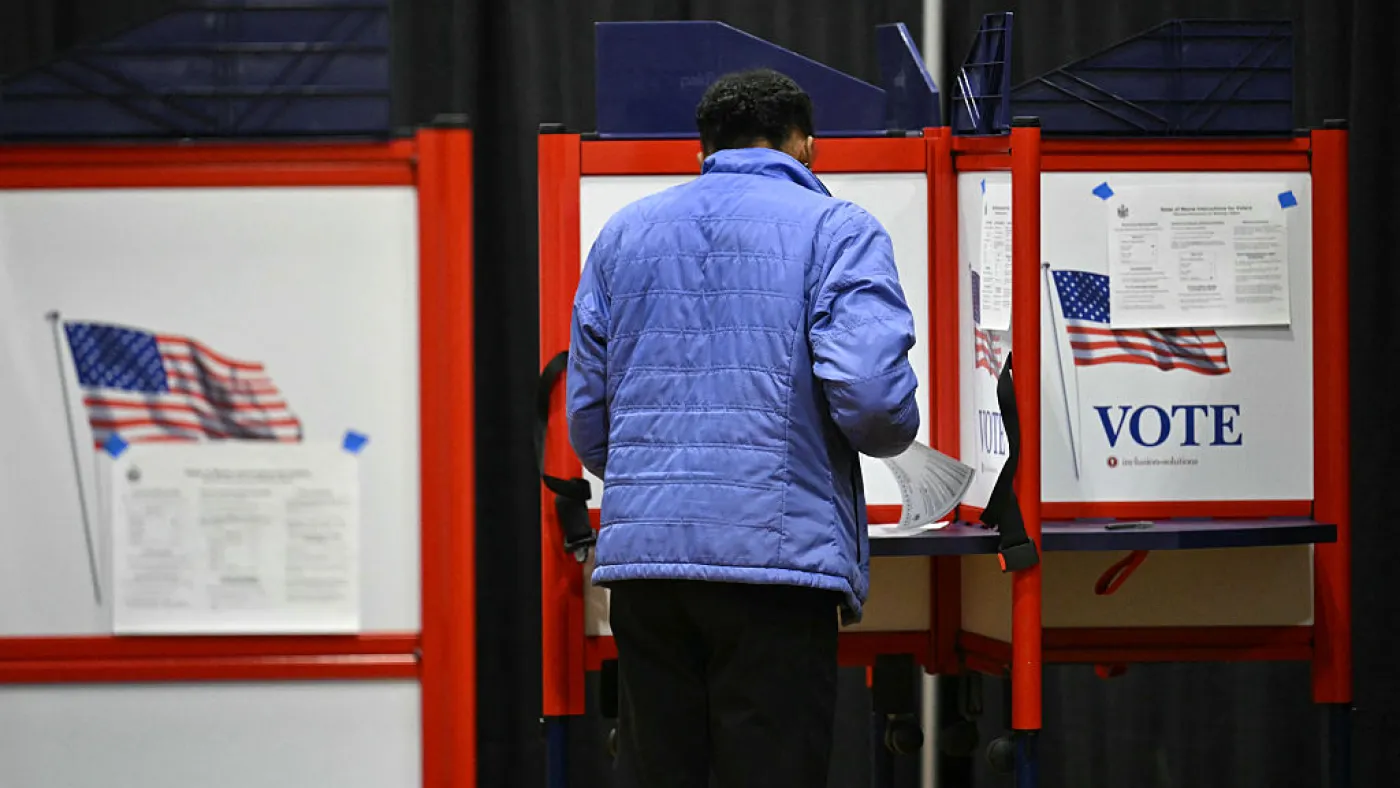
The curtains have remained drawn for months at the daycare on Lisbon Street in Lewiston, Maine. The mother and daughter who run it, both Angolan asylum seekers, keep the windows covered to avoid drawing attention from Immigration and Customs Enforcement in their neighborhood. On Tuesday, as voters cast ballots at polling stations in Portland and across the state for the midterm elections, their fear of deportation sat alongside a broader anxiety that NPR’s Morning Edition found echoing across six states that will decide which party controls Congress: the cost of living and immigration.
Throughout October, hosts Leila Fadel, A Martínez, Steve Inskeep and Michel Martin traveled to Maine, Texas, North Carolina, Georgia, Ohio and Michigan to speak with voters across the political spectrum. What they found, NPR reported, was an electorate where razor-thin margins in the Senate and House races come down to whether Americans feel they can afford beef, stock hardware inventory, or feel safe in their own neighborhoods. With Election Day arriving after months of campaign ads and rallies featuring President Trump and former President Barack Obama advocating for candidates in tight races, the final push for votes revealed a country wrestling with immediate economic pain and deep unease about who belongs.
The Price of Beef and the Hardware Store Math
In Texas, where beef is king, rising prices have affected the quality of life for residents, farmers and business owners. Martínez spoke with them about what is driving the price hikes and how it may sway their votes. Marlene Escucha, a Republican in San Antonio who was watching her daughter play the flute at a game when Martínez met her, has always voted along party lines but is unhappy with the GOP right now. Her conflict is really between her Republican values and the actual performance of the party. She said she hoped to talk through the choices with her husband before settling on a decision, but their conflicting work schedules mean they hardly ever see each other, which has made that difficult.
Inskeep did door-knocking in and around Marietta, Ga., where railroad tracks split the city and its residents across political lines. He spoke with Ryan Dunlap in rural Stokes County, a member of Trump’s coalition who is concerned about rising prices at his hardware store. Dunlap generally votes conservative and cannot see how you can run a business without being conservative, yet the economic reality posed a conflict as he needed to focus on the candidates and make a decision. Come election day, Inskeep noted, he would see which side of those tracks turned out in greater numbers. In Georgia, one Marietta voter told Inskeep that Americans have a problem with delayed gratification, feeling that long-term things would get better even while acknowledging that things are not going well for many Americans right now.
In Michigan, Martin documented how tariffs are affecting businesses and everyday lives, while voters expressed burnout and frustration with the political system. Trump made increasingly personal attacks against Democratic Senate candidate Abdul El-Sayed, even calling him a “jihadist.” Some Black voters in the state felt dissatisfied with how the Democratic Party treated them, while some Jewish voters expressed skepticism about the Senate nominee or were upset by the campaign’s tone, which they saw as leaning into bigoted tropes.
Curtains Drawn in Lewiston, Accusations in Springfield
Immigration concerns manifested in starkly different ways across the map. In Maine, Fadel went fly fishing and discussed the Democratic Party’s perceived “man problem” with men who varied in age and political affiliation but all agreed they loved to fish and wanted change; Trump won the 2024 election largely because most men across the country voted for him. Yet in Lewiston, the Angolan daycare operators’ caution reflects a community on edge, with people in the state wanting change in the Senate and some finding themselves more against the Republican incumbent rather than for the Democratic nominee.
In Springfield, Ohio, President Trump made wild false accusations about Haitians that were almost immediately debunked, yet he doubled down on the same argument. That prompted Martin to consider whether it might backfire, given that many residents said they were more motivated than ever to vote as a way of sending a message to the administration. The contrast between the fear in Lewiston and the defiance in Springfield shows how immigration has become a flashpoint that mobilizes voters on both sides of the aisle.
With experts projecting that the Senate and House will be won with razor-thin margins, the ballots cast Tuesday in these six states will determine not just which party controls Congress, but whether the next two years bring relief at the grocery store and hardware store, or continued anxiety at the border and in the neighborhood.
Related reading

Democrats Sweep District 15 Amid Idaho Republican Supermajority
While Republicans across Idaho celebrated a Tuesday night that extended their decades-long supermajority in the state Legislature through...

UNF’s Meals on Wings Delivers 250,000 Free Meals to Jacksonville Seniors
UNF's Meals on Wings Hits 250,000 Free Meals for Jacksonville Seniors Two hundred fifty thousand meals. Delivered. The...

Hawai’i Air National Guard Celebrates 80 Years of Service
Eighty years of taking flight. This November 2026, the Hawai‘i Air National Guard marks its 80th birthday, a...

CVS to Split Pharmacy Chain from Aetna in 2028 Breakup
For anyone with a prescription to fill or an insurance card in a wallet, CVS’s pharmacy and insurance...