Voters Deliver a Resounding Defense of Direct Democracy Across Seven States
“Overwhelmingly, voters said ‘No way.’” That was the stark message from Hanna Ledford, executive director of the Fairness Project, after voters in seven states resoundingly affirmed their power to pass laws without going through their lawmakers on Tuesday. From the Dakotas to California, citizens rejected proposed supermajority requirements, bans on initiatives, and other restrictions, while in Missouri and Montana, they went on the offensive to enshrine a fundamental right to citizen-led lawmaking.
A Clear Mandate for Citizen Power
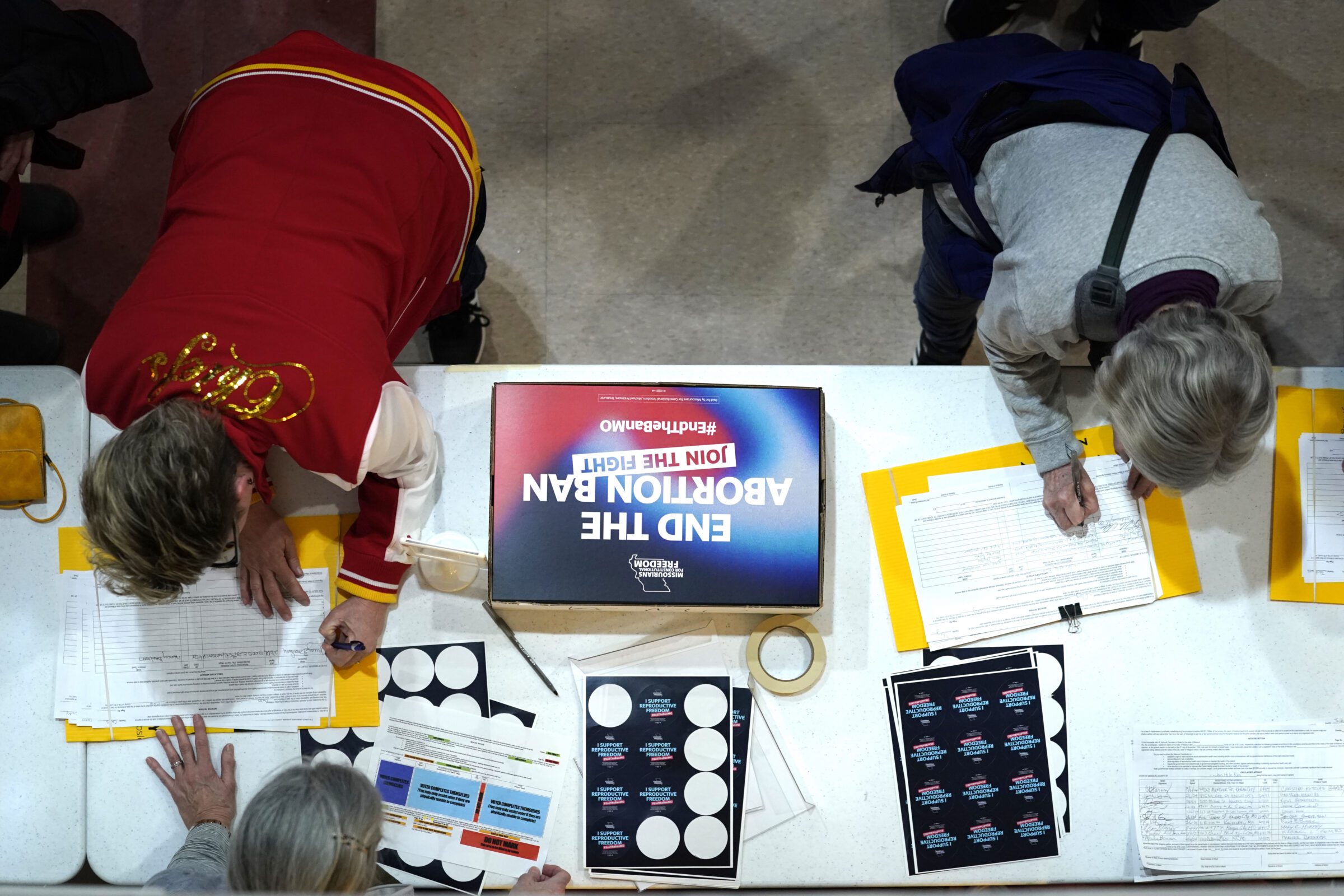
The clearest victories for direct democracy came in Missouri and Montana, where voters approved constitutional amendments designed to protect the initiative process from government interference. Missourians approved Amendment 6 by a margin of 20 percentage points.
The amendments codify a fundamental right to direct democracy, instructing courts to use a high legal standard known as strict scrutiny when reviewing hurdles to initiative campaigns. “If something impacts a fundamental right, courts are supposed to basically subject it to very rigorous questioning,” Derek Clinger, a scholar at the University of Wisconsin Law School, told Bolts. This new legal footing will make it much harder for state officials to put a thumb on the scale against campaigns they don’t like.
“Voters ‘sent a very clear message to their legislatures that this right is protected and cannot be taken away,’ said Hanna Ledford, executive director of the Fairness Project, an advocacy group that helped expand Medicaid via ballot initiatives in both Missouri and Montana.”
The victories in these states were a direct response to years of what advocates called the GOP’s “thousand cuts strategy.” Republican lawmakers in both states had passed legislation creating onerous new requirements for putting measures on the ballot and used litigation to derail citizen-led campaigns. Frustrated by repeated rebukes from state supreme courts, organizers took a bold step: they proposed amending their state constitutions to affirm the people’s right to direct democracy. Tuesday’s results suggest their strategy worked.
The Supermajority Backlash in the Plains and the West
Not all the battles were about strengthening initiatives. In North Dakota, South Dakota, and Utah, Republican legislators proposed requiring a 60-percent supermajority to approve any future constitutional amendments—a move designed to make it harder for citizens to pass laws. Voters, however, soundly rejected these proposals, by 14 percentage points in North Dakota and 16 points in South Dakota. Utah’s measure, which would have applied only to tax-related initiatives, was rejected by almost 25 points.
The decisive defeats highlight a clear pattern. Had these supermajority rules been in place, some of the most significant citizen-led victories in recent years would have failed. North Dakotans approved a 2018 ethics commission with 54 percent of the vote, and South Dakotans expanded Medicaid in 2022 with 56 percent support. Both measures would have fallen short of a 60-percent threshold.
“I don’t know if they will ever give it up, trying to make it harder to use direct engagement by the citizens to petition the government,” said Rick Weiland, co-chair of Dakotans for Health, a grassroots network that campaigned for Medicaid expansion. “But this is the third time at the altar, and they were resoundingly rejected.” The votes also mean future efforts to legalize abortion in the Dakotas remain viable, a goal that advocates say is impossible to achieve through the legislatures.
A Narrow Defeat in California and a Preemptive Strike in Idaho
In California, voters were poised to reject Proposition 43, a Democratic-sponsored measure that would have required a two-thirds majority to approve new local taxes. The measure was trailing 55 to 45 percent as of publication, though the race remained uncalled due to the slow count of mail-in ballots. The proposal, sponsored by Democratic Assemblymember Buffy Wicks, was part of a deal with a conservative group and was actively urged to be rejected by the California Democratic Party. The outcome means that California’s signature local tax measures, like the 2022 Los Angeles “mansion tax,” will still only need a simple majority.

In Idaho, voters rejected a different type of restriction: a proposal to ban all future initiatives on drug policy. The measure, HJR 4, was defeated 66 to 34 percent. Republican lawmakers have intensified their efforts to limit citizen initiatives since a 2018 campaign successfully expanded Medicaid. Their 2021 attempt to impose new signature-gathering rules was struck down by the state supreme court, which ruled that the state constitution protects a fundamental right to initiative powers. Lawmakers then turned to a constitutional amendment, a strategy that also failed on Tuesday.
“That explains why we’re in this strange situation as voters of being asked to surrender our own rights,” Luke Mayville, executive director of Reclaim Idaho, told Bolts. “We have every reason to think that if they can successfully convince voters to surrender their power on one topic, they would come back again in future cycles for other topics.” The vote suggests Idaho voters are wary of letting lawmakers pick and choose which issues are off-limits for direct democracy.
What’s Next for Direct Democracy?
Fields Figueredo, a key organizer in the fight, predicts that other states will follow Missouri and Montana’s example. “I think we are going to see more attempts to ensure that direct democracy remains in the hands of the people and free from government interference,” he told Bolts.
The victories also show a broader political reality. In an era of deep partisan divides, ballot initiatives have become a powerful tool for citizens to enact policies that legislatures, often deadlocked by partisanship, cannot or will not address. From Medicaid expansion to abortion rights, the initiative process has proven to be a potent force for change. Tuesday’s vote shows that while politicians may try to constrain it, the people are determined to keep their power.
As the dust settles on this election cycle, one thing is clear: the fight over direct democracy is far from over. It has simply shifted from defense to offense, with citizens moving to permanently protect the tools they use to hold their governments accountable.
Related reading

Chiefs Penalty Trends Reveal Persistent Struggle
Across the NFL, the yellow flag has been a frequent sight to open the 2026 season, a product...

Salvation Army of Augusta needs bell ringers for Red Kettle Campaign
The Salvation Army of Augusta is urgently seeking paid and volunteer bell ringers for its annual Red Kettle...

Defense Seeks Dismissal in Madison Brooks Case, Alleging Evidence Leak to Nancy Grace
Defense Seeks Dismissal in Madison Brooks Case After Video Leaked to Nancy Grace Just weeks before jury selection...

IndyGo issues bid for HVAC project at East Campus Building A
Indianapolis Public Transportation Corporation, dba IndyGo, has issued an Invitation for Bid (IFB) 26-10-597 for an HVAC project...