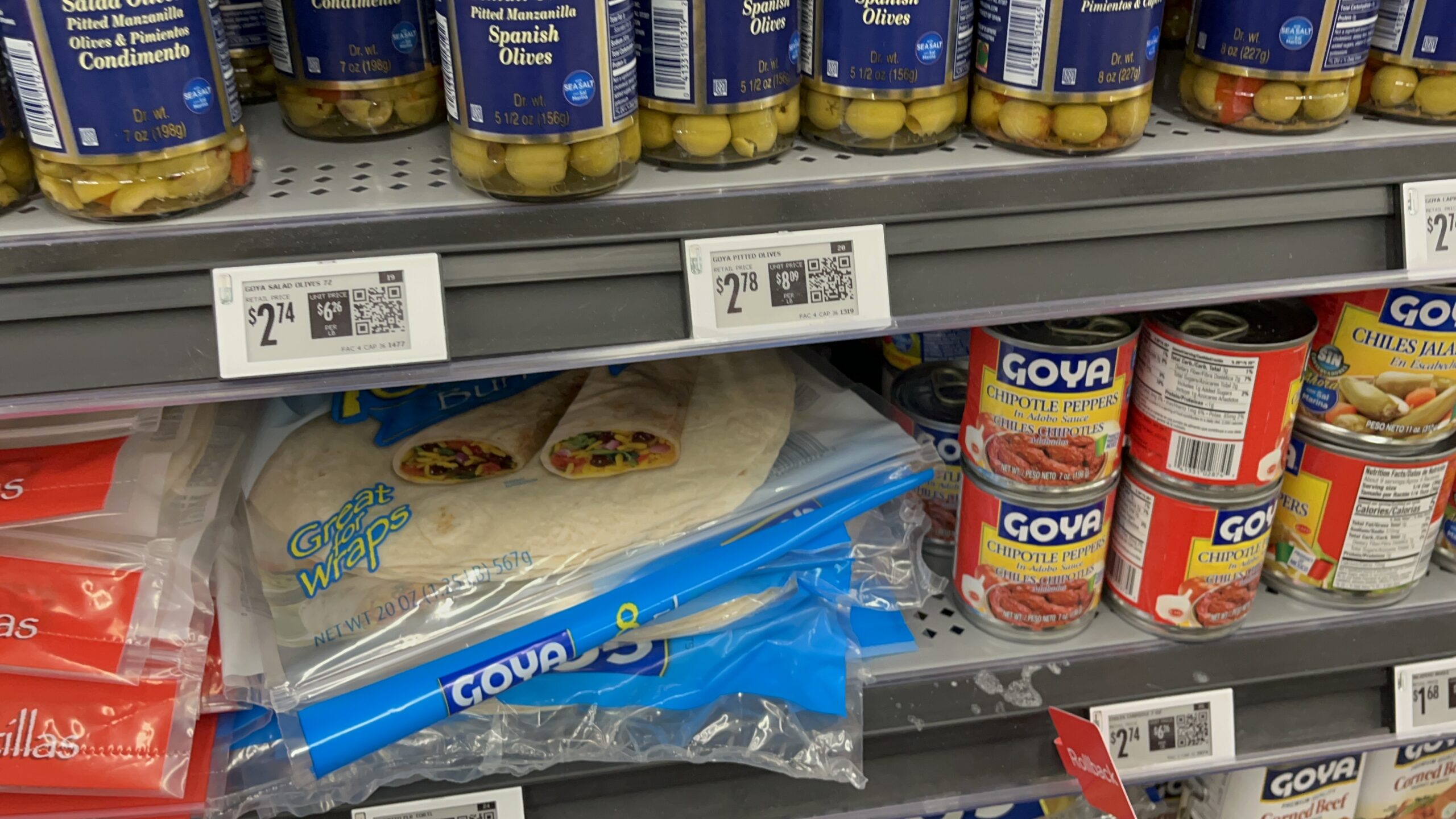
Walmart’s Digital Shelf Pivot and the New Economics of the Grocery Aisle
Walmart has publicly pledged to move away from dynamic, personalized pricing, as the retail giant expands the use of electronic shelf labels (ESLs) across its stores. In a September letter to customers, Walmart CEO John Furner stated that the company does not and will not adjust prices based on a shopper’s income, urgency, or personal history. This commitment arrives as the retailer replaces traditional paper price tags with digital screens capable of being updated instantly from a central computer.
Walmart’s new chief executive officer, John Furner, wants employees to share what’s holding them back. https://t.co/eOWN06HF9t
The shift toward digital labeling is driven by a desire for operational efficiency. Furner noted that updating paper tags is a tedious, labor-intensive task, and the company intends for its employees to focus on assisting customers rather than maintaining a “small forest of adhesive rectangles.” While these electronic tags allow for near-instant price changes, Walmart maintains that the technology will not be used to implement surge pricing or to hide lower-cost options from users of the company’s AI-powered shopping assistant, known as Sparky.
The Disconnect Between Efficiency and Transparency
The reliance on digital infrastructure creates a friction point between corporate efficiency and consumer trust. In a recent column for Salon, writer Mary Elizabeth Williams argues that while electronic labels are not inherently predatory, they obscure the logic behind pricing. When a physical sticker remains on a shelf for an extended period, it provides a stable, transparent reference point for every customer who walks by. Digital labels, by contrast, make the price a moving target, even if the retailer claims those changes remain uniform for all shoppers.
This anxiety is compounded by the increasingly elaborate “administrative” requirements of modern grocery shopping. To secure discounts, consumers are now expected to download specific applications, create accounts, and activate digital coupons. While these steps offer immediate savings, they also provide retailers with granular data regarding individual preferences and habits. The core concern for many shoppers is that this data collection could eventually be used to segment customers by their willingness to pay, rather than by the actual value of the goods.
The Precedent for Algorithmic Pricing
The fear that supermarkets might adopt airline-style pricing is not entirely unfounded. A December investigation conducted by Consumer Reports and the Groundwork Collaborative found that some shoppers using Instacart were shown varying prices for identical items at the same retail location. For instance, at a Safeway store in Washington, D.C., the price of an 18-ounce box of Signature SELECT Corn Flakes fluctuated between $2.99, $3.49, and $3.69 depending on the user’s screen. Instacart subsequently ended these experiments, stating that the pricing differences were part of random testing rather than demographic targeting.

While the researchers did not find evidence that personal habits were being leveraged to increase individual costs, the incident highlighted how easily price divergence can occur in a digital environment. As Williams observes, “You can’t question a difference you have no way of seeing.” This lack of visibility into why a price changes creates a power imbalance, where the retailer possesses exquisite detail on the shopper, while the shopper remains largely in the dark regarding the rules of the transaction.
The Stakes of the Modern Supermarket
The pressure on retailers to maintain trust is growing as AI integration becomes more common. McDonald’s, for example, is currently facing a lawsuit—which the company denies—alleging AI-assisted price coordination among its franchises. These developments suggest that the grocery sector is approaching a threshold where the convenience of digital technology risks alienating the very customers it seeks to serve.
Walmart’s promise to “price the product, not the person” serves as a significant corporate commitment in a landscape where such guarantees are becoming rare. However, the necessity of such a promise underscores how much the retail experience has shifted. For the average shopper, the goal remains simple: to know the cost of a box of cereal without wondering if the price tag is reacting to their presence, their history, or the time of day.
Worth a look

Three Things You Didn’t See on TV During Oregon’s Win Over Northwestern
Oregon Overcomes a 20-6 Deficit Against Northwestern in a 34-26 Halloween Thriller at Autzen Stadium A thick layer...

How to Watch Oklahoma vs. Florida – Sports Illustrated
The Oklahoma Sooners will travel to Gainesville, Florida, to face the Florida Gators on November 7 at Ben...

Community drives Journal’s commitment to Lobo basketball coverage – Yahoo Sports
As the University of New Mexico Lobo basketball season tips off, the Albuquerque Journal remains an outlier in...

Scientists Assess the Environmental Recovery of the Hackensack River
A Journey Through New Jersey's Industrial and Natural Corridor Environmental guide and captain Bill Sheehan recently piloted a...