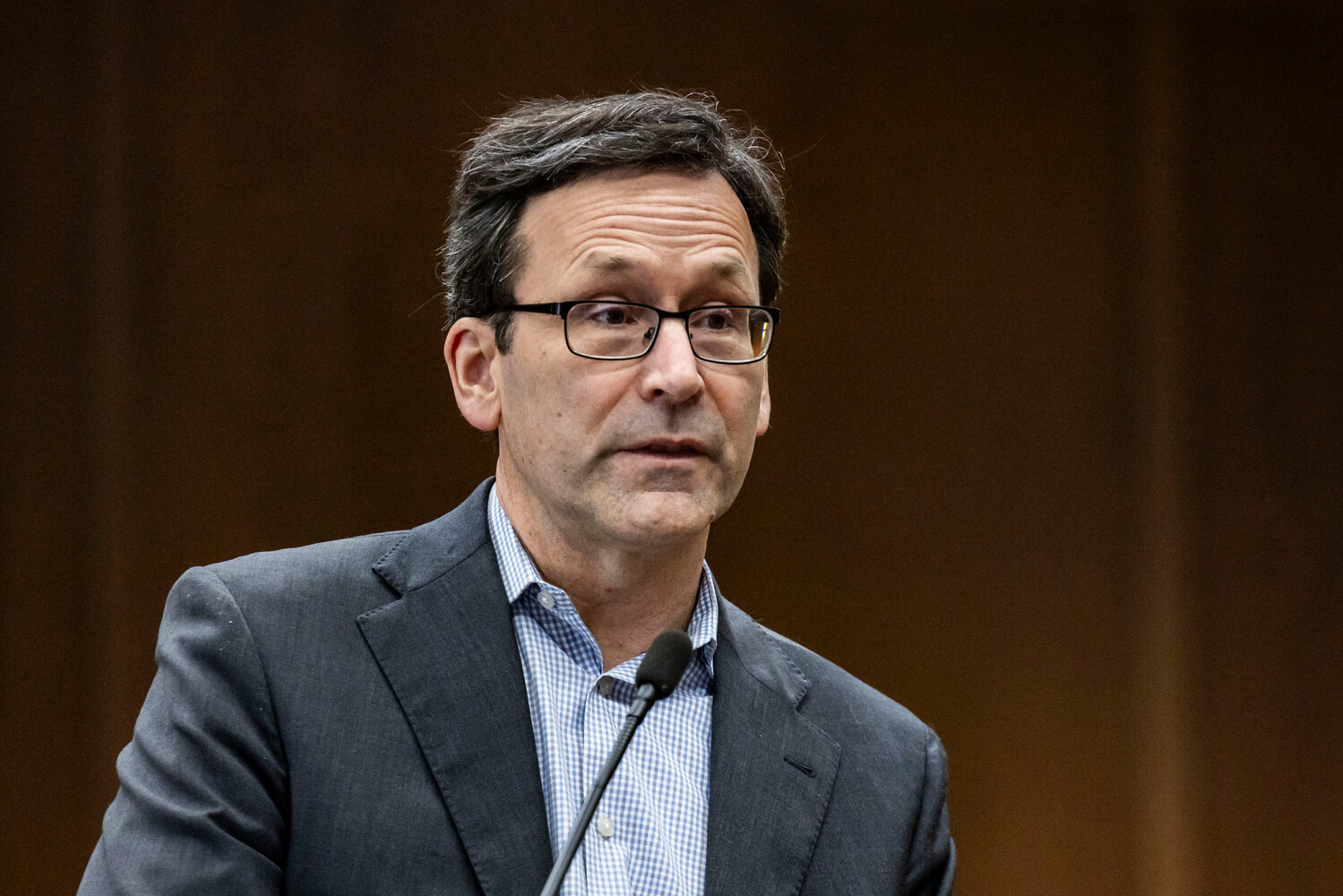
Washington state agencies faced a deadline this week to submit plans for 10% and 15% budget cuts by 2028, while critics predict Gov. Bob Ferguson will ultimately raise taxes to cover a projected $4 billion shortfall.
The Director of the Office of Financial Management, K.D. Chapman-See, directed agencies to prioritize reductions for fiscal year 2028. Director K.D. Chapman-See warned against proposals that shift costs to other programs. “Please do consider the timing of savings – how long would it take to implement the reductions?” Chapman-See wrote in a Nov. 16 memo obtained by The Center Square.
Ferguson blamed federal reductions for the gap. “After dealing with billions of dollars in draconian cuts imposed by the Trump Administration, voters have elected a new Congress that will help return us to budget sanity,” he wrote in a Nov. 16 press release. The governor has said he will not propose new taxes for the 2027–2029 biennium but has not pledged to veto increases passed by the Legislature.
GOP Chair Jim Walsh dismissed the cuts as theater. “He will fold. He will collapse,” Walsh said in a Nov. 23 interview with The Center Square. “Maybe a so-called corporate income tax, maybe an expansion of the state income tax… He will very unconvincingly whine about how he doesn’t want to sign them. And then he’ll sign them.”
Rep. Ed Orcutt, a Republican from Kalama who sits on the Economic and Revenue Forecast Council, said the administration targets painful cuts to build pressure for tax hikes. “They always cut where it hurts…so the public sentiment says we can’t do this,” Orcutt told The Center Square.
Ferguson signed a $78 billion two-year budget in his first session that included billions in new and higher taxes. He championed a 9.9% tax on income above $1 million annually in 2026; voters upheld it Nov. 3, but a legal challenge heads to Klickitat County Superior Court on Feb. 5. If it survives, the tax takes effect January 2028 with first payments due in 2029, projected to generate $3 billion to $3.5 billion in its first year.
“The good news is our budget situation will be stable beginning July 1, 2028,” Ferguson said in the press release.
Walsh argued spending restraint, not cuts or taxes, is the answer. “We’ve got to get some grownups in the room and slow the spending,” he said. “Honestly, what we need to do is we need to hold our spending at the current levels for a few years; a couple of budget cycles.”
The Office of Financial Management provides vital information, fiscal services, and policy support for Washington’s budget, preparing the executive budget proposal and monitoring its implementation. The agency also develops and maintains state administrative and accounting policies and prepares statewide financial reports, ensuring oversight and accountability in managing the state’s budget.
The 105-day legislative session opens Jan. 11.
Worth a look

Brown Rushes for 3 TDs, No. 13 Iowa Defeats Nebraska 31-7
Iowa quarterback Hank Brown ran for three touchdowns and threw for another as the No. 13 Hawkeyes defeated...

Missouri Medicaid to Start 12-Month Renewals in 2027, Then Six-Month Cycles
Missouri Medicaid participants will first use 12-month renewals in 2027 before switching to six-month cycles. Missouri Medicaid participants...

Oklahoma State hosts Tennessee State Sunday at Gallagher-Iba Arena
Oklahoma State hosts Tennessee State at 2 p.m. CT Sunday at Gallagher-Iba Arena, the first meeting between the...

Fantasy Week 12: Montgomery, Marks, Douglas, Tyson, Samuel Start/Sit
RotoBaller's Week 12 fantasy tool surfaces nine players at the center of start-sit debate, with backfield uncertainty driving...