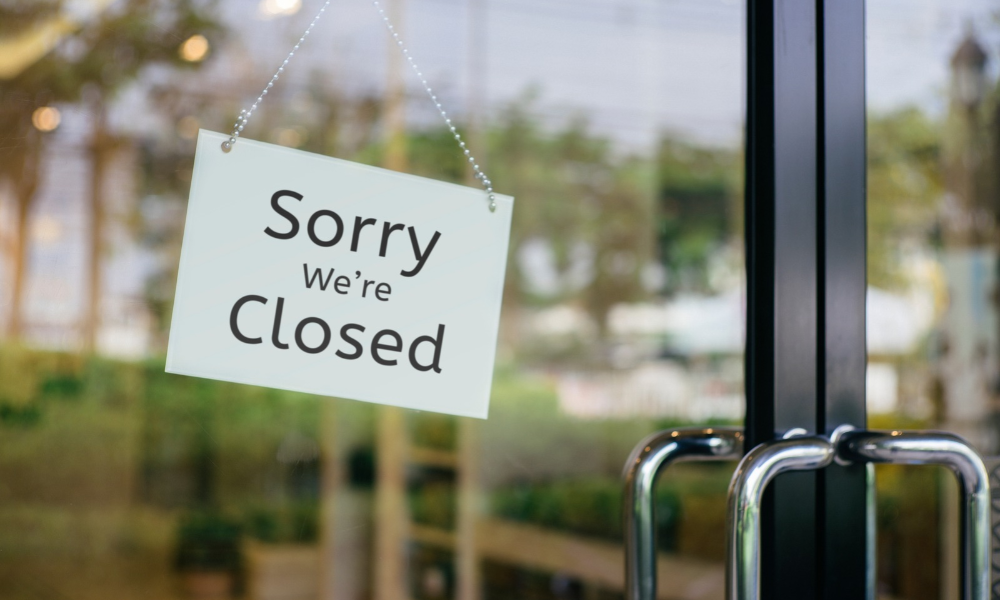
Heavy snow collapsed the east rink roof and wall of the Wentzville Ice Arena early on Thanksgiving morning, shutting down the city-owned facility during its busiest seasonal window.
The sudden structural failure occurred between 3am and 4am, according to Mike Lueck, director of Wentzville Parks and Recreation, who pointed to the preceding winter weather as the primary culprit. “The building was fine yesterday, and we had a snow event, and now it’s not fine. So best guess is it’s tied to the snow,” Lueck told Insurance Business.
Emergency Crews Secured Gas Line and Shut off Utilities
Wentzville Fire Chief Steve Mosher confirmed that emergency crews arrived at the scene within minutes of the collapse. The impact severed a gas line, which workers quickly secured, while city utilities were shut off entirely.
Having served the local community since the late 1990s, the arena now faces a complete shutdown with no reopening timeline in sight. All future events at the facility have been cancelled, though nearby organizations have stepped up to help displaced participants.
JP Beilsten, director of the CarShield AAA Hockey Team, noted the swift community response in Chesterfield: “When bad things happen, people tend to rise up and do the right thing for each other and make sure the kids aren’t affected by it,” he said.
Commercial Property Coverage Gaps
For commercial policyholders and risk managers, the Wentzville disaster highlights a recurring insurance oversight regarding snow load provisions. Under the Insurance Business reporting on standard programs, the weight of snow, ice, or sleet is classified as a named peril solely under the Broad Form (CP 10 20) and the Special Form (CP 10 30). Facilities insured under the Basic Form (CP 10 10) carry zero snow load protection.
Burden of proof requirements also shift depending on the specific form purchased. Under the Special Form, insurers must prove that an exclusion applies to deny a claim, whereas Broad Form policyholders must prove that a listed peril directly triggered the loss.
Broader Winter Claim Pressures
Winter weather risks have intensified across the commercial sector following severe early-year storms. Verisk’s Q1 2026 Quarterly Property Report recorded a year-over-year increase in ice and snow claims, driven heavily by winter storms Fern and Hernando, which produced over 46,000 claims totaling more than $478 million in estimated replacement cost value.
Beyond physical repairs, the timing of the collapse threatens severe financial friction through lost seasonal revenue. Business interruption coverage typically requires a triggering physical loss to activate, with the indemnity period running from the exact date of the incident.
Data published in the 2025 Nationwide Agency Forward Commercial Lines Protection Survey showed that business interruption appeared in 37% of catastrophe-affected property claims, ranking alongside water intrusion and roof damage as a primary loss category.
Municipal properties face further scrutiny regarding how risk is retained internally. City financial documents show that Wentzville operates an Internal Service Fund—functioning as a Self-Insurance Fund—to allocate coverage costs across municipal departments. Whether that specific arrangement mirrors standard commercial collapse forms remains undisclosed, underlining the need for rigorous coverage audits before winter weather strikes.
Keep reading

Columnist: 3 Suns Stats to Be Thankful for This Thanksgiving
Bright Side of the Sun columnist argues the Phoenix Suns have three statistical reasons for Thanksgiving optimism: a...
NFL Replay Center Overturns Rashee Rice Catch; Andy Reid Disagrees
The NFL replay center in New York overturned a Rashee Rice catch that would have given the Kansas...

Maine Turnpike Tests Pollinator Plantings on 160 Acres
The Maine Turnpike Authority is converting mowed highway verges into native plant corridors to help pollinators like monarch...

Nico Paz Open to Man Utd Move, Rules Out Real Madrid Return
Nico Paz is open to joining Manchester United after the midfielder ruled out a return to Real Madrid,...