If you want to maintain a healthy weight, you probably know you should watch what you eat and get some exercise, maybe hit the gym.
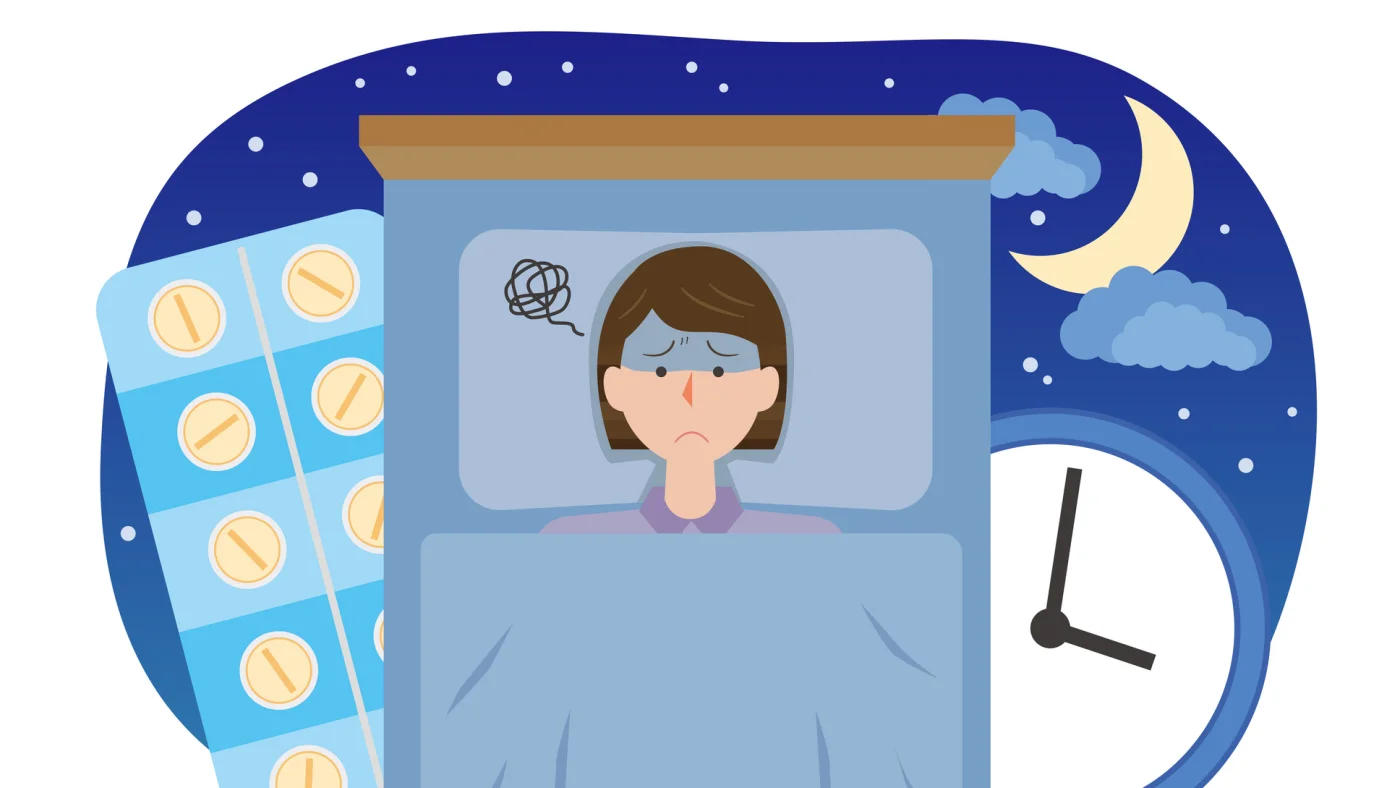
But what about hitting the hay? There is a lot of evidence linking lack of sleep to overeating and an increased body weight. While the link between sleep deprivation and weight gain has been established for some time, researchers are now looking closer at whether a better night’s rest can actually help you shed pounds.
The science remains an active, evolving field, but the data is starting to paint a clearer picture of how our circadian rhythms dictate our metabolism.
The core of the issue involves how our brains process hunger and impulse control when we are chronically tired. According to a randomized clinical trial involving 80 overweight adults, extending sleep by just over an hour per night led participants to spontaneously eat about 270 fewer calories daily without any specific dietary intervention.
“They got them to sleep a little over an hour more per night,” Seth Creasy, an associate professor of medicine at the University of Colorado Anschutz, told NPR. “And they saw that, without intervening on food, these people started to eat less by about 270 calories per day. So once they were getting adequate sleep, they ate less.”
While the evidence that more sleep directly causes weight loss is still considered scant, the research linking sleep loss to weight gain is remarkably consistent. Across various studies, researchers have found that when people are sleep-restricted, they consume about 300 more calories a day on average, as reported by NPR.
Even modest losses have an impact; in a study involving sleep loss of just 90 minutes, participants gained an average of one pound over six weeks. “Over time, it adds up,” Marie-Pierre St-Onge, a sleep and nutrition scientist at Columbia University, told NPR.

The struggle to maintain a healthy weight when tired is often physiological rather than just a lack of willpower. Imaging studies suggest that short sleep triggers increased activity in the brain’s pleasure and reward centers, making sweet and salty foods significantly more tempting.
“Our brain is less able to inhibit our desires for those sweet and salty foods—especially later in the day,” Christopher Kline, an associate professor of health and human development at the University of Pittsburgh, told NPR. Kline, who has researched how sleep health impacts weight loss and fat mass, said that poor sleepers often report greater difficulty sticking to their established diet and exercise goals.
Beyond the simple duration of sleep, the quality and timing of that rest are equally vital. It is not just about the total number of hours, but when those hours occur.
“A good analogy I like to make is if you get your eight hours of sleep, but those eight hours are between 4 a.m. and noon, that might not be as healthy as someone who regularly obtains their sleep between 10 p.m. and 6 a.m.,” Kline told NPR.
Disruptions to our circadian rhythms can impair insulin sensitivity and promote fat storage, creating a metabolic environment that makes weight management significantly harder.
The relationship between food and rest functions as a two-way street. What you eat during the day can directly influence how well you sleep at night. Research has linked the consumption of added sugars and saturated fats to more frequent sleep disturbances and a reduction in deep sleep.
Conversely, fruits, vegetables and fiber were associated with better sleep and fewer awakenings at night. “As a first step, cut out foods that are higher in added sugars and sweetened beverages,” St-Onge told NPR.
Philip Cheng emphasizes the importance of sleep hygiene, such as keeping the bedroom cool and dark while maintaining a consistent schedule for going to bed and waking up as best as you can.
However, he says that if your poor sleep lasts months or even years, it is time to see a medical provider for help. As Creasy noted, while we continue to clarify these links, the consistent evidence regarding sleep loss shows that rest is essential for health.
Keep reading

Bouchaker to Be Sentenced Over Parnell Square Attack
“I hope whatever god you believe in doesn’t forgive you, because harming innocent children is simply unforgivable,” Leanne...
LBBP Superior to RVP in Reducing Heart Failure and Cardiomyopathy Risk
Left bundle branch pacing reduces deaths, heart failure hospitalizations, and pacing-induced cardiomyopathy compared with traditional right ventricular pacing...

At Final ASEAN-UN Summit, Guterres Upholds Cooperation and Action on Myanmar – UN News
United Nations Secretary-General António Guterres wrapped up his final ASEAN-UN Summit appearance on Monday by pressing regional leaders...

GAA Clubs Used in Lung Cancer Screening Pilot to Help Improve Outcomes
A mobile unit parked outside an O’Rathallaigh Park GAA clubhouse in Drogheda has become the unlikely setting for...