
Wichita Falls Mayoral Debate Focuses on Residency, Datacenters, and City Purchases
In a televised mayoral debate Monday evening on Oct. 27, 2026, presented by News Channel 6 KAUZ-TV, incumbent Wichita Falls Mayor Tim Short and challenger Scott Poenitzsch clashed over local residency requirements, proposed datacenter projects, municipal property acquisitions, and police surveillance technology.
The event, held against the backdrop of an ongoing two-man mayoral race, brought sharp exchanges to the forefront as both candidates defended their records and visions for the North Texas city.
Mayor Short Accuses Poenitzsch of Misrepresenting Residency
The debate quickly turned contentious regarding where challenger Scott Poenitzsch actually lives. Incumbent Mayor Tim Short accused Poenitzsch of “perpetrating a fraud on the city of Wichita Falls” by misrepresenting his primary residence during the televised event.
Short contended that Poenitzsch’s true residence is a property located outside city limits rather than an apartment in the Morningside addition of Wichita Falls. While acknowledging that Poenitzsch “is not illegally on this ballot,” Short pointed to government tax forms where Poenitzsch reportedly swore he lived in Iowa Park.
Poenitzsch, who owns a winery outside Wichita Falls, pushed back against the accusation. He explained that the homestead exemption forms he filed over several years were actually challenges of his business property evaluations submitted to the Wichita Appraisal District. According to Poenitzsch, the appraisal district’s response was that he did not own or occupy the property for residential homestead purposes.
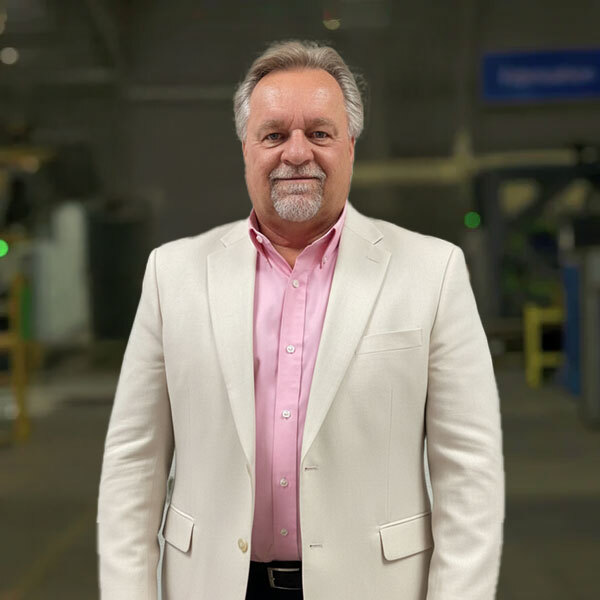
Addressing voters directly during the broadcast, Poenitzsch remarked that anyone who cannot accept his residency should “cast your vote for Tim.”
Disputes Over Skybox Datacenter Lobbying and Permits
Economic development also drove intense debate, specifically concerning Skybox Datacenters and their efforts to establish a facility in Wichita Falls.
Moderators questioned Mayor Short about who organized and funded a recent flight to Austin for Short and other city officials. The delegation traveled to lobby on behalf of Skybox’s permit application with the Electric Reliability Council of Texas (ERCOT), which is responsible for issuing electric power permits to commercial data centers.
Short stated that a local nonprofit with no formal ties to Skybox donated the flight for their scheduled meetings with ERCOT representatives. He emphasized that the trip cost taxpayers nothing and that Skybox representatives neither paid for the plane nor rode on it.
Challenger Poenitzsch countered by citing a public question-and-answer session at the Wichita Falls Public Library, asserting that Skybox representatives stated they traveled alongside city representatives. “So the two can’t be the same,” Poenitzsch argued.
On the broader question of hosting hyperscale data centers, Poenitzsch stated his opposition, adding that Skybox representatives told him their local project is delayed by at least two to three years.
Short defended the development, noting that constructing the Skybox datacenters in the city’s business park could ultimately provide a 20% to 40% tax break for Wichita Falls homeowners. He added that Skybox paid $65,000 per acre for the land and received no tax abatements from the city. “You can advocate all you want for it, you do not have the power to stop it,” Short said.
Wichita Falls Plans to Appeal Lake Ringgold Permit Denial
The candidates also addressed the city’s infrastructure and real estate pursuits, including the stalled Lake Ringgold project in Clay County.
A state district judge in Austin recently denied a construction permit for the reservoir. Expressing deep frustration, Short said, “This is the second judge that I’ve been extremely disappointed in — the second judge that is not elected or voted on by the citizens of Wichita Falls or North Texas.” Short confirmed that the city expects to appeal the ruling.
Poenitzsch offered a different perspective, pointing out that Wichita Falls has experienced a declining population, meaning the projected need for the municipal lake “does not materialize.” He added, “I’m glad it has been paused, and I think we should evaluate other options that have been on the table for some time.”
Turning to the municipal purchase of the Sikes Senter mall for $27.5 million, Short explained that the city acquired the property to maintain direct control over its future development. He noted that three developers recently made presentations to the city regarding the site, and officials expect to work through those proposals conservatively over the next couple of months.
Poenitzsch criticized the acquisition, arguing the city should not have purchased the mall without having a developer “inked and solid.” He outlined four potential paths for Sikes Senter, asserting that a public-private partnership represents the best option to align the property with community goals.
Candidates Clash over Flock License Plate Cameras
The debate concluded with a discussion on Flock automated license plate reading cameras, which have raised privacy concerns among some residents.
Short defended the technology as an essential tool for local law enforcement. “It depends on if you trust law enforcement to have that information or not,” he said.
Poenitzsch acknowledged that the cameras were deployed with good intentions, but criticized the initial rollout for lacking solid rules governing their use. He advocated for the removal of Flock cameras in Wichita Falls.
Keep reading

Needham Bank Expands Small Business Capital Access via Invest MA Program
Needham Bank Joins State Initiative to Expand Massachusetts Small Business Lending Needham Bank announced on October 27, 2026,...

Ravens Release Guard Michael Jordan Amid Offensive Line Issues
Baltimore Adds Guard Michael Jordan to Practice Squad Following Vega Ioane Injury The move follows a 35-13 loss...
Augusta to settle federal lawsuit with Allen Crispin for $150,000
The Augusta Commission voted 11-0 on Tuesday to settle a federal lawsuit for $150,000 with Allen Crispin Fuentes,...

Louisiana Midterm Election Guide: Races, Candidates, and Constitutional Amendments
The Final Hours of Early Voting Early voting for the November 3rd Louisiana midterm elections officially closes on...