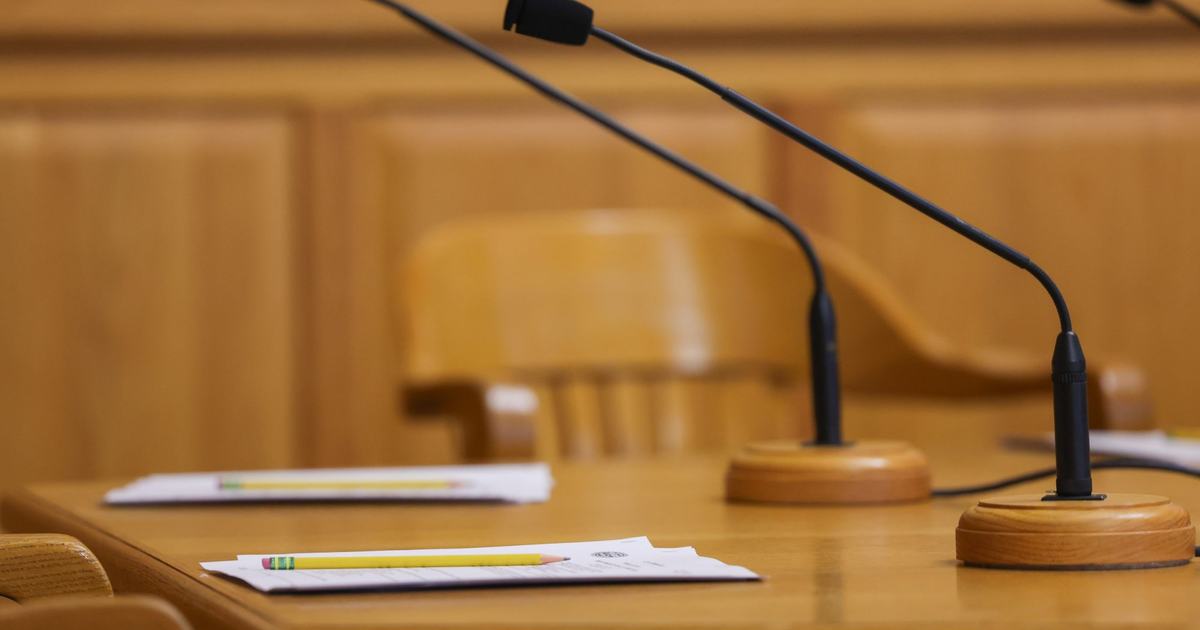
Wisconsin law allows government boards to meet behind closed doors only for specific reasons such as personnel matters, litigation strategy or property negotiations, and only after a public vote in open session. The board must post the reason on its agenda at least 24 hours in advance, and discussion must stay limited to that stated purpose.
Notice and motion required before any closed session
Every governmental body “shall give at least 24 hours” notice of any meeting, and at least two hours for an emergency meeting, Wisconsin statutes show. A board that plans to convene in closed session must list the reason on its agenda, start the meeting in open session, and adopt a motion — made, seconded and approved — before closing the doors, Milwaukee Neighborhood News Service reported.
Statutory reasons are narrow and specific
State law enumerates the permitted purposes, including deliberations after quasi-judicial hearings; specific personnel, probation or parole matters; crime detection or prevention strategy; purchase of public property or investment of public funds when competitive or bargaining reasons require confidentiality; unemployment or worker’s compensation cases; burial-site locations where publicity would risk disturbance; financial, medical, social or personal histories that would substantially harm a person’s reputation; conferring with legal counsel on litigation strategy; requests for confidential advice from the Government Accountability Board; certain business matters under the State Economic Adjustment Program; and financial information related to certain nonprofit corporations, according to the Wisconsin Broadcasters Association breakdown cited by Milwaukee Neighborhood News Service.
Personnel issues and legal advice are the most common reasons appearing on agendas, the outlet noted.
Discussion and minutes must stay within the stated purpose
The law requires that closed-session discussion focus only on the reason announced on the agenda, which is why boards sometimes list multiple reasons to avoid moving in and out of closed session repeatedly, Milwaukee Neighborhood News Service reported.
Minutes are mandatory: “The open meetings law requires a governmental body to create and preserve a record of all motions and roll-call votes at its meetings. This requirement applies to both open and closed sessions,” according to the Wisconsin Department of Open Meetings Guide.
Reader question sparks closed-session explanation
Reader Sophie B. asked why government boards are allowed to meet without the public present, prompting the reporting on Wisconsin’s open meetings law. The question noted uncertainty about the process behind city and town board meetings. The outlet responded that many people share the same curiosity and that knowing the rules helps the public identify when a board may not be following them.
Both Milwaukee Neighborhood News Service and WFHR published the reader’s question and the subsequent explanation. Each outlet said that most boards generally follow the rules, but some do not, making public awareness important for accountability.
Voting in closed session remains unsettled
State statutes do not clearly authorize final votes behind closed doors, and the Wisconsin Department of Justice advises government bodies to reconvene in open session to take any vote.
WFHR also noted the law is not super clear on whether boards can vote in closed session and highlighted the DOJ’s advice to return to open session for voting. The guide covers each permitted closed-session purpose in detail as well.
The Wisconsin Government Accountability Board (G.A.B.), a regulatory agency composed of six retired judges serving staggered six-year terms, administered and enforced state law on campaign finance, elections, ethics, and lobbying from its creation in 2007 until the Republican legislature dissolved it effective June 30, 2016, replacing it with the Wisconsin Ethics Commission and Wisconsin Elections Commission.
State statutes specifically listed “requests for confidential advice from the Government Accountability Board” as a permitted reason for a governmental body to convene in closed session, granting the board a formal advisory role in the open meetings process during its existence.
Voting in closed session remains unsettled
The state Department of Justice advises government bodies to reconvene in open session to take any vote, Milwaukee Neighborhood News Service reported. The Open Meetings Guide provides further detail on compliance and on steps to take if a local board is believed to have violated the law.
Idaho Steelhead Bag Limits Extended Into Next Year Due to Poor Run
Idaho Steelhead Bag Limits Extended Into 2027 Idaho’s reduced steelhead bag limits will continue into next year, a...

Kim Declares Nuclear Status Irreversible, Orders Tactical Weapons Focus After Ignoring Trump
North Korea's leader declared his nuclear arsenal an irreversible fact and ordered wider deployment of tactical warheads after...

Bismarck Residents Share Thanksgiving Gratitude for Family, Health
"I'm a rich man because I have a good family and I haven't experienced much tragedy in our...

Historic Storm Forces First Macy’s Parade Delay Ever; 770K Lose Power
Wind gusts in Central Park reached 48 mph by early afternoon; peak gusts of 65 mph forecast for...