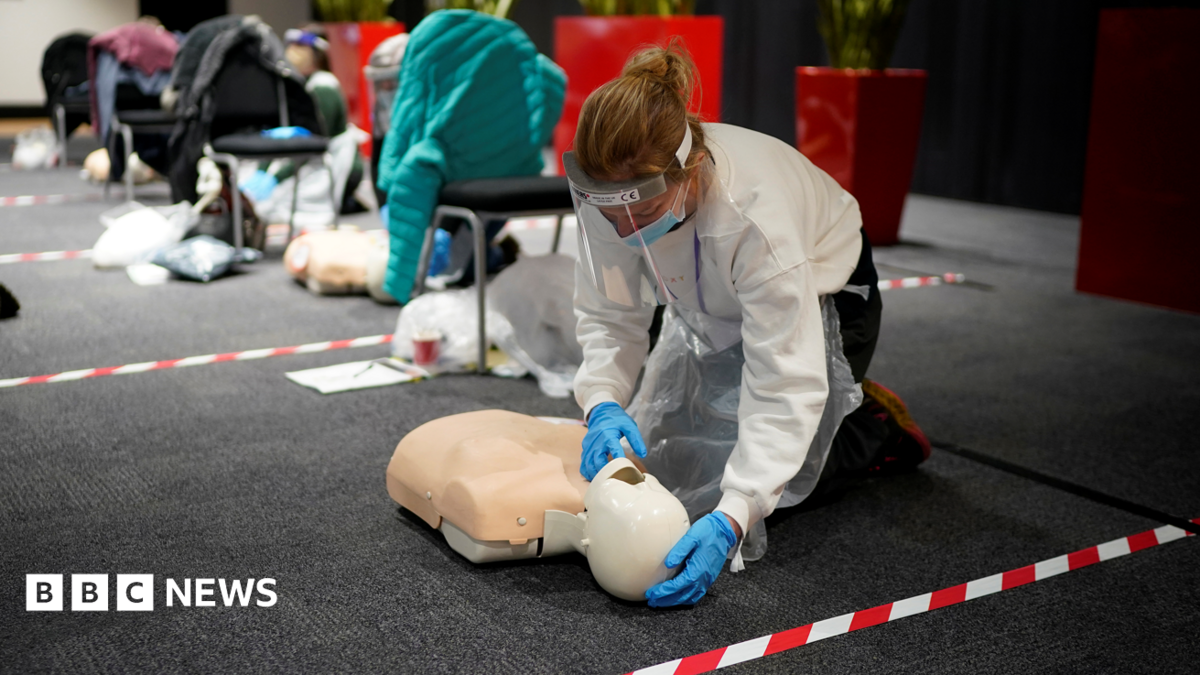
Workers across the UK could receive paid leave to train for emergencies under proposals published on Monday by a House of Lords committee.
The national resilience committee recommended introducing a new “civic resilience leave” entitlement. The measure aims to let employees complete emergency volunteering and training without taking a financial hit.
The 12-strong committee examined how the UK prepares for major crises, including natural disasters, cyber-attacks, power cuts, and war. Peers described a government campaign launched last month—which urged the public to stockpile tinned food and bottled water—as a welcome step but warned that Britain remains underprepared.
The committee said that the public does not possess the full picture regarding potential threats from China, Russia, and Iran. To address these vulnerabilities, the peers outlined several operational changes for local authorities and national infrastructure.
- Local councils should maintain registers of volunteers possessing relevant skills and capabilities.
- Municipalities must compile lists of local buildings suitable for use as emergency shelters.
- The government should launch a national campaign for civil reservists and registered volunteers, modeled on the NHS volunteer responder program established during the Covid pandemic.
While certain employers already grant time off to staff who volunteer, no statutory right currently exists for paid leave dedicated to roles such as firefighting, coastguard rescue, or the St John Ambulance. Army reservists can claim up to £400 a day from the government to cover lost pay during mobilization, but businesses are not legally required to provide time off for training.
Rather than mandating specific roles, the committee suggested that the new right should cover approved volunteering and training. Peers stopped short of setting a precise number of leave days, recommending instead that Labour ministers collaborate with employers to establish proportionate arrangements.
The report also referenced a previous government proposal from a 2021 defense review that floated a civilian reservist cadre, noting that the idea was dropped when the review was updated two years later.
Peers rejected the government’s plan to rely solely on official websites for emergency advice, arguing that digital-only delivery risks excluding certain groups and would fail during extended utility disruptions. Instead, the committee urged officials to distribute informational booklets to every household, mirroring models used in Denmark and Sweden.
The recommendations also include developing a multilingual public preparedness app. The software would host official guidance and let users automatically share their location with emergency services, following the design of Finland’s 112 Suomi app.
The Cabinet Office stated it would review the committee's findings while maintaining that the administration is already taking steps to increase national resilience. Officials highlighted ongoing updates to departmental defense plans, known as the war book, alongside a major national exercise planned for next year to test war preparedness.
The government recently introduced additional powers allowing authorities to inspect undersea internet cable landing stations operated by telecommunication companies, forming part of broader efforts to secure critical infrastructure.
Worth a look
Delaware Urges Poultry Owners to Take Precautions as Bird Flu Risks Rise
Delaware poultry owners face renewed warnings to secure their flocks following the detection of avian influenza in nearby...

WHEMS vs. MIDMS Match Highlights and Second Period Play-by-Play
Middlebury College men's soccer faced Wheaton College (Mass.), delivering a scoreless second-half battle through relentless defensive stops, multiple...

Disrespectful’: Video Shows Men Touching Monk Seal in West Oahu | Hawaii News Now
A foot tapping a sleeping monk seal on a West Oahu beach has sparked outrage. The incident, captured...

September’s Monthly Housing Indicators | Georgia Association Of REALTORS®
Georgia’s housing market saw a moderate decline in new listings, pending sales, and closed sales during September, according...