Across the United States, about 2,515 counties lack traditional public transit, according to World Atlas, leaving millions of residents without bus routes, trains, or often even taxi services to travel long distances. While no county in the nation is entirely without some form of transportation, many rely on a single private door-to-door service that requires advance reservations, turning a simple trip to the grocery store into a logistical operation planned days ahead. In these places, there are no scheduled stops, even fewer bus stops, and no trains to carry people from one part of a city to another.
This isn’t merely a rural inconvenience—it’s a structural reality covering enormous portions of the American landscape, where the absence of fixed-route transit shapes who can work, who can see a doctor, and who can simply leave their homes without a personal vehicle.
Eight Thousand Square Miles, One Dial-A-Ride
In White Pine County, Nevada, U.S. Route 50 serves as the main street of Ely, the county seat, but residents cannot catch a bus along it. The county spans 8,905 square miles—nearly 8.1 percent of Nevada’s entire land surface—and is home to 8,661 people, yet offers no public transit system for those within its borders. The only option is the Ely Bus Dial-A-Ride, which operates without scheduled stops like a normal bus route and requires riders to schedule at least 24 hours in advance to ensure a ride.
The geography alone explains the challenge. White Pine County contains Great Basin National Park and 14 federally designated wilderness areas, meaning any transit system would need to cover massive distances between tiny population centers with no fixed infrastructure to anchor service.
When 72 Hours Notice Becomes the Norm
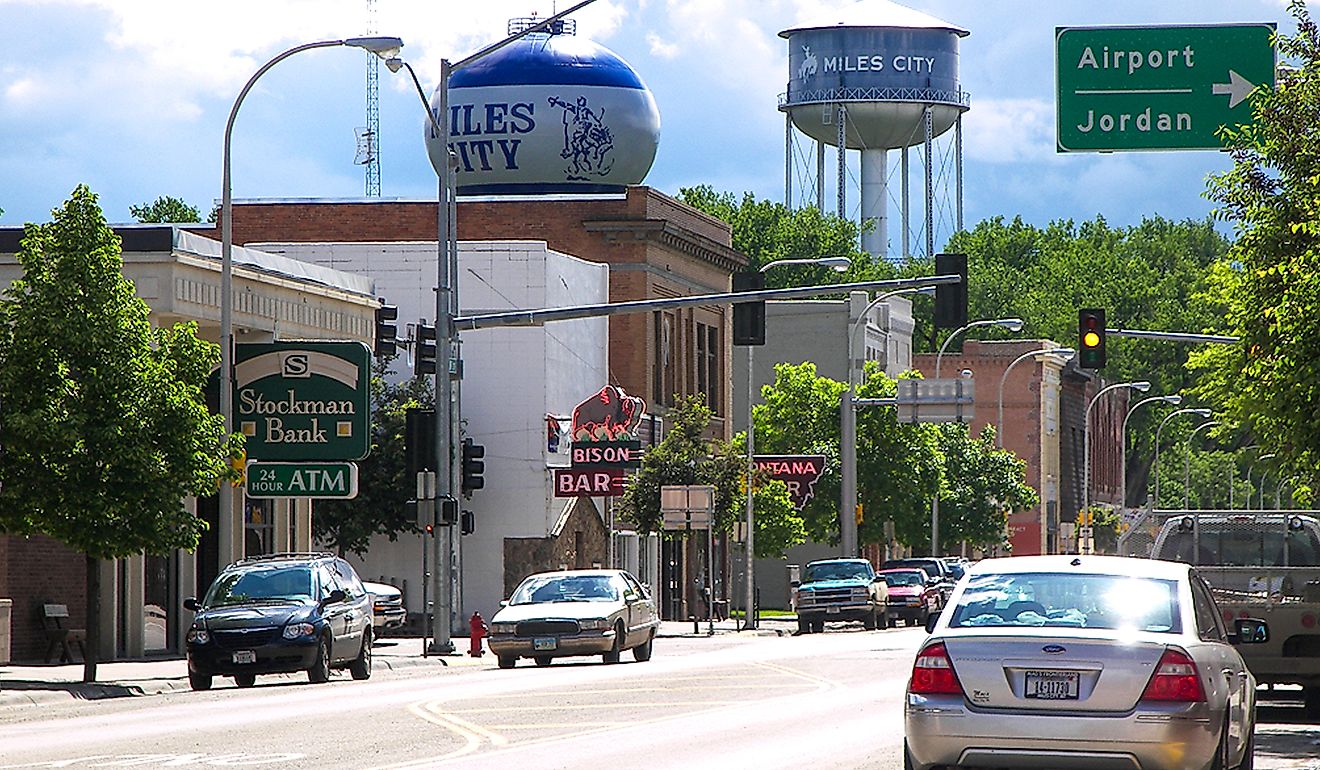
Custer County, Montana, tells a similar story from the other side of the Rockies. When formed, the county was larger than the present state of Pennsylvania, but it has since shrunk to 3,783 square miles, with most residents clustered in Miles City, the county seat and population center. Here, too, there is no public transit in the traditional sense—just the Custer County Transit, an on-demand small bus that serves only the Miles City area unless riders schedule at least 72 hours in advance. A connection point exists in Miles City with Jefferson Lines, an intercity bus service, but that, too, must be booked in advance, leaving no option for spontaneous travel.
For the elderly, the disabled, or anyone without a car, these advance-booking requirements create a transportation schedule dictated not by personal convenience but by bureaucratic lead times.
The Hospital-Run Alternative
Not all counties rely on county-run services. In Holt County, Nebraska, covering 2,417 square miles around the county seat of O’Neill, transportation falls to private and hospital-owned systems: Avera St. Anthony’s system, Avera Creighton Hospital Transit Services, and Red Star Transport. While Avera St. Anthony’s serves mostly the elderly and disabled, it is open to the general public—but every ride across all three systems requires a phone call and scheduled pickup, unlike a public transportation system where one can simply wait at a stop.
A handful of counties in Kansas don’t have public transportation for residents. The systems now are the Four County Mental Health and the Southeast Kansas Community Action Program, and each one requires a scheduled pickup.
Populous Counties Aren’t Immune
The transit gap isn’t limited to remote wilderness. Coffee County, Georgia, home to 42,346 residents across 603 square miles, lacks a standard public transportation system despite Douglas, its county seat, being a metropolitan statistical area. Residents rely on the SGRC Regional Transit, a rural demand-response public transit system available to the general public but requiring 24-hour notice for every trip.
Similarly, Churchill County, Nevada—population 25,851 as of 2025 across 5,024 square miles with Fallon as its seat—offers the Churchill Area Regional Transportation (CART) service, but rides must be booked at least 48 hours in advance. CART does offer trips to Reno and Carson City for a fare, but those, too, require advance booking, meaning a resident cannot decide on a Tuesday to visit family in Reno on Wednesday.
3.2 Percent vs. Zero
To understand how stark this divide is, consider the national picture: according to Demographics Atlas, drawing on U.S. Census Bureau American Community Survey 2020-2024 5-Year Estimates, only 3.2 percent of American workers aged 16 and over commute by bus, subway, rail, light rail, or ferry. In Bronx County, New York, that figure reaches 52.4 percent—the highest in the nation—while Kings County, New York, reaches 46.5 percent and New York County 43.8 percent. At the opposite extreme, numerous counties register at 0.0 percent, including Yauco Municipio, Yabucoa Municipio, and Vega Baja Municipio in Puerto Rico.
The contrast between the Bronx’s dense transit network and White Pine County’s single dial-a-ride line illustrates a country split between mobility haves and have-nots, often along lines of population density and geography that leave rural residents dependent on advance planning for basic movement.
The Daily Math of Getting Around
In these 2,515 counties, the practical stakes are immediate. World Atlas notes that everyday activities—grocery shopping, commuting to work, attending medical appointments—become difficult exercises in planning when every trip requires a phone call days in advance and operates within limited service hours. The long distances between destinations compound the problem, turning what takes minutes in a city into hours of travel in rural America, where a medical appointment might require taking a day off work to accommodate a 72-hour advance booking window.
Demand-response transit does provide an important lifeline, and defenders of the current system note that any service is better than none. But the requirement for 24-, 48-, or 72-hour advance booking effectively excludes spontaneous travel, emergency trips, and the flexibility that fixed-route systems provide in urban areas. These counties highlight the need for more accessible and reliable transportation options across rural America, yet no clear solution has emerged for covering thousands of square miles with sparse populations.
As rural populations age and younger residents leave for cities with better transit, these counties face an open question: whether the current patchwork of scheduled, door-to-door services can sustain communities, or whether the 2,515 counties without traditional transit will need fundamentally different transportation solutions to remain viable places to live and work.
Elected Officials Join Sixth Rally to Demand Columbia Reopen Gates
The Sixth Rally in Three Years Thursday's gathering outside Columbia's 115th Street and Broadway gates marked the sixth...

Democrats Sweep Rhode Island statewide offices and Reject bond
Helena Buonanno Foulkes won the Rhode Island governor's race Tuesday night with more than 57 percent of the...

Pennsylvania Democrats Gain Power to Push Recreational Marijuana Bill in 2027
Pennsylvania could legalize recreational marijuana after Democrats secured a "trifecta" of state power in Tuesday's midterm election, controlling...

Claire Lynn Prepares to Represent Oregon House District 9
"I want there to be an eighth generation Oregonian," Claire Lynn said. The newly elected representative for Oregon...