The Quietest Corners: Six American Towns With Rare Safety Records
Finding a place to call home often involves a delicate trade-off between access, opportunity, and the fundamental desire for safety.
While crime statistics fluctuate across the country, a report from World Atlas highlights six communities that have maintained remarkably low rates of serious violent crime over a five-year period.
These towns—Hanover, New Hampshire; Lake Forest, Illinois; Zionsville, Indiana; Brookings, South Dakota; Peachtree City, Georgia; and Los Gatos, California—are not just statistical outliers; they are places where specific infrastructure and community design appear to foster a tangible sense of security.
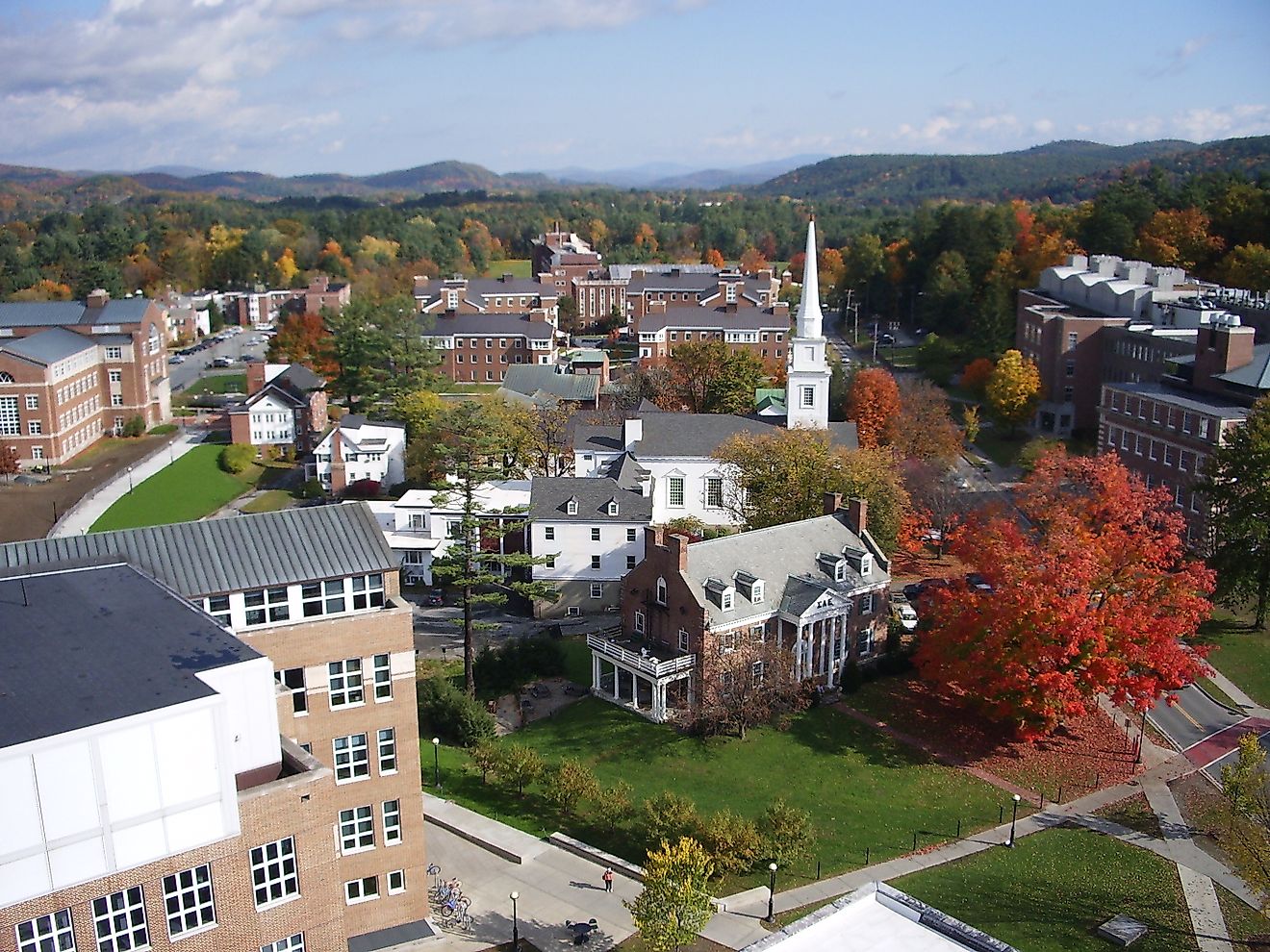
Hanover, New Hampshire, serves as a primary example of this stability. Between 2020 and 2024, the town recorded zero homicides, and its aggravated assault rate remained significantly lower than the already low state average.
This safety record coincides with a town fabric defined by Dartmouth College, which has anchored local life since 1769. The community’s integration with the outdoors, including the Appalachian Trail running directly through downtown, provides a shared space that encourages consistent foot traffic and local interaction.
Infrastructure as a Social Anchor
The layout of these communities often plays a role in their overall character. In Peachtree City, Georgia, the city’s design revolves around 100 miles of multi-use paths.
These trails, which accommodate pedestrians, cyclists, and golf carts, create a network that connects neighborhoods to schools, shops, and parks. This intentional planning helps keep residents engaged with their immediate surroundings, a factor that can contribute to lower crime rates through natural surveillance and community cohesion.
Similarly, Lake Forest, Illinois, utilizes its geography to maintain a park-like atmosphere. The town’s streets were laid out in the 1850s to mirror the natural ravines leading to Lake Michigan.
This commitment to preserving open space, managed through organizations like Lake Forest Open Lands, ensures that the town remains rooted in its natural environment even as it stays connected to the broader Chicago metropolitan area via the Metra commuter line.
Educational and Cultural Institutions Stabilize Safe Towns
Many of the safest towns identified share a common thread: the presence of a major educational or cultural institution. Brookings, South Dakota, home to South Dakota State University, recorded no homicides between 2020 and 2024, with aggravated assault rates staying well below national benchmarks. The university’s influence extends beyond the classroom, with the Children’s Museum of South Dakota and the McCrory Gardens providing focal points for community gathering.
In Zionsville, Indiana, the sense of history and continuity acts as a stabilizer. The town’s brick-paved Main Street and the preservation of local landmarks like the site where Abraham Lincoln spoke in 1861 foster a communal identity that residents actively maintain. As noted in the data, the town recorded only a single homicide over the five-year study period, a figure that remains a small fraction of regional and national averages.
The Reality of Localized Risk
Even in communities with strong safety records, crime is never entirely absent. Los Gatos, California, located in the Santa Cruz Mountains, provides a nuanced look at these trends.
While the town maintains an aggravated assault rate well below the state and national levels, it experienced a single-year spike in homicides in 2023. This data shows why examining trends over a longer horizon is more effective than relying on single-year snapshots, as even the safest towns can see fluctuations.
“Before you settle, visit at different times of day and talk with local police and neighbors. It is also worth checking the latest FBI data for any changes since 2024,” the report advises.
Prospective residents should recognize that these statistics offer a starting point rather than a guarantee. While these towns provide a high quality of life through access to nature, education, and walkable downtowns, the economic and social stakes of relocation remain personal. High demand for housing in safe, well-planned communities often leads to rising property costs, which can inadvertently reshape the demographic makeup of these towns over time.
The longevity of these safety records suggests that community design—ranging from the 1916 planning of Lake Forest’s Market Square to the modern film production jobs at Trilith Studios near Peachtree City—creates a buffer against the volatility seen elsewhere. As these towns continue to balance growth with their established character, they remain models for how deliberate planning can influence the daily experience of safety in America.
Worth a look

South Dakota Voters Reject Amendment I to Protect Medicaid Expansion
South Dakota voters have delivered a definitive message to the state legislature: the current Medicaid expansion program is...

Nebraska Defeats Providence 67-58 as Sandfort Scores 25 Points
Nebraska basketball walked into the Mohegan Sun this Saturday and secured a 67-58 victory over the Providence Friars,...

Leaders Condemn Philadelphia Bike Protest Targeting Six Restaurants
A planned bicycle protest aimed at six Philadelphia restaurants drew condemnation from state and city leaders this weekend,...

Search Oregon Healthcare Providers via CMS NPI Registry
Searching for reliable provider data in Oregon has historically involved using fragmented state databases or cumbersome registry portals....