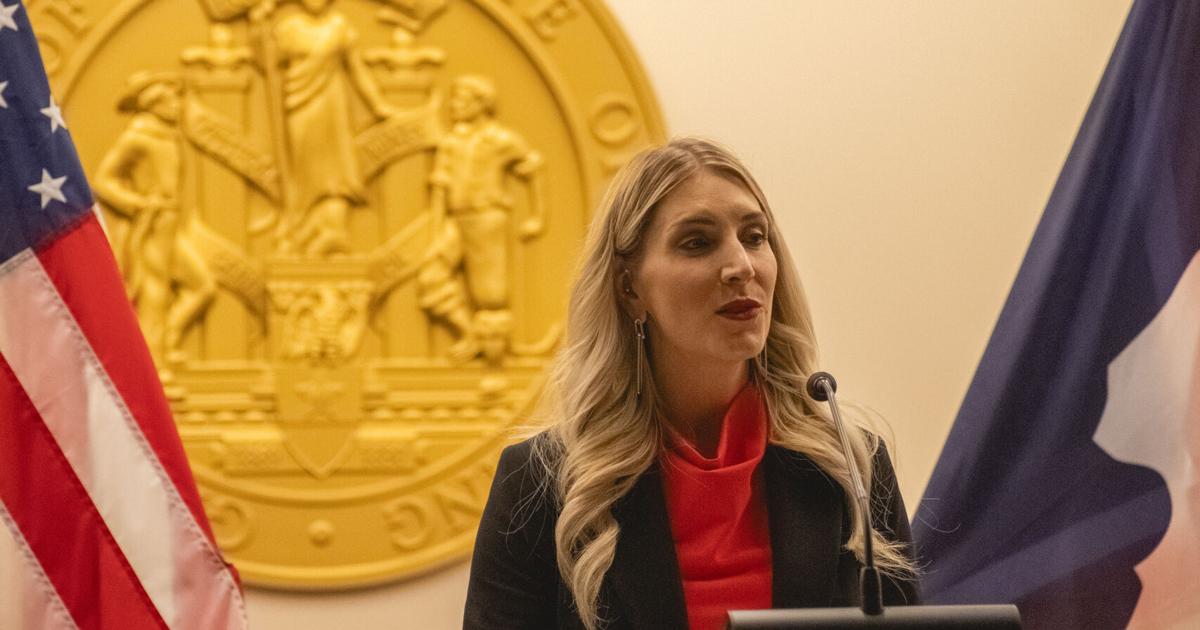
Wyoming students posted their strongest proficiency gains in years as enrollment fell by 1,400 students in a single year.
Wyoming students posted their strongest proficiency gains in years, but the state’s classrooms are emptying out at a rate that has the State Board of Education asking where the children went.
The 2025-26 Assessment, Accountability, State System of Support, and Accreditation report, presented to the board Wednesday by Wyoming Department of Education standards chief Laurie Hernandez, showed math, English language arts, and science scores all climbing roughly four percentage points. Participation hit 99 percent in grades three through ten, back to pre-pandemic levels.
At the same time, enrollment fell by 1,400 students in a single year and has dropped nearly 4,500 since 2019. “We know nationally enrollment is down,” Hernandez told the board, citing declining birth rates as a factor in the lower grades. Board co-Chairman Mark Mathern pressed for specifics on where the students have gone, but the department could not pinpoint migration, homeschooling, or private-school shifts from the assessment data alone.
Every grade gained in math, but middle-school reading stalled
Math proficiency rose in every tested grade, with nearly all surpassing pre-pandemic benchmarks. English language arts improved in every grade except seventh and eighth, where scores were flat; fifth and tenth grades jumped more than three points. Science proficiency also topped pre-pandemic levels across the board, though eighth grade dipped 1.2 percent this year after a 3.6 percent gain last year, while tenth grade surged 4.1 points.

Virtual and charter sectors show divergent gaps
Virtual students lagged sharply behind their in-person peers: 44 percent proficient in ELA versus 57 percent for brick-and-mortar students; 23.4 percent versus 54.9 percent in math; and 34.7 percent versus 52.6 percent in science. Mathern noted the pattern holds nationwide. “I think we know, even nationally, virtual schools perform poorer,” he said. “That’s probably a strong word, but their achievement level is less than brick-and-mortar.”
Charter-school students as a whole sat just below the statewide average in ELA and math but exceeded it in science. Hernandez flagged wide variation between individual charter programs in both size and outcomes.
English learners show varying proficiency levels
Of 2,669 students who took the ACCESS test, 11.5 percent tested proficient and 37.4 percent were classified as making progress. Hernandez said a six-year timeline to proficiency is reasonable for students entering with little English, though prior schooling and first language shift the curve.
Accountability ratings improve; one school’s six-year climb
Accountability director Sean McInerney reported that 62 percent of traditional elementary and middle schools now meet or exceed expectations, up from 58 percent last year. High schools meeting or exceeding expectations held at 44, with only ten not meeting expectations.
The statewide system of support highlighted Carey Junior High in Cheyenne, which spent six years rated “not meeting expectations” before reaching “meeting expectations” this year. Principal Matt Schlagel credited a building-wide goal-setting push: every student targeted a WY-TOPP score higher than their prior year. “I’m just super proud of the students and the work and the ownership and getting them actually wanting to perform well,” Schlagel said.
Superintendent Megan Degenfelder, whose term ends in January, told the Joint Education Committee Tuesday the gains reflect “the strong partnership between the legislative and the executive branch, the hard work of our districts and the systems that we have put in place.”
Data reporting still catching up to virtual enrollment
Mathern asked whether virtual students’ scores roll into their home school’s overall rating. Hernandez said the department receives confidential reports that separate the two groups, but public reporting still has “kinks to work out.”

Celtics Start White, Walsh, George, Tatum, Queta vs Nuggets; Mazzulla Stresses Margins
The Boston Celtics will start Derrick White, Jordan Walsh, Paul George, Jayson Tatum and Neemias Queta against the...

California Water Service Group to Rename to Watermark Utilities Nov. 30, 2026
California Water Service Group announced on Nov. 18 that it will change its holding company name to Watermark...

USDA Proposed Rule Would Cut SNAP for 6.3 Million by Ending Broad-Based Categorical Eligibility
Six point three million people would lose food assistance in 2029 under a USDA proposed rule published November...
NCAA Refuses to Clear Arizona’s RJ Godfrey Despite Court Injunction
Arizona forward RJ Godfrey will not play against No. 3 UConn on Wednesday night after the NCAA refused...