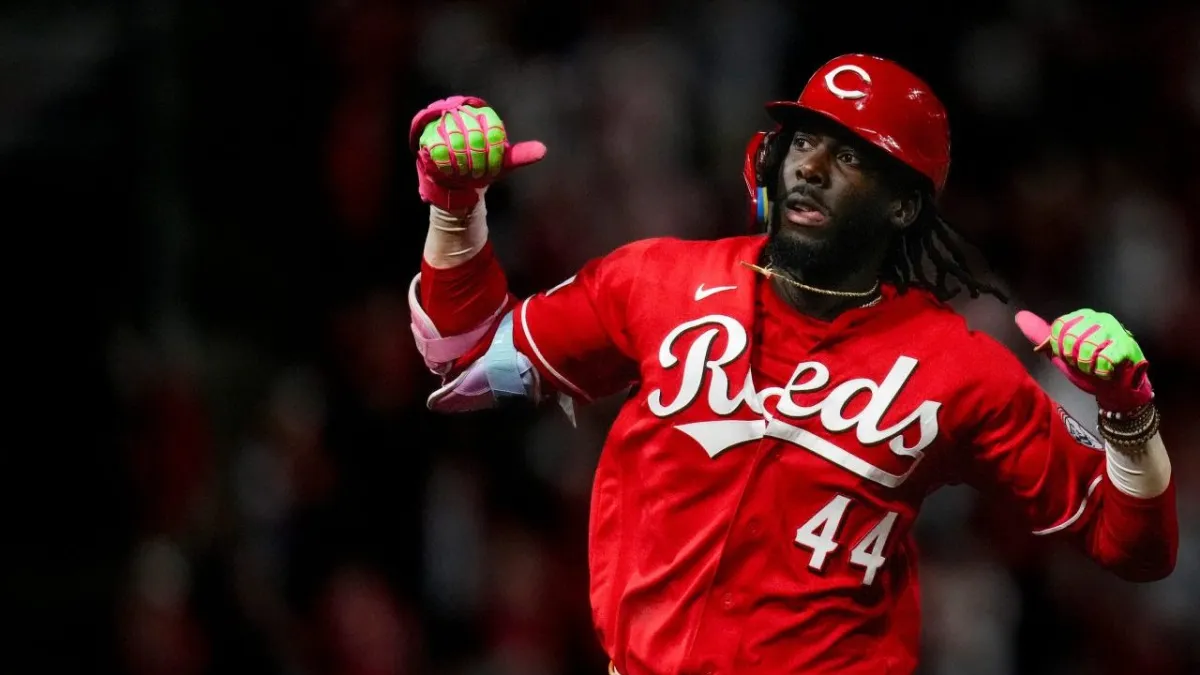
The Boston Red Sox face a high-stakes offseason pursuit of middle-infield power
The Boston Red Sox are staring down a roster construction dilemma that could define the next several seasons of the franchise. Entering the 2026 offseason, the club finds itself with two glaring vacancies: a consistent slugger to anchor the lineup and a reliable replacement for the production provided by Sonny Gray. While free agency remains an option, the front office may find more success navigating the trade market to address these deficiencies.
According to a report from NBC Sports Boston, Chief Baseball Officer Craig Breslow and his staff are expected to aggressively pursue high-profile talent, specifically naming Elly De La Cruz and CJ Abrams as primary targets. This strategy signals a shift toward acquiring established, high-ceiling players rather than relying solely on incremental improvements through the free-agent market.
The pursuit of De La Cruz, the 24-year-old shortstop for the Cincinnati Reds, represents the most ambitious—and perhaps most difficult—path forward. His 2026 campaign was nothing short of electric, producing a .283 batting average, 30 home runs, and 30 stolen bases. However, the cost of such a player is steep. The Red Sox’s ability to facilitate a blockbuster deal was significantly hampered earlier this year when they traded four of their top 10 prospects—RHP Anthony Eyanson, RHP Kyson Witherspoon, OF Enddy Azocar, and OF Harold Rivas—to the Baltimore Orioles to acquire Adley Rutschman.
To entice the Reds, Boston would likely need to part with shortstop Franklin Arias, their No. 1 prospect, alongside other high-value assets like Justin Gonzales, Franklin Primera, or Wilyer Abreu. Even a package of that magnitude may not satisfy Cincinnati’s valuation of De La Cruz.
Comparing the shortstop options on the block
If the path to De La Cruz proves too costly, the Red Sox have other middle-infield profiles to consider. CJ Abrams of the Washington Nationals offers a different kind of impact. Abrams coming off a career-high season in 2026, where he tallied 33 home runs and 106 RBIs. While his offensive production is elite, his defensive metrics present a complication; he finished the season with -17 Outs Above Average and 20 errors.
Acquiring Abrams would necessitate a defensive reshuffle. Boston could potentially move him to second base, allowing Curtis Mead to transition to the designated hitter role, while Arias or Trevor Story would take over at shortstop. This trade-off highlights the central tension in Boston’s decision-making: choosing between pure offensive firepower and defensive stability.

The following table illustrates the statistical profiles of the primary shortstop targets discussed by NBC Sports Boston:
| Player | Team | 2026 HR | 2026 RBI | 2026 SB | Key Note |
|---|---|---|---|---|---|
| Elly De La Cruz | Cincinnati Reds | 30 | 79 | 30 | High-ceiling superstar |
| CJ Abrams | Washington Nationals | 33 | 106 | 34 | Elite power; defensive concerns |
| Jeremy Pena | Houston Astros | 22 | 56 | 12 | Right-handed pop; injury risk |
| Zach Neto | L.A. Angels | 27 | 77 | 24 | High strikeout rate (30.5%) |
Jeremy Pena and Zach Neto represent alternative routes to the right-handed power Boston craves. Pena, the former World Series MVP, offers a polished all-around game, though his injury history remains a factor. Neto, meanwhile, provides significant slugging potential but carries a red flag in his 30.5 percent strikeout rate. For a team looking to stabilize a lineup, the choice between Pena’s reliability and Neto’s raw power is a calculated gamble on long-term stability versus immediate impact.
Addressing the rotation and the search for a veteran arm
While the offensive overhaul captures the headlines, the Red Sox rotation requires urgent attention following Sonny Gray’s departure. The search for a replacement spans from “buying low” on injured talent to acquiring proven veterans.
Hunter Greene of the Cincinnati Reds offers a high-upside, long-term play. Although his 2026 was marred by elbow injuries and Tommy John surgery—which will sideline him through 2027—his previous seasons suggest elite potential. In 2025, he posted a 2.76 ERA, and in 2024, he earned All-Star honors with a 2.75 ERA. While he won’t solve the immediate need for a 2027 starter, he could become a cornerstone of the rotation once healthy.
For more immediate stability, the front office could look toward Joe Ryan of the Minnesota Twins or Jacob deGrom of the Texas Rangers. Ryan, who posted a 3.79 ERA in 2026, provides a reliable mid-rotation presence and is scheduled to become a free agent in 2028. DeGrom, at 38, represents a similar profile to the aging Sonny Gray move Boston executed last season. Though his days as a perennial Cy Young candidate may be behind him, his 2026 ERA of 4.20 and high strikeout rate (201 SO in 162.2 innings) would provide a veteran right-handed anchor to a rotation currently heavy on left-handers.
There is also the possibility of a “change of scenery” move for Ketel Marte. After an inconsistent year in Arizona that included an unexplained absence in August, Marte could serve as a starting second baseman and a primary bat in the Boston lineup, allowing Mead to move to DH.
The success of this offseason will likely hinge on whether the Red Sox are willing to sacrifice the depth of their farm system to secure a transformative superstar. The cost of greatness is rarely just financial; in the modern MLB, it is measured in the future potential of the very prospects meant to sustain the club.
Related reading

Central Catholic Secures Top Seed in Tournament Bracket
Central Catholic and Brookline lead the MIAA Division 1 Volleyball seeds Central Catholic enters the 2026 MIAA Fall...

How to Dissolve an LLC or Corporation in Louisiana
To dissolve an LLC or corporation in Louisiana, owners must follow specific statutory procedures that include formal approval,...

Kansas 2026 Midterm Elections: Key Races, Local Issues, and Voting Guide
Kansas voters weigh gubernatorial race and local bond issues on Election Day “In ’24, for the first time...

Dan Campbell Provides Positive Injury Update on Jack Campbell
Jack Campbell shows signs of improvement following on-field injury Detroit Lions linebacker Jack Campbell is showing signs of...