
A $14 million wetland system completed in 2012 may no longer be necessary for Albany’s wastewater management, raising sharp questions about the future of the shuttered facility and ongoing litigation.
Two distinct takeaways emerged from a discussion of wastewater at a Wednesday meeting of the Albany City Council, according to a report by hh-today.com.
First, the city is actively working to persuade the state Department of Environmental Quality to permit the resumption of Talking Water Gardens as part of its treatment system before water discharges into the Willamette River. Second, the wetlands themselves might not actually be required at all.
The council on Wednesday approved an agreement between Albany and ATI allowing the Millersburg metals company to continue discharging treated industrial wastewater through the city’s diffuser pipe in the river. Wastewater is regulated by the state under the National Pollutant Discharge Elimination System, or NPDES permits.
A staff memo on the new agreement outlined the shift in regulatory oversight. “Effective November 1, 2026, ATI Millersburg will discharge through Albany’s diffuser under an individual NPDES Permit issued by DEQ, at which point Albany no longer regulates the facility’s discharge,” the memo said, as reported by hh-today.com.
The combined effluent was previously routed through the Talking Water Gardens treatment wetland, which currently lacks a DEQ permit. ATI Millersburg will continue to discharge directly to the Willamette River through the city’s diffuser while Albany works with the state to modify its NPDES permit specifically for the Albany-Millersburg Water Reclamation Facility effluent.
Cooling the effluent from the sewage treatment plant was the core reason Talking Water Gardens was built in the first place. A new Albany NPDES permit took effect on April 1, imposing specific limits on the heat load permitted to enter the river.
Wastewater Superintendent Contrail Smith told the council on Wednesday that the heat load limit has not been exceeded since the new permit took effect. That operational reality prompted a broader question from observers about the point of spending resources to reactivate a site that has been shut down since December 2024.
When Councilman Michael Thomson brought up Talking Waters during the meeting, Public Works Operations Manager Kristin Preston advised the council against discussing the topic due to continued litigation, hh-today.com reported. That legal battle stems from a lawsuit Albany filed in 2017 against the engineers who designed Talking Water Gardens, seeking millions of dollars in damages.
The Albany-Millersburg Water Reclamation Facility was constructed jointly by the two cities and began operations in 2009. Talking Water Gardens, completed in 2012, provides additional natural treatment to remove nutrients and lower the temperature of the facility’s effluent before it reaches the Willamette River.
“Now that cooling through the wetlands is not necessary, or required even under the new permit, and since ATI wastewater won’t be routed through the wetlands even if they are reactivated, what’s the point of continuing that suit?” hh-today.com asked in its review of the proceedings.

Port Discovery Hosts Business Breakfast on Play, AI, and Future Workforce Development
"Right now, this space is filled with some of Baltimore’s most accomplished business and civic leaders," said Chad...
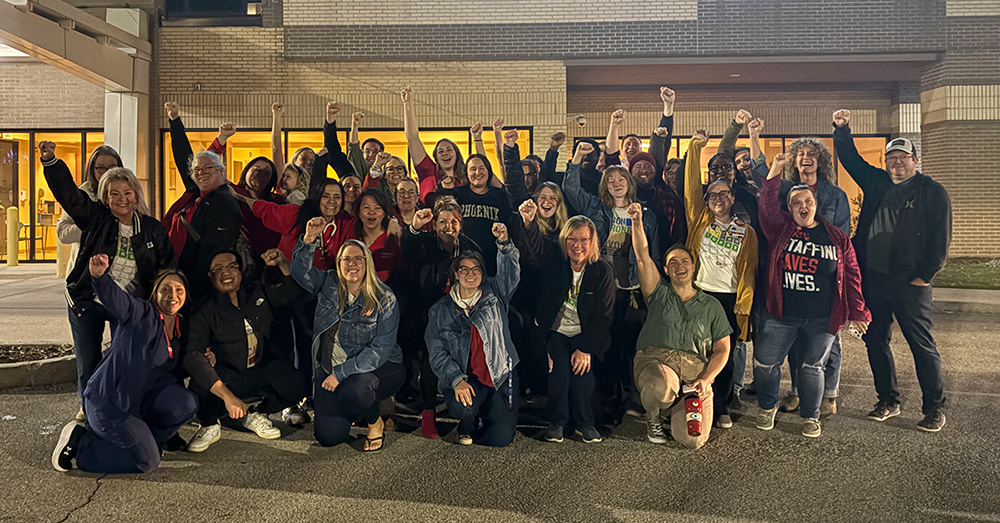
CommonSpirit Hixson Nurses Vote to Join National Nurses Organizing Committee
Nurses at CommonSpirit Memorial Hospital Hixson voted 59 percent in favor of forming a union, joining the National...

Georgia Game Marks End of Era Before $350M Renovation Forces Reseating
Andy Delaney will sit in Section 3, Row 13 on Saturday night waiting for a picture as a...

Gerald “Gerry” Guthmiller, Vietnam Veteran and Hall of Fame Musician, Dies at 79
Gerald "Gerry" Guthmiller, a longtime Jamestown resident, musician, and veteran, passed away at the age of 79 on...