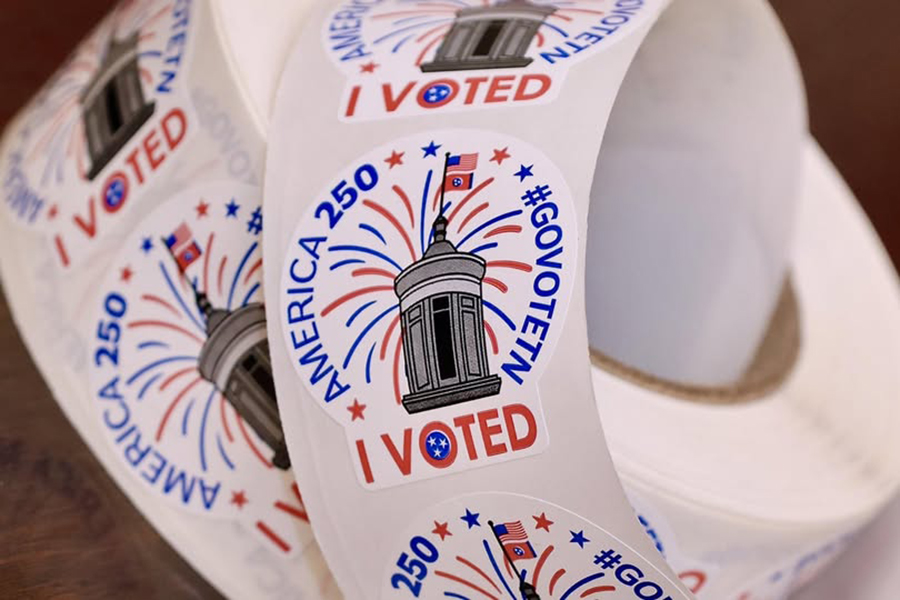
Tennessee municipalities shift leadership in 209 local races
Voters across 209 Tennessee municipalities went to the polls on November 3, 2026, to decide local leadership and several high-stakes community referendums.
The local elections, held in conjunction with state and federal general elections, resulted in a wave of new faces for city commissions and mayoral offices throughout the state, according to reports from ttc.tml1.org.
The results reflect a significant period of transition for many towns. While several incumbents successfully defended their seats, many municipalities saw newcomers unseat sitting officials or fill vacancies left by those who chose not to seek re-election.
Voters decide on liquor laws and taxation across municipalities
Beyond the race for office, 19 referendums were held across 15 municipalities, touching on sensitive issues like liquor laws, taxation, and city charters. In Brighton, voters sent a clear message regarding local commerce; they approved measures to allow retail package stores and legal premises consumption, but rejected a proposed sales and use tax increase.

Liquor-related decisions were a recurring theme in several communities. Wartrace considered the implementation of liquor-by-the-drink, while Brighton and Harrogate voted on whether consumption should be permitted on premises. Additionally, residents in Brighton, Gainesboro, Lenoir City, and St. Joseph weighed in on whether wine should be available in retail stores.
Other legislative shifts were on the ballot as well. Voters in Crossville considered a property transfer, while East Ridge, Knoxville, and Memphis looked at charter amendments. In Mt. Juliet and Red Bank, the focus turned to home rule amendments, and Walden residents voted on a bond referendum.
New leadership emerges in key cities
In Clarksville, the mayoral race saw a significant change. Mark Riggins secured the seat after defeating Aldermen Wanda Smith and Brian Zacharias. Riggins earned 16,092 votes, while Smith received 15,082. In the Ward 1 City Council race, newcomer Sabrena Gillespie defeated Larry Allen and Adolph Dagan to take the seat previously held by Zacharias.
Bristol also experienced a shift in its governing body. Three newcomers are set to join the Bristol City Council following the departure of incumbent Kelly Graham. Andrew Meyer won the East District seat with 3,562 votes, defeating Wayne Hayton. In the West District, James “Jay” Kyle unseated incumbent Lea Powers with 3,523 votes to 3,107. David E. Warren ran unopposed for the South District seat.
The following table details specific results from several municipal races across the state:
| Municipality | Office | Winner | Status | Votes Received |
|---|---|---|---|---|
| Adamsville | City Commission | Wesley Rainey | Newcomer | 325 |
| Adamsville | City Commission | Kevin Howell | Incumbent | 318 |
| Alcoa | City Commission | Dyran Bledsoe | Newcomer | 1,483 |
| Athens | City Council | Abby Burke Carroll | Newcomer | 1,684 |
| Atoka | Mayor | Barry L. Akin | Incumbent | 1,664 |
| Bartlett | Mayor | David Parsons | Incumbent | 16,662 |
| Bruceton | Mayor | Brad Burley | Challenger | 211 |
Stability and turnover in smaller towns
While larger cities saw intense competition, many smaller municipalities experienced high levels of incumbency or unopposed races. In Adams, Robert Wayne Adams was re-elected to the Adams City Commission with 146 votes without facing an opponent. Similarly, in Allardt, Mayor Yvonne M. Gernt and Alderman William Billbrey both ran unopposed.
In contrast, some smaller towns saw decisive shifts. In Ardmore, Alderman Jason Sherman unseated incumbent Mike Magnusson for the mayoral seat, winning 197 to 182 votes. Big Sandy also saw a change in leadership as Alderwoman Becky Belyew Wright defeated incumbent John N. Clement III for the mayor’s office, earning 88 votes to his 63.
In Bluff City, Michelle Roberts unseated incumbent Lori Stanton to become mayor, winning the seat with 227 votes against Stanton’s 196. Meanwhile, in Bruceton, Brad Burley successfully challenged incumbent Robert T. Keeton III for the mayoralty, earning 211 votes to Keeton’s 114.
The diverse range of outcomes—from the massive margins in Bartlett to the razor-thin margins in Ardmore—highlights the varying levels of civic engagement and political volatility across Tennessee’s local government landscape.
Worth a look
- Rhode Island Energy to Launch Expanded Electric Bill Discounts for Low-Income Customers
- Salem Academy Students Explore Diverse Careers During Innovation Days
- Thick fog clings on across UK with commuters warned to expect disruption (newsarchyuk.com)
- ICJ's Myanmar Judgment Nov. 19: Three Outcomes and What Each Would Order (daybreakwire.com)

Rhode Island Energy to Launch Expanded Electric Bill Discounts for Low-Income Customers
Rhode Island Energy will launch an expanded discount program for low-income customers this coming January, according to reports...
Salem Academy Students Explore Diverse Careers During Innovation Days
Salem Academy students connect classroom lessons to local industry Students at Salem Academy recently moved beyond their traditional...

Alejandro Dylan Rivera Pleads Guilty to Assault with Intent to Murder
An 18-year-old Tahlequah resident faces up to 20 years in federal prison after pleading guilty to a violent...

New Renderings Reveal Mixed-Use Project at 1490 McDonald Avenue
The proposed height for the development at 1490 McDonald Avenue in Brooklyn has been significantly reduced, according to...