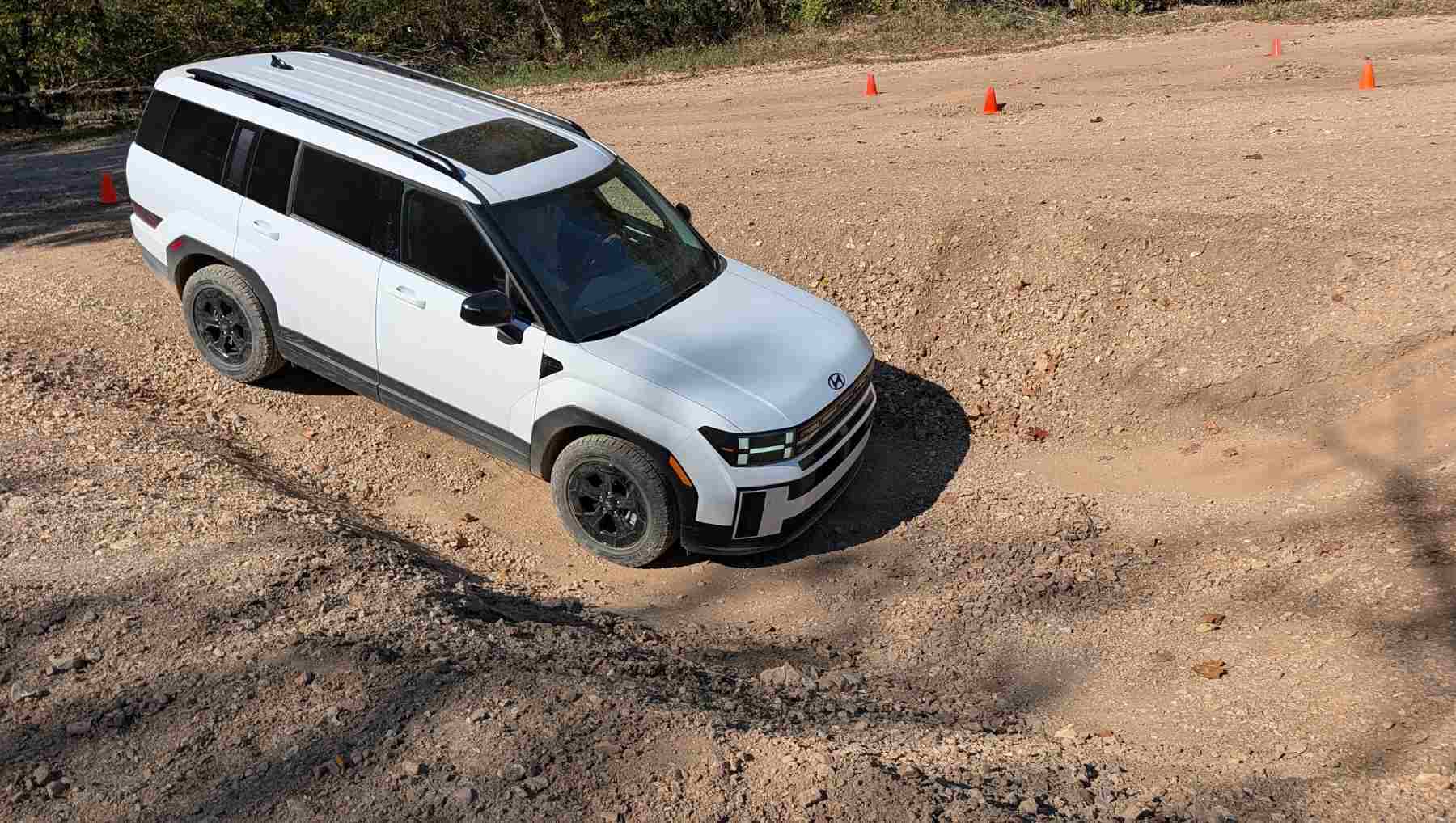
Hyundai Sent Two SUVs to a Missouri Off-Road Ranch, and the Smaller One Stole the Show
When Hyundai invited automotive journalists to Rush Springs Ranch in southern Missouri to test its XRT lineup, the expectation was straightforward: the three-row Palisade would dominate the trails while the two-row Santa Fe played supporting role. AutoNotion reported that the reality turned out to be far more interesting. The Santa Fe, a mid-sized SUV that most buyers picture cruising suburban streets, climbed gradients that would make a Ford Bronco grunt, rode the walls of a dirt bike track, and casually dipped into a vehicle-deep hole without breaking a sweat.
This wasn’t a fluke of good conditions. The AutoNotion reviewer put both the Palisade XRT and Santa Fe XRT through what they described as one of the most intense off-roading sections they had ever subjected a unibody vehicle to, noting that the Korean manufacturer rolled the dice by pushing the SUVs to their actual limits rather than staging a gentle demo.
From Appearance Package to Actual Capability
The XRT badge has undergone a significant transformation since its introduction. MotorTrend reported that when XRT launched in 2022 on the Tucson, it was essentially an appearance trim that added zero actual capability—just some rugged-looking styling. By 2027, the trim has evolved into a legitimate all-terrain setup featuring all-terrain tires, a lifted suspension, upgraded shocks, tow loops, and a limited-slip differential.
Hyundai’s push to enhance the XRT line is partly strategic, informing development of the automaker’s upcoming body-on-frame platform. MotorTrend noted that a pickup truck built on this architecture is confirmed, and an SUV previewed by the Boulder concept seems likely to follow. For now, both the Palisade and Santa Fe remain unibody vehicles, which means they are not built for the extreme rock crawling of Moab, but they handle mild to moderate off-roading with surprising competence.
Hyundai is working to make XRT serious. The Palisade XRT Pro and Santa Fe XRT show where it’s at in its fight to take on Subaru Wilderness, Honda TrailSport, and Toyota TRD. https://t.co/UyGtYYT8Fs
The Numbers Don’t Tell the Whole Story
On paper, the Palisade XRT Pro holds the advantage. It offers 8.4 inches of ground clearance compared to the Santa Fe’s 8.3 inches—a negligible 0.1-inch difference that both achieve through factory lifts of roughly one inch over their non-XRT counterparts. The Palisade also boasts superior approach and departure angles at 20.5 and 22.4 degrees respectively, versus the Santa Fe’s 19.3 and 21.8 degrees.
But the Santa Fe fights back where it counts. Its shorter wheelbase gives it a better breakover angle of 19.1 degrees, compared to the Palisade’s 18.8 degrees. During the Missouri test, this translated into real-world agility; the Santa Fe proved more maneuverable in the narrow, tree-lined sections of the Jeep Trail that formed the exit from the ranch.
After spending a day with the 2026 Santa Fe XRT and 2026 Palisade XRT Pro off-roading in rural Missouri, I'm not totally sure Hyundai is all the way there yet. pic.twitter.com/qoiIzc3Bi3
The Palisade’s naturally aspirated V-6 requires revs to make power, making smooth, consistent torque delivery difficult at low speeds without a low-range gearbox. The Santa Fe’s smaller turbocharged inline-four, however, produces torque closer to idle, giving it the low-speed precision to crawl over obstacles and push up inclines that the larger SUV struggled to match smoothly.
Where the Santa Fe Falls Short
The Palisade maintains its edge in technology and protection. It features an electronic rear limited-slip differential that the Santa Fe lacks, along with more developed trail modes including a dedicated trail camera and surround-view camera system. AutoNotion said the Santa Fe lacks cameras, which makes driving in confined areas without a spotter much harder.

The Palisade’s armored skid plate also proved its worth during the two-day test, showing visible wear from the abuse but successfully protecting the vulnerable underbody components. Both vehicles were asked to use “sand” mode on the trails, which adjusts power distribution, throttle response, and wheel spin, though the reviewer accidentally ran one section in standard drive mode and the vehicle still handled it without issue.
Who Should Actually Buy These?
The Palisade offers 46.3 cubic feet of cargo space behind the second row and 86.7 cubic feet behind the first row, while the Santa Fe provides 40.5 and 79.6 cubic feet respectively. Both offer five-year/unlimited-mile warranties, though the hybrid powertrains available on both carry seven-year/unlimited-mile coverage on hybrid components.
Fuel economy remains a strong suit for both, particularly in hybrid configurations. The AutoNotion columnist emphasized that while the XRT trims significantly boost off-road ability, buyers should honestly assess how often they will actually leave the pavement. The Calligraphy trim of both vehicles offers superior comfort, better styling, and improved fuel economy for daily driving. If the dirt roads appear only once a month in summer, the more comfortable daily driver makes more sense. But for those living rurally or regularly dealing with gravel roads and forest trails, the XRT’s capabilities are genuinely worth considering.
Hyundai appears to be listening to enthusiasts who want more. The company has suggested upcoming updates like a locking differential and a stronger aftermarket network for modifications—but these could need a larger XRT owner base to create demand. For now, the Missouri test proved that Hyundai’s family SUVs can handle far more than their showroom polish suggests.
Worth a look

AG Hanaway settles Jackson County tax dispute and defends Homestead Credit
Missouri Attorney General Catherine Hanaway announced on Wednesday that her office had won two significant legal battles over...
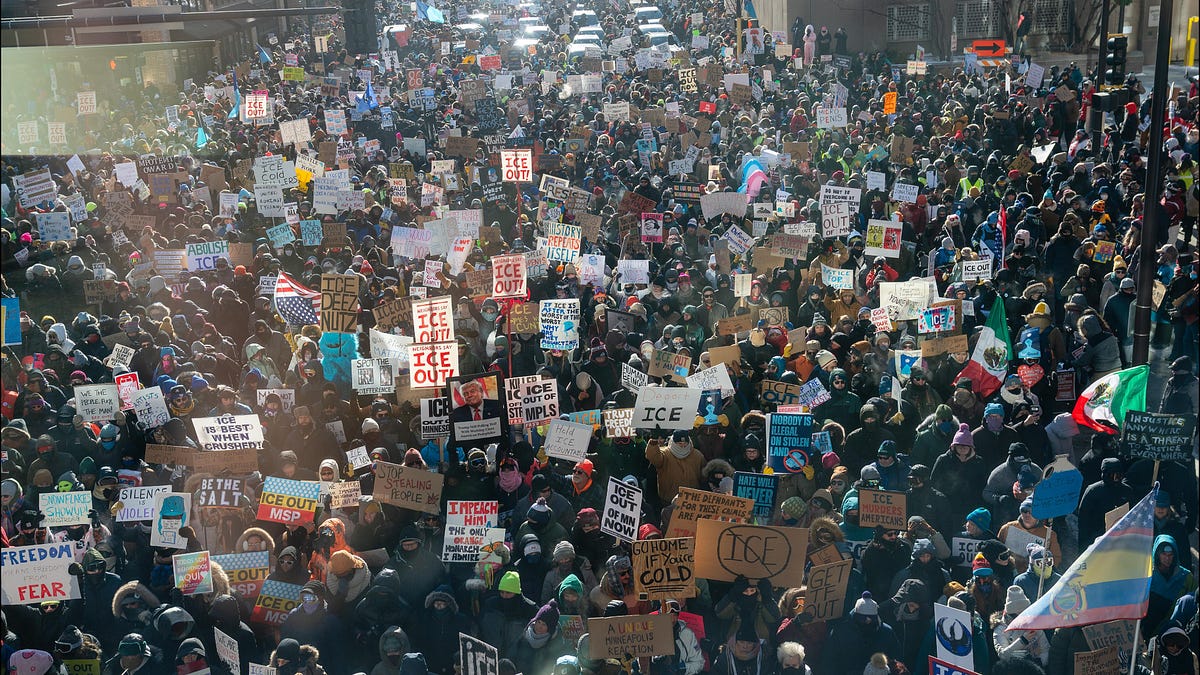
Minneapolis ICE Protests Spark Nationwide Backlash Against Trump Administration in 2026
Democratic Midterm Sweep Entrenches Capitol Hill Power, Traced to Minneapolis Protests Last night's elections delivered a decisive rebuke...

Mississippi Senate race still unresolved after shockingly close Democrat challenge
Democrats have already secured control of the U.S. Senate in the 2026 midterms, but the size of their...

Michigan Voters Pass Money Out of Politics Initiative, Reject Constitutional Convention
Michigan voters on Tuesday overwhelmingly approved a ballot measure barring regulated utilities and large government contractors from spending...