
“We can not be satisfied with a ‘meets expectations’ designation,” Milwaukee Public Schools Superintendent Brenda Cassellius told WPR on Tuesday, as the district moved from “meeting few expectations” to “meeting expectations” on the latest state report cards.
The Wisconsin Department of Public Instruction released its annual accountability ratings Tuesday, showing 95 percent of the state’s 377 public school districts earned three, four or five stars — meaning they met, exceeded or significantly exceeded expectations. No district received the lowest one-star rating, the same as 2024-25, according to the Department of Public Instruction.
Yet the headline numbers mask a stubborn reality: 48 percent of students in grades three through 11 were proficient or above in reading and 49 percent in math, figures DPI spokesperson Chris Bucher said should be used together with report card data to “paint a broader picture of student achievement.”
Milwaukee Public Schools, the state’s largest district, nudged its overall score to 60.6, up one point from the previous year, enough to shift from “meeting few expectations” to “meeting expectations.” The district scored the same or better in academic growth than nearly three-quarters of districts statewide. Still, 40 MPS schools remain rated “meets few expectations” and 36 “fails to meet expectations.”
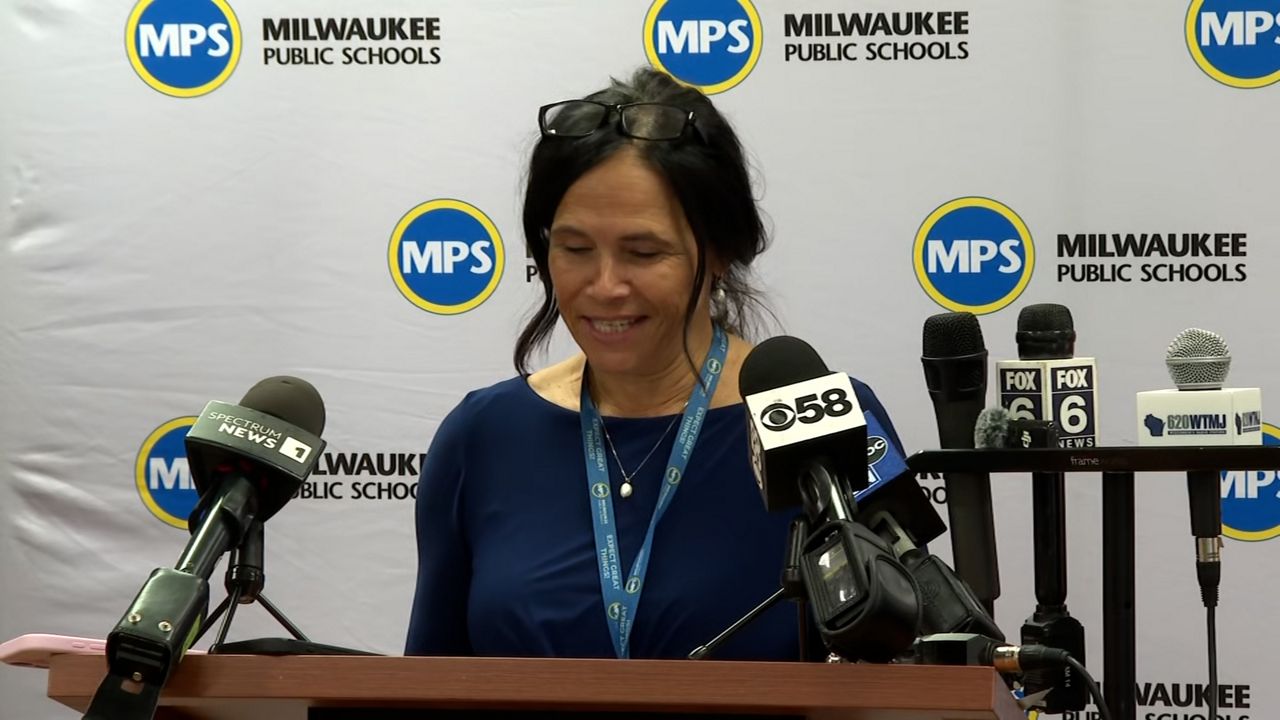
“This progress shows that we are on the right path,” Story Elementary Principal Chareese Morris said. “We’re doing the right thing, and the teachers’ hard work is really, really paying off.”
Cassellius credited a renewed focus on early literacy and a new literacy curriculum for high schoolers for this year, but warned the district serves “some of the most vulnerable kids in all of the state of Wisconsin and particularly Milwaukee,” often in buildings 85 years old.
Among Wisconsin’s three largest districts, Madison Metropolitan scored 70.8 — corrected from an earlier 66.8 — while Green Bay Area Public Schools posted 63. Madison saw one school increase by five points, a gain spokesperson Edell Fiedler said the district will study to replicate. Green Bay has four schools rated “fails to meet expectations.”
The report cards measure four priority areas: achievement, growth, target group outcomes and on-track to graduate. A methodology approved by a GOP-led state Legislature and signed into law by former Gov. Scott Walker weighs student achievement and growth more than student performance in calculating overall scores in low income districts. Critics argue the methodology makes it impossible for parents to make apples-to-apples comparisons between districts across the state.
Of the 446 schools in the Private School Choice Program for 2025-26, 81 percent — or 156 schools — reached the met, exceeded or significantly exceeded expectations categories. However, 253 schools — 57 percent — lacked scores because of insufficient data, usually stemming from small enrollments or low participation by Choice students on state tests.
DPI data indicate roughly 26 percent of eligible private school students skipped the English language arts or math sections of the statewide Forward Exam last year.
Bucher said the report-card data underpins DPI’s 2027–29 budget request, which seeks $2.75 billion in new K-12 aid, revisions to the funding formula to direct more money to districts with higher-needs populations and lower property wealth, and roughly 100 literacy coaches statewide. “In order to really help have those targeted interventions, the state needs to invest in it,” Bucher said.
Worth a look

KSL: 5 Traits to Look for When Choosing a Financial Advisor
Fifty-seven percent of Americans say they have made regrettable financial decisions based on misleading online information, a 2025...
Cheyenne MPO Adopts Connect 2045, Enabling Federally Funded Projects
Cheyenne’s newest long-range transportation blueprint is officially on the books, unlocking federal dollars for projects that will shape...

Historian Stephen Wise Details Charleston’s 587-Day Siege in New Book “Smoke on the Battery
Historian Stephen Wise details Charleston's 587-day siege in his new book "Smoke on the Battery." Nearly 46,000 shells...

Vermont Agency: Tourism Shrank $80M as Canadian Visits Fell 28%
Vermont's tourism economy shrank by $80 million last year as Canadian visits fell 28 percent, the Vermont Agency...