Cheyenne’s newest long-range transportation blueprint is officially on the books, unlocking federal dollars for projects that will shape the capital city’s streets for the next quarter-century.
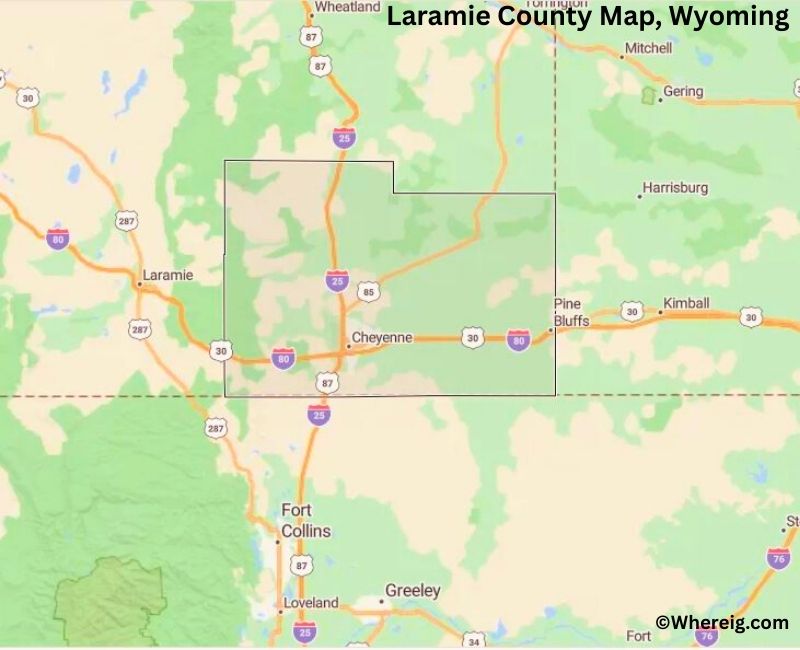
The Cheyenne Metropolitan Planning Organization adopted Connect 2045 in December 2020, replacing a plan last updated in 2014. The document identifies the transportation investments necessary for Cheyenne and Laramie County to thrive through 2045, covering every mode of travel from freight and cars to bikes, pedestrians and transit.
With the plan now formally approved, the City of Cheyenne, Laramie County and the Wyoming Department of Transportation can begin planning, design and construction on the federally funded projects listed inside it, the MPO announced.
“Connect 2045 is the Cheyenne area’s new Long Range Transportation Plan for all modes of travel, including car, bike, pedestrian, transit, and freight,” the organization said. “This plan is designed to define the region’s transportation strategy for the next five to 25 years.”
Alongside the transportation plan, the City and County adopted an updated Future Land Use Plan. The two documents have been combined into a single map that aligns where growth is expected with the roads, trails and transit needed to serve it.
The integration moves away from the 2006 PlanCheyenne framework, which won awards for its community-driven approach but kept land use and transportation separate. The new combined map is intended to give developers, planners and the public a clearer picture of how growth and mobility intersect.
The plan rests on a baseline of community workshops, demographic and growth trends, commute patterns, roadway data and an inventory of existing bicycle and pedestrian infrastructure. A project and policy review rounded out the analysis before the MPO finalized the project list.
Residents who want to review the workshop presentations or the executive summary of the original PlanCheyenne can find them through the MPO’s online archive.
Project-level work — environmental review, design, right-of-way acquisition and construction — will now move forward on the federally funded portions of the plan. The MPO, housed at 2101 O’Neil Ave., Room 304, remains the point of contact for questions at (307) 638-4308.
The plan was adopted in December 2020 and will guide regional transportation decisions through 2045.
Worth a look

Judge Clears RJ Godfrey to Play for Arizona vs. No. 3 UConn After Eligibility Ruling
Pima County Superior Court Judge Jeffrey Bergin granted a temporary restraining order and preliminary injunction Tuesday that clears...

Mary Peltola Unseats Dan Sullivan, Becomes First Alaska Native to Win Senate Seat
On the night of November 3, while the lower 48 states absorbed a Democratic wave, Mary Peltola bounced...

Ricardo Adelso Colato Salamanca Charged in Cellmate’s Death at Montgomery County Jail
A second murder charge now hangs over Ricardo Adelso Colato Salamanca, the man already awaiting trial in his...

KSL: 5 Traits to Look for When Choosing a Financial Advisor
Fifty-seven percent of Americans say they have made regrettable financial decisions based on misleading online information, a 2025...