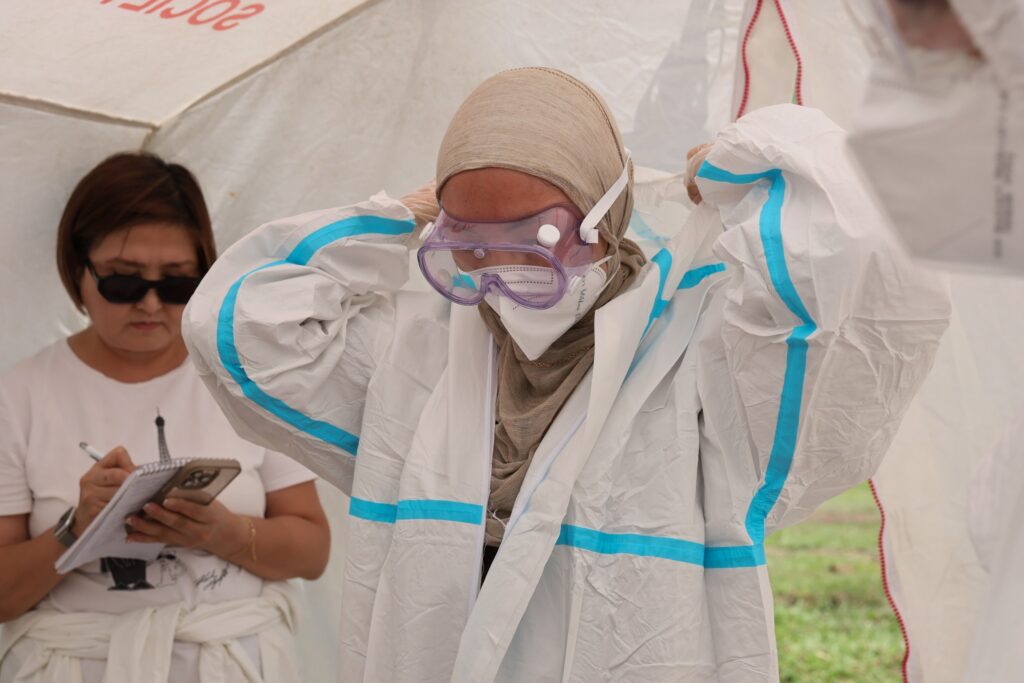
Kyrgyzstan has conducted large-scale, interagency public health emergency exercises in Cholpon-Ata as part of its preparations for the sixth World Nomad Games, scheduled for August 31 to September 6, 2026. Authorities identified health security as a primary component of the planning for the event, which is expected to be the country’s largest international gathering of the year.
Simulation Focus and Scenarios
The two-day simulation exercises, held on July 14–15, brought together representatives from the Ministry of Health, various government agencies, healthcare institutions, the World Health Organization (WHO), and international development partners. The drills were designed to test the national healthcare system’s capacity to respond to public health emergencies under conditions intended to mirror a real-world crisis.
Participants focused on a scenario involving a hypothetical outbreak of an acute intestinal infection and cases of an unidentified illness. According to the Ministry of Health, the exercises covered several critical response stages, including:
- Early threat detection
- Laboratory diagnostics
- Interagency coordination
- Anti-epidemic measures
- Medical assistance
- Crisis communication
Practical field exercises were conducted at the Kyrchyn Gorge, a primary venue for the upcoming Games, and at the infectious diseases department of the Issyk-Kul District Center for General Medical Practice.
Evaluating Emergency Response Systems
Following the drills, experts conducted a debriefing to evaluate the performance of all participating services, identify systemic strengths, and highlight areas requiring further improvement. Gulbara Ishenapysova, Kyrgyzstan’s Deputy Minister of Health and Chief State Sanitary Doctor, stated that the exercises provided an opportunity to assess the national emergency response system under realistic conditions. She noted that while the level of interaction between services was high, the drills helped identify specific issues that require additional work to strengthen the country’s response to public health challenges.
Acting WHO Representative in Kyrgyzstan Zhanara Bekenova emphasized the necessity of these simulations. She stated that while it is impossible to predict all emergencies, such exercises are essential for evaluating the effectiveness of coordination, information sharing, and decision-making mechanisms ahead of major international events. The WHO expressed its appreciation for Kyrgyzstan’s efforts to strengthen its national preparedness and response capacity.
Strategic Planning and Future Improvements
The Ministry of Health plans to use the results of the debriefing to prepare formal recommendations aimed at improving interagency cooperation and the readiness of healthcare institutions. These recommendations will also address revisions to national public health emergency response plans and improvements to risk communication strategies.
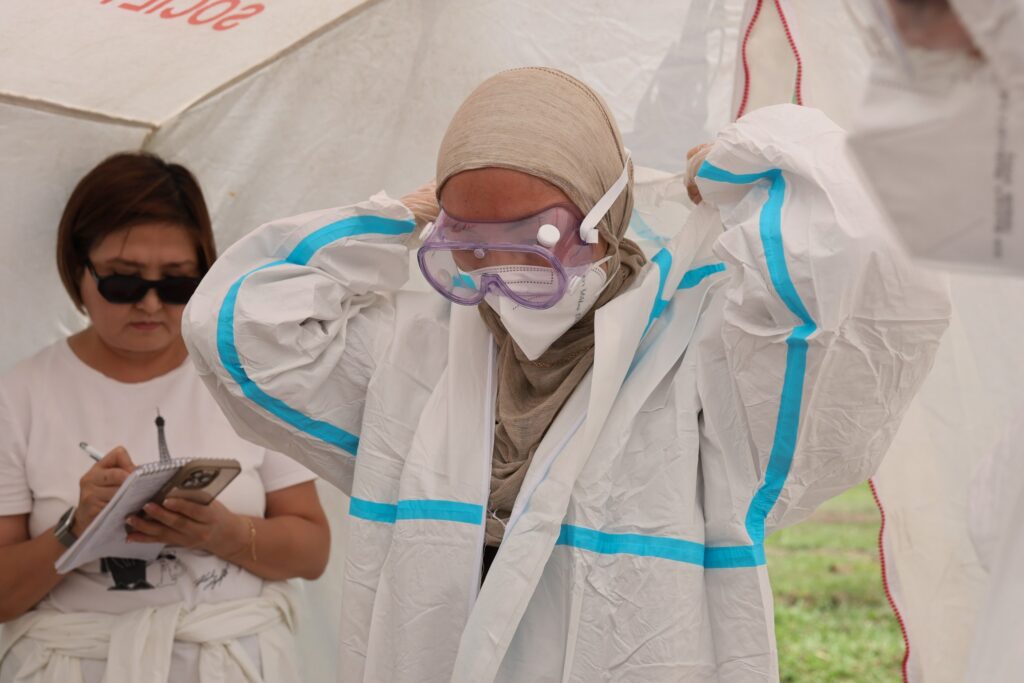
The preparation for the 2026 World Nomad Games—which marks the event’s return to Kyrgyzstan—has included broader strategic planning. Earlier this year, from June 1 to 3, a Kyrgyz delegation participated in a meeting of the Collective Security Treaty Organization (CSTO) member states on biological security in Saratov, Russia. Kyrgyz specialists utilized that opportunity to practice emergency response algorithms and gain experience in utilizing mobile biological laboratories. Since 2015, Kyrgyzstan has received six mobile laboratories with support from the Russian government, which are intended to provide autonomous testing capabilities using advanced diagnostic methods.
Scale of the 2026 World Nomad Games
The upcoming Games are expected to be a significant logistical and operational undertaking for Kyrgyzstan, serving as both a sporting event and a platform to promote the country’s nomadic cultural heritage and tourism. The event is projected to draw a substantial international and domestic audience:
| Category | Expected Participation |
|---|---|
| Participating Countries | More than 95 |
| Delegation Members (Sports, Culture, Science) | More than 3,000 |
| Media Representatives | More than 600 |
With thousands of participants and media personnel expected to converge on the region, officials maintain that the insights gained from the July exercises are critical to ensuring the safety and health security of all attendees throughout the duration of the Games.
Find more reporting in our Health section.
Related reading

DNA Damage Response and Repair Pathways Link Genomic Stability to Cancer Therapy
Help Center less All Topics Biology Molecular Biology DNA damage response DNA damage response description 2,477 papers group...

Researchers Develop BioTAK Score to Identify Broken Heart Syndrome
Researchers have developed and validated the BioTAK score, a novel diagnostic tool combining biological sex and four blood...

England Emergency Departments See Surge in Children Facing Mental Health Crisis
England is facing what children's doctors describe as a national crisis, with emergency departments experiencing a steep rise...

Case Study: Radiation-Induced Pneumonitis Following SBRT
A 67-year-old male with left upper lobe squamous cell carcinoma developed radiation-induced pneumonitis after receiving stereotactic body radiation...