Ned Reeves and Lloyd Meek Anchor Hawthorn’s Tactical Pivot
The Shift to Supersized Interchanges
In the high-intensity environment of modern AFL, the traditional interchange strategy has undergone a significant transformation. With the extension of the interchange bench to five players, teams have taken a variety of approaches to managing the new rules. Some clubs have opted for sub-like cameos, while others have loaded the bench with extra bodies through the middle of the ground. A handful of clubs have looked to go bigger to dominate the game in the air, resuscitating the era of the dual ruck—a strategy originally considered a casualty of limited rotations.
Scott Pendlebury and the Evolution of AFL Interchange Patterns
Hawthorn has deployed the duo of Ned Reeves and Lloyd Meek whenever both have been fit this year. The two have combined to form one of the league’s premier big-man divisions, providing strength at the stoppage and in general play, though they have almost never shared the ground together. This approach is part of a broader trend where contenders gamble that dominance in the air can make an impact on the scoreboard.
Following the expansion to four interchange players, bench rotations became solidified, with teams setting ideal schedules in the week before a game. Groups covering the three lines across the ground are common, as well as a group covering talls. A good example of this data-driven approach was Hawthorn’s defence last week, where seven players rotated throughout the game, despite only six being on the field at any one time. The incorporation of the fifth interchange player initially broke this settled thinking, leading to early suggestions of an impact player role. While AFL games record holder Scott Pendlebury provided a scintillating performance in the opening round by spending the first 20 minutes on the pine, the return of others in that role has been patchy. As the season has progressed, fewer sides leave players off for long periods; impact interchanges were used just five times in the past month, compared with 19 times until the end of round four.
The Red-tailed Hawk and Sharp-shinned Hawk Population in New York
Defining the Hawks of New York
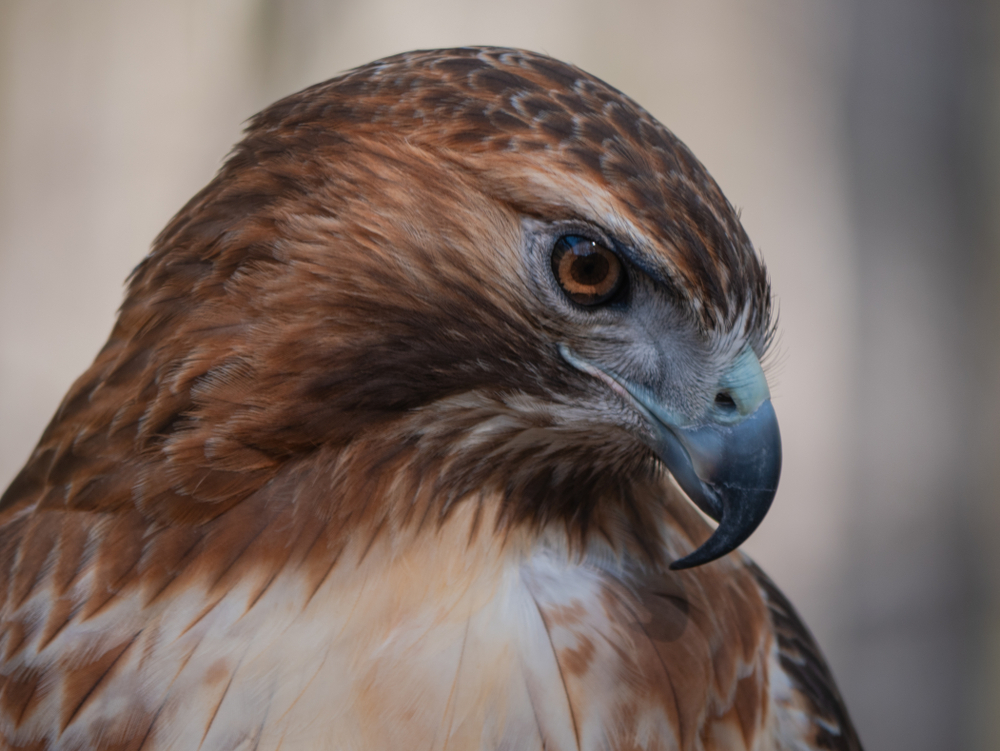
While the Hawthorn team dominates the AFL landscape, a different set of raptors occupies the skies above New York. For birdwatchers, identifying these birds is a study in size and behavior. The Red-tailed Hawk (Buteo jamaicensis) is common in New York and highly adaptable, thriving in habitats ranging from urban cities to woodlands. These large raptors, weighing 1.5-3.5 lbs, are identified by their characteristic red tail and rely on mammals like mice, voles, and rabbits for their diet. Unlike the Hawthorn big men, these hawks mate for life and often reuse nests, which they can assemble in less than a week if necessary.
In contrast, the Sharp-shinned Hawk is the smallest hawk in New York. These athletic birds are ambush predators, often seen in forested areas zipping through woods to prey on songbirds, which make up 90% of their diet. They are often confused with the Cooper’s Hawk; however, the Sharp-shinned is significantly smaller, being about 6 inches shorter and half the weight of the Cooper’s on average. These raptors are characterized by bars of orange on their upper chest and blue-gray back and wings, providing a distinct profile compared to their larger counterparts.
Keep reading

Malaysian badminton patron and Andrew Kam, who offered a RM2 million gold bar for Malaysia’s first Olympic gold, dies at 64
MALAYSIAN BADMINTON PATRON ANDREW KAM, WHO OFFERED A RM2 MILLION GOLD BAR FOR MALAYSIA’S FIRST OLYMPIC GOLD, HAS...

Datuk Seri Andrew Kam, Malaysian Businessman and Badminton Patron, Dies at 64
Malaysian businessman, lawyer, and prominent badminton patron Andrew Kam died at the age of 64.

Manchester United Submit 23-Man Premier League Squad for 2026/27 Season
Manchester United has submitted its 23-man squad for the Premier League season, leaving two spots open while young...

Matthew Mayich Hospitalized Following Collapse at ASU Workout
St. Louis Blues prospect Matthew Mayich remains hospitalized in Arizona following a medical collapse during an outdoor workout...