
The U.S. The July 2026 decision clears the Eärendil-1 prototype for communications testing despite sharp protests from astronomers.
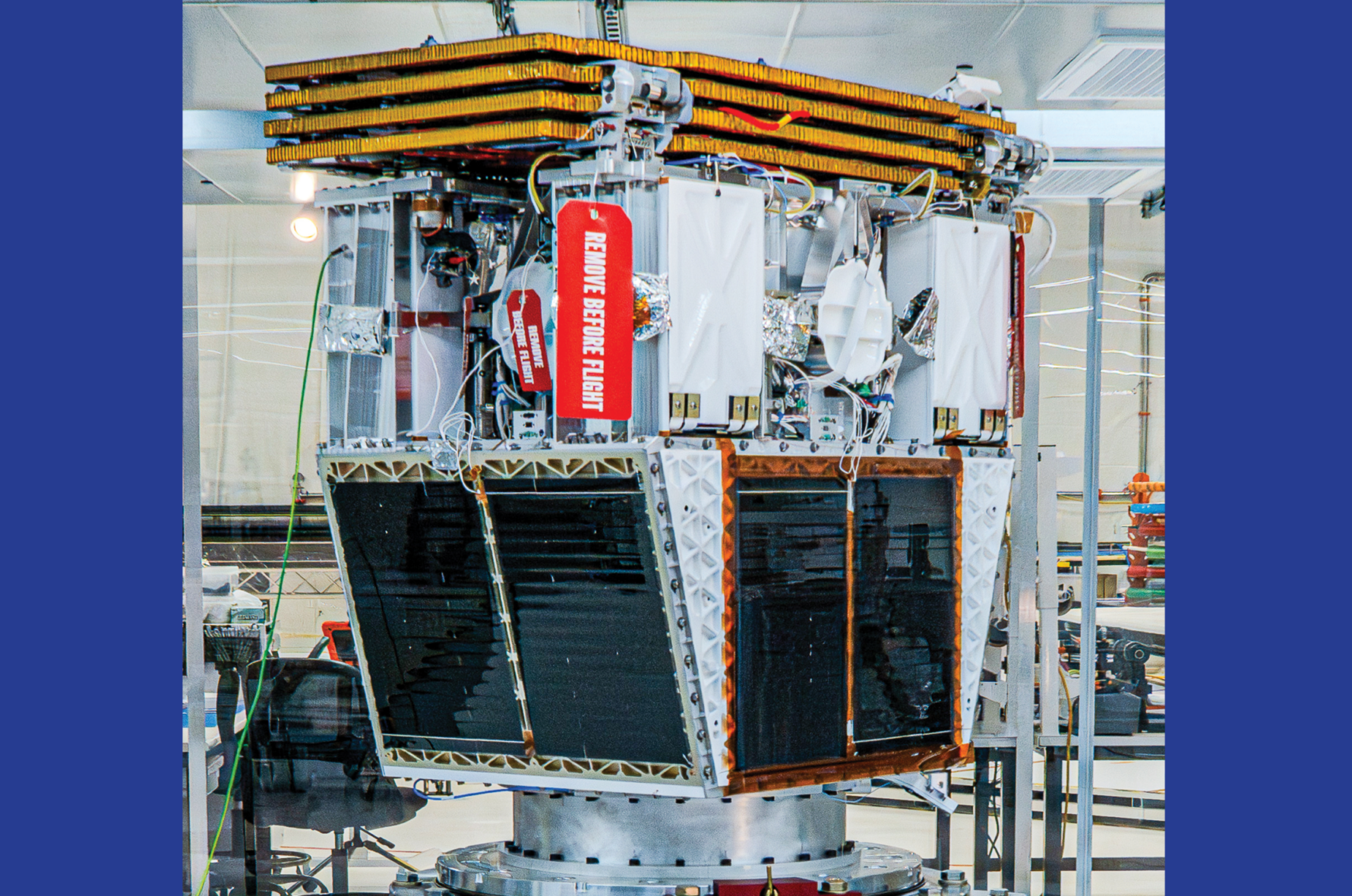
A Los Angeles-based startup called Reflect Orbital has cleared a major regulatory hurdle in its quest to commercialize nighttime sunshine. The U.S. Federal Communications Commission approved a license for the company’s experimental Eärendil-1 satellite, authorizing the spacecraft’s communications systems to operate in low-Earth orbit. The decision marks the first step toward testing whether sunlight can be successfully reflected from space onto targeted terrestrial locations after the sun has set.
While the startup envisions a future commercial network numbering in the tens of thousands of spacecraft, the current regulatory sign-off applies strictly to a single demonstration mission.
Federal Communications Commission Limits Scope to Communications Licensing
The regulatory approval granted by federal authorities comes with strict geographical and operational boundaries. Regulators emphasized that their authorization pertains solely to the radiofrequency spectrum required for spacecraft communications, explicitly declining to evaluate broader environmental or ecological concerns associated with orbital solar reflectors.
“the Commission’s authority pertains to the licensing and operation of a radio station using radiofrequency spectrum,” adding that “it does not have regulatory authority over the licensing and operation of a solar reflector.”
Federal Communications Commission, via Slashgear
Engineering Space Mirrors and Controlling the Beam
The reflective film consists of an aluminum front and a space-grade plastic backing.
During the upcoming orbital demonstrations, ground operators will position the satellite so its reflective panels beam sunlight onto a target location for approximately five minutes. The resulting illumination is projected to match the brightness of a full moon across an area measuring roughly 24 square kilometers.
Commercial Ambitions and Potential Industrial Applications
Reflect Orbital positions its technology as a novel tool to expand access to renewable energy and support critical round-the-clock operations. Company executives argue that maximizing solar infrastructure efficiency can help reduce global dependence on fossil fuels.

- Solar Farms: Designed to serve as anchor clients, extending energy collection windows at dawn and dusk.
- Emergency Response: Providing illumination for nighttime search and rescue operations in disaster zones.
- Construction and Agriculture: Extending working hours on building sites and lengthening seasonal crop yields.
- Unconventional Uses: Potential applications for large public outdoor events, military operations, and helicopter searchlights.
Financial backing for the initial prototype includes a $1.25 million award received from the U.S. Air Force in 2025, complementing self-funding by the startup.
Astronomical Opposition and Environmental Concerns
The regulatory filing drew nearly 2,000 public comments, with widespread pushback from astronomical organizations, aviation safety stakeholders, and environmental groups. The American Astronomical Society filed formal petitions warning that orbiting reflectors could create dangerous glare for pilots and drivers while causing catastrophic interference with professional and amateur stargazing facilities.
Researchers expressed alarm that a full operational constellation could become among the brightest objects in the night sky, streaking astronomical images with light trails and degrading federally funded scientific instruments.
Addressing safety concerns, Reflect Orbital highlighted the commission’s finding that the likelihood of harm to telescope users is extremely small under operating circumstances.
Long-Term Deployment Plans and Unresolved Oversight
While Eärendil-1 has a design life of one year and is slated for controlled deorbiting rather than integration into a permanent fleet, the startup’s ambitions extend far beyond a single test article.
Federal regulators maintained that objections aimed at a future multi-thousand-satellite constellation fell outside the scope of the current single-satellite review.
Webb Telescope Finds Chariklo’s Rings Are Changing Over Years
Astronomers using the James Webb Space Telescope (JWST) have discovered that the two narrow rings surrounding the distant...

SpaceX Launches Final Three O3b mPOWER Satellites for SES
SpaceX successfully launched the final three O3b mPOWER satellites for SES on September 13, 2026, from Cape Canaveral...

Japan Launches Kaguya Spacecraft to Map Moon in 2007
On September 13, 2007, Japan launched its advanced Kaguya spacecraft from the Tanegashima Space Centre aboard an H-IIA...

Astronomers Identify Eos, a Massive Molecular-Hydrogen Cloud Near the Sun
Astronomers have identified Eos, a massive molecular-hydrogen cloud located roughly 300 light-years away and spanning 40 full-Moon widths...