
Although the storm is moving away, the enhanced southwest monsoon will continue bringing moderate to heavy rains and strong gusts across Luzon and parts of the Visayas.
Typhoon Kiyapo Exits the Philippine Area of Responsibility
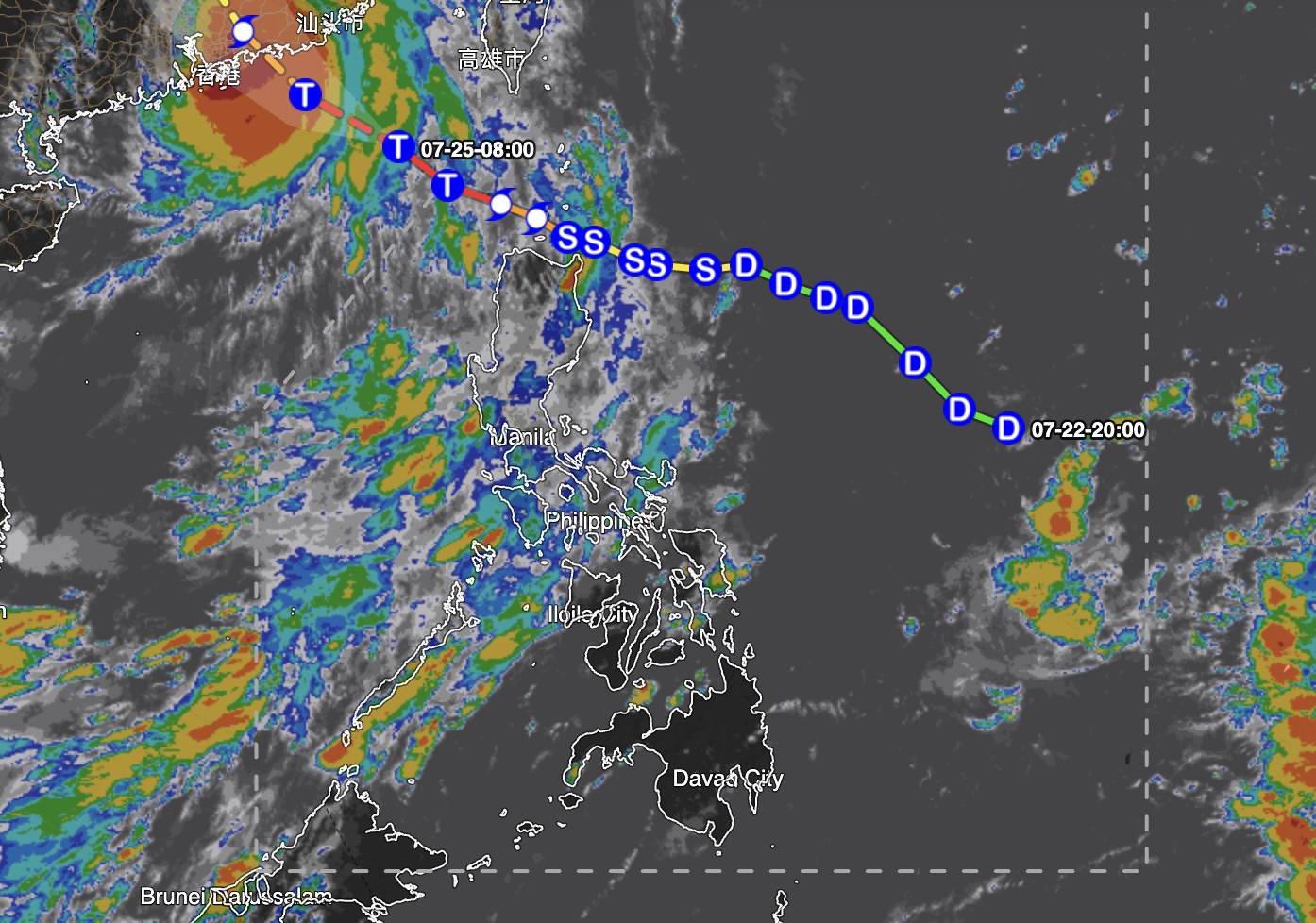
The tropical cyclone locally known as Kiyapo left the country’s area of responsibility at around 2 a.m. on Saturday, carrying its international name, Noul. The Philippine Atmospheric, Geophysical, and Astronomical Services Administration reported that the storm was tracked moving northwest at 25 kilometers per hour, packing maximum sustained winds of 120 km/h and gustiness of up to 150 km/h.
PAGASA weather specialist Veronica Torres said Kiyapo left the country’s area of responsibility at around 2 a.m. and now bears its international name, “Noul.” Torres stated, “Itong si Bagyong Kiyapo ay lumabas na ng ating Philippine Area of Responsibility (PAR) kaninang alas dos ng madaling araw. Ito ay may international name na ‘Noul’. Ngayon ay nasa Typhoon category na itong si Bagyong Kiyapo.”
Camiguin Island
Before moving outside the country’s boundary, Kiyapo made landfall as a tropical storm in Camiguin Island, Calayan, Cagayan, at 2:10 p.m. on Friday, July 24. That initial impact triggered heavy downpours across Northern Luzon, where Tropical Cyclone Wind Signal No. 3 was raised as the highest warning tier.
“Inaasahan natin na tatahakin nito ang direksyong northwest bago mag-landfall sa may s[outhern mainland China],” Torres said.
State weather forecasters anticipate that the cyclone will continue moving northwest before making landfall over southern mainland China, after which it may weaken quickly once it moves further inland there.
Monsoon Rains Persist Across Luzon and Parts of the Visayas
Even though the typhoon is pulling away, the southwest monsoon—locally called habagat—is actively interacting with the storm’s outer circulation. This combination continues to generate widespread rainfall and strong winds across multiple regions. PAGASA weather specialist Daniel Villamil explained during the 5 p.m weather advisory on Saturday that the trough or extension of typhoon Noul may bring rains over Cagayan, Batanes, Apayao, and Ilocos Norte.
Cagayan
Villamil stated, “Its trough or extension is currently affecting the extreme northern Luzon area; therefore, from this afternoon through tomorrow, we will continue to experience rainfall in parts of Northern Luzon—specifically in Cagayan, Batanes, Apayao, and Ilocos Norte.” As of 5 p.m., the typhoon was located 560 kilometers west of Itbayat, Batanes, moving west northwestward at 30 kilometers per hour with maximum sustained winds of 130 km/h near the center and gustiness of up to 160 km/h, according to Pagasa.
Metropolitan Manila and surrounding provinces are also seeing cloudy skies accompanied by scattered rain showers and thunderstorms. Villamil added, “In Metro Manila and most of Luzon, cloudy skies and scattered rain showers and thunderstorms will continue due to the southwest monsoon.” He further stated that the southwest monsoon will largely affect Pangasinan, Zambales, Bataan, Occidental Mindoro, bringing 50 up to 100 millimeters of rain within the next 24 hours.
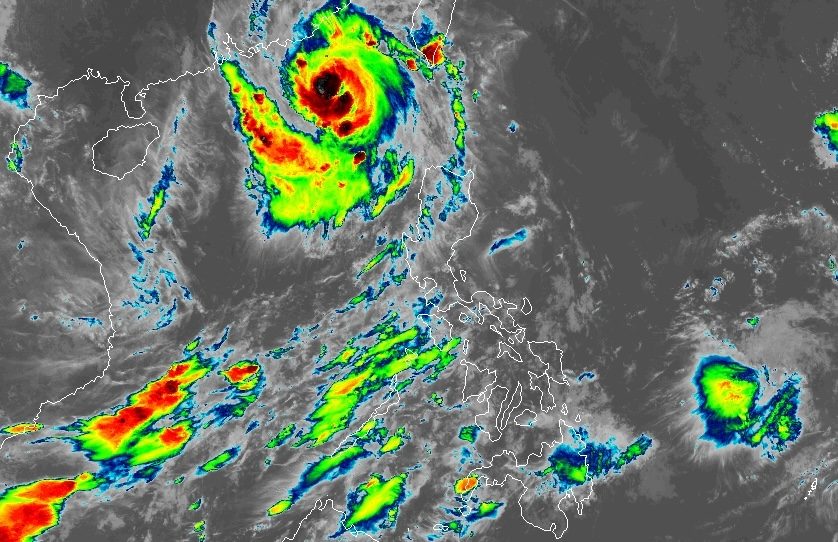
Weather advisories highlight that Pangasinan, Zambales, Bataan, and Occidental Mindoro remain vulnerable to 50 to 100 millimeters of accumulated rainfall, creating ongoing risks for localized flooding and landslides.
Wind Signals and Maritime Travel Restrictions
Authorities maintained tropical cyclone wind signals while gale-force wind conditions buffet coastal and upland communities. Forecasters noted that strong wind gusts will prevail across most of Luzon, Western Visayas, the Negros Island Region, Northern Samar, Zamboanga del Norte, and Davao Oriental.
Maritime conditions remain hazardous along affected seaboards.
Gradual Weather Improvement Timeline
Northern Mindanao
Conditions are projected to stabilize across several southern regions first. Villamil noted regarding Northern Mindanao and Eastern Visayas: “Generally improving weather conditions na rin ang mararamdaman sa area Northern Mindanao. Mababawasan na rin yung mga sustain na kalupaan at pag ulan sa may Eastern Visayas.”
Worth a look

Venus and Crescent Moon to Align in September 2026 Sky
Stargazers caught a striking view on the evening of September 13, 2026, when Venus shone brightly beside a...

Worker Dies After Being Struck by Compressed Air Hose at Jurong Port Road
A 35-year-old worker died at a Jurong Port Road construction site on September 11, 2026, after being struck...

Singapore Police Investigate Three Traffic Officers Over Unsafe Riding Footage
The clip, which surfaced online, shows the outriders cutting across lanes and forcing sudden braking near the Traffic...

Justice Department Deports Legal Resident to Afghanistan in First ATRC Case
The Justice Department deported a 47-year-old legal U.S.