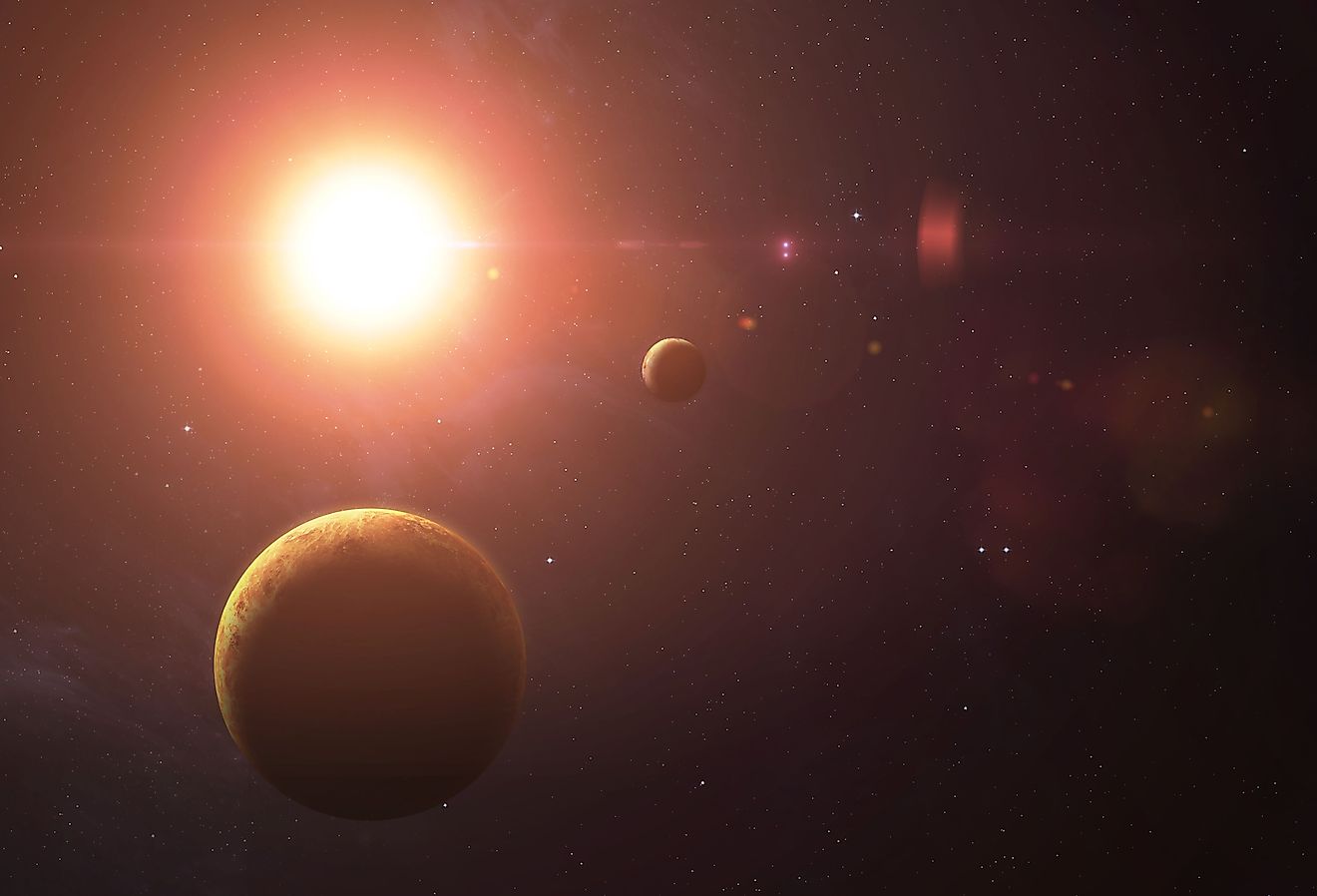
Venus holds the title of the hottest planet in the solar system, with surface temperatures reaching 867 degrees Fahrenheit, despite Mercury sitting closer to the sun. A runaway greenhouse effect driven by a thick carbon dioxide atmosphere traps intense solar heat, creating a relentless global environment that completely overwhelms distance.
Why Venus Outheats Mercury Despite Distance
Mercury sits 36 million miles from the sun, while Venus orbits at roughly 67 million miles out. By distance alone, Mercury should claim the highest temperatures in the solar system. Instead, Venus reaches a searing 867 degrees Fahrenheit (464 degrees Celsius), hot enough to melt lead. Sunlight penetrates its upper atmosphere easily, but a thick blanket of carbon dioxide traps the thermal energy so completely that the surface never cools down, whether facing day or night. Mercury bakes during its long daytime hours before radiating its heat rapidly into space after sunset, resulting in extreme temperature swings that drop to minus 290 degrees Fahrenheit on its night side, as space science experts explain.
The Runaway Greenhouse Mechanism That Altered a Planet
Scientific models indicate that the sun has grown about 40 percent brighter since the early history of the solar system, emitting only about 70 percent of its modern energy four billion years ago. While ancient Venus likely possessed oceans and a tropical environment comparable to early Earth, increasing solar radiation triggered massive water evaporation. Without surface water to absorb and store carbon dioxide, nearly all of that greenhouse gas accumulated in the atmosphere. This dynamic created an escalating feedback loop known as a runaway greenhouse effect, locking the planet into its current state where carbon dioxide makes up about 96 percent of its air and surface pressure reaches roughly 90 times that of Earth at sea level.

Extreme Rotation and Atmospheric Pressure on the Surface
Venus is the slowest-spinning planet in the solar system, rotating backward on an axis tilted at 177 degrees. One full rotation takes 243 Earth days, which is longer than the 225 Earth days it takes the planet to complete an orbit around the sun. This sluggish rotation combines with crushing atmospheric pressure equivalent to diving 3,000 feet underwater. Historic exploration programs demonstrated the hostility of this environment firsthand, with ten Soviet Venera landers reaching the surface between 1961 and 1984. Venera 13 held the durability record among them, surviving 127 minutes and transmitting the first color photographs before its instruments failed under corrosive clouds of sulfuric acid.
Contrasting Thermal Extremes Across the Inner Planets
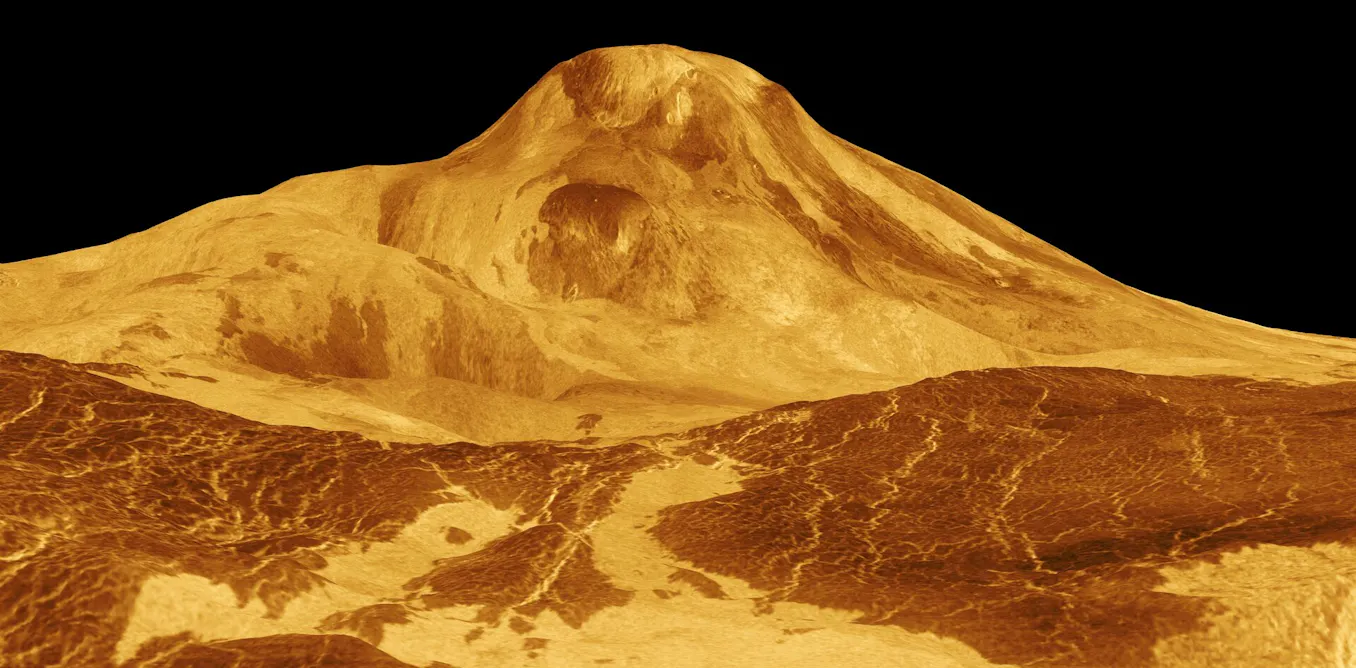
While Venus maintains a relentless, uniform warmth across both day and night sides, Mercury presents a study in contrast. Stripped of most of its atmosphere by solar wind billions of years ago, its exposed rock reaches 800 degrees Fahrenheit in direct sunlight before plunging to extreme lows in shadow. Yet Mercury holds a surprising exception within its polar craters: radar data reveals patches of water ice trapped inside permanently shadowed depressions where sunlight never reaches, contrasting sharply with the global baking oven found on Venus.
Exoplanet Extremes Beyond Our Solar System
Within our local planetary neighborhood, Venus remains the hottest world.
Related reading
Webb Telescope Finds Chariklo’s Rings Are Changing Over Years
Astronomers using the James Webb Space Telescope (JWST) have discovered that the two narrow rings surrounding the distant...

SpaceX Launches Final Three O3b mPOWER Satellites for SES
SpaceX successfully launched the final three O3b mPOWER satellites for SES on September 13, 2026, from Cape Canaveral...

Japan Launches Kaguya Spacecraft to Map Moon in 2007
On September 13, 2007, Japan launched its advanced Kaguya spacecraft from the Tanegashima Space Centre aboard an H-IIA...

Astronomers Identify Eos, a Massive Molecular-Hydrogen Cloud Near the Sun
Astronomers have identified Eos, a massive molecular-hydrogen cloud located roughly 300 light-years away and spanning 40 full-Moon widths...