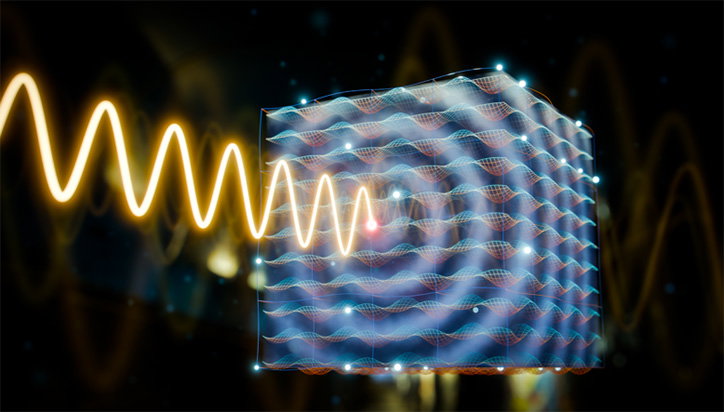
A team of physicists has developed the first all-optical photonic time crystal (PTC), a material capable of dynamically altering its optical properties over time rather than space. The breakthrough, published in The Debrief, enables unprecedented control over terahertz light, opening new avenues for optical technologies.
Controlling Light in a Fourth Dimension
The device, created by researchers from École Polytechnique, Collège de France, and the Helmholtz-Zentrum Dresden-Rossendorf (HZDR), operates in the terahertz frequency range—between conventional electronics and visible light. Unlike traditional photonic crystals, which control light through spatial patterns, the PTC introduces a repeating optical pattern in time. This allows the material to modulate light reflectivity and resonance frequency on picosecond timescales, matching the oscillation period of light itself.
By extending photonic crystals from space to time, we open a new dimension for light control—and a novel path toward amplification and lasing,
said Tingwen Guo, a PhD student at École Polytechnique and lead author of the study. The innovation leverages micrometer-scale gold structures with cavities that trap light photons, separated from an indium-antimony semiconductor by an insulating layer.
Key Technologies and Collaborations
The research relied on the TELBE superradiant terahertz source at HZDR, which generates high-field, phase-stable terahertz pulses critical to the experiment. Scientists bombarded the PTC with ultra-intense terahertz laser pulses, observing strong, coherent modulations of the material’s optical properties. These modulations occur at speeds of one billionth of a billionth of a second, far surpassing previous technologies.
The team included Yannis Laplace, an assistant professor at École Polytechnique, and collaborators from the Laboratory of Irradiated Solids (LSI). The device’s design incorporates surface plasmons—collective electron waves that interact with light—created when the semiconductor surface is excited. This interaction enables the material to dynamically adjust its optical behavior, a feat previously unachievable with static methods.
Potential Applications and Future Work
The PTC’s ability to rapidly modulate light has significant implications for terahertz technology. Researchers envision applications in ultrafast optical computing, enhanced wireless communications, and advanced medical imaging. The device also represents a step toward terahertz-scale light sources and detectors, bridging the gap between electronics and visible light frequencies.
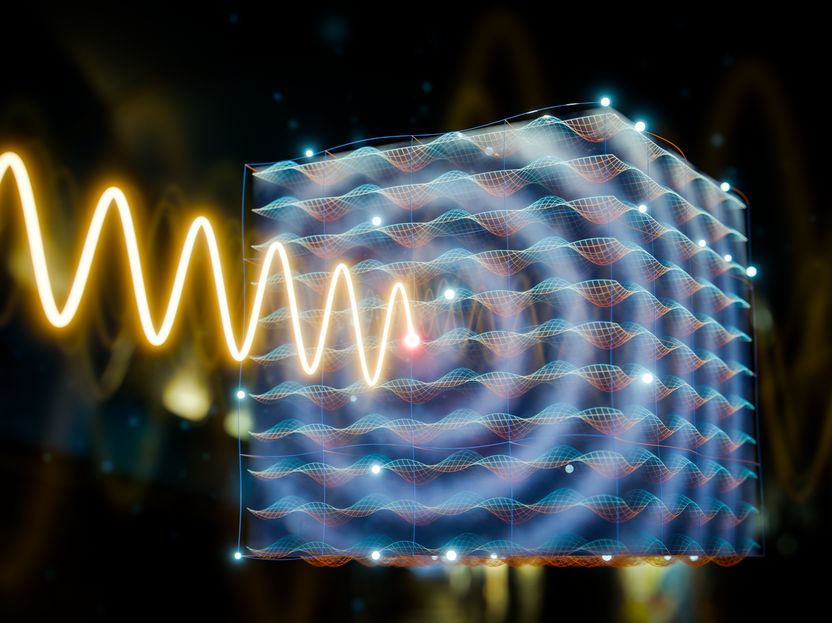
While the study confirms the PTC’s dynamic optical modulation, further experiments are needed to observe photon amplification within the structure. The team aims to reduce energy loss and increase the number of trapped photons, with the goal of enabling highly tunable terahertz lasers. Creating photonic crystals could lead the way to the closing of this gap,
Laplace noted, highlighting the technology’s potential to transform underdeveloped terahertz applications.
Publication and Recognition
The research, titled Plasmonic Metamaterial Time Crystal,
was published in Dallas Express and details the collaboration between European institutions. The study’s authors include Tingwen Guo, Jules Sueiro, Gian Marcello Andolina, and Yannis Laplace, among others. The work has been recognized for its potential to revolutionize light control, with scientists emphasizing its role in exploring uncharted terahertz frontiers.


The Blood of Dawnwalker Crosses One Million Sales on $40 Million Budget
Rebel Wolves' dark role-playing game The Blood of Dawnwalker has surpassed one million copies sold following its launch.
NIST Scientists Bake Model Scrolls to Test Lead-Based Ink Scans
Researchers studying the 2,000-year-old Herculaneum papyri have tested a new method for reading carbonized scrolls by looking for...

Apple Launches Apple Watch Series 12 and Ultra 4 With New Retailer Deals
Apple launched the Apple Watch Series 12 and Apple Watch Ultra 4 on September 18, alongside new pricing,...

Battery Imaging Library Launches Open Access Database With 4.5TB of Data
Researchers have launched the world's first open-access Battery Imaging Library, housing over 4.5 terabytes of experimental data from...