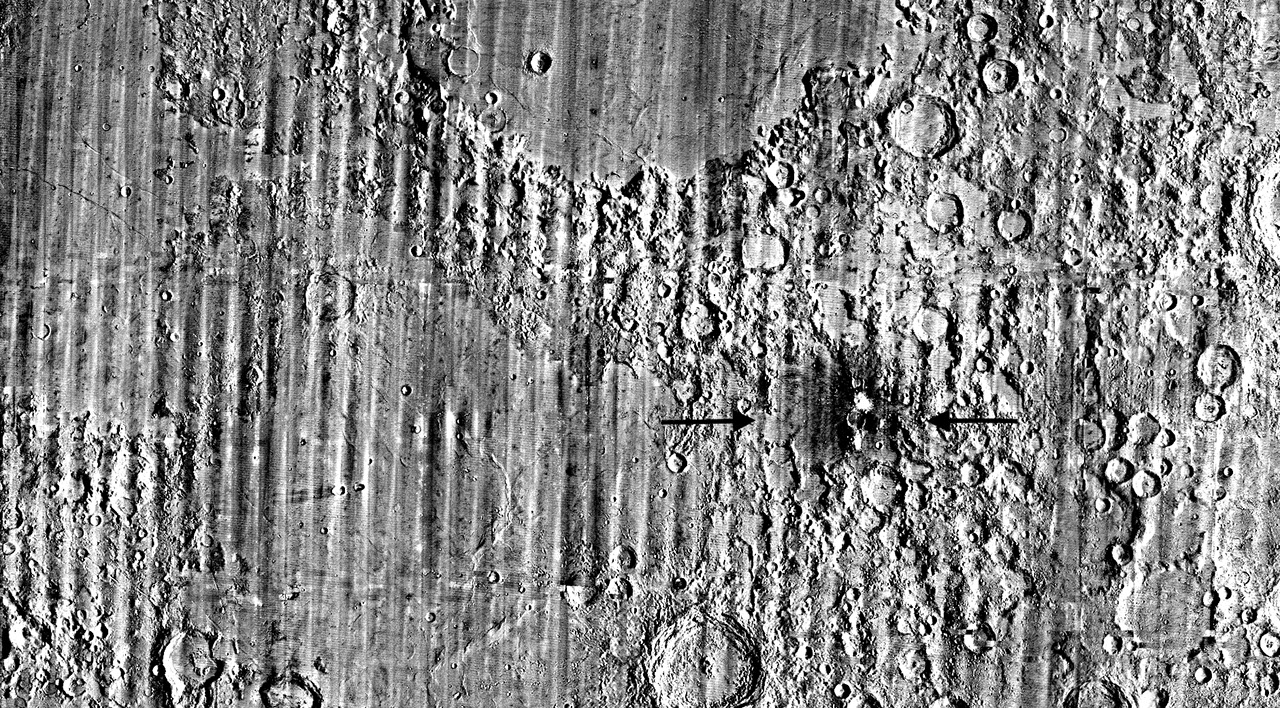
Researchers have identified the largest newly formed impact crater in the solar system, a 728-foot-wide depression on the moon named McGetchin. Formed by a space rock impact between April and May 2024, the rare once-in-a-century event created a massive thermal cold spot extending miles across the lunar surface.
Discovering McGetchin Crater: A Routine Check Reveals a Solar System Record
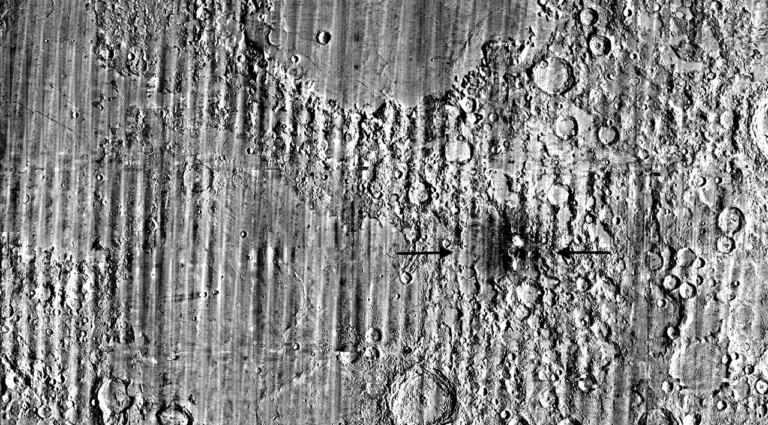
What began as a routine data-quality check on a computer screen ended with the identification of a record-breaking lunar impact. Robert Wagner, an image-processing specialist from Intuitive Machines working with data from NASA’s Lunar Reconnaissance Orbiter Camera system, spotted an unusually large bright spot circled by a dark halo while scanning a giant moon map.
“I just stopped, dropped everything, and started looking into what that spot was,”
said Wagner, an image-processing specialist from Intuitive Machines who works with data from the Lunar Reconnaissance Orbiter Camera (LROC) system.
The feature, officially named McGetchin after pioneering lunar scientist Tom McGetchin, spans 728 feet across and plunges 141 feet deep, an excavation that could fit three vertically stacked yellow school buses. The impact occurred sometime between April 11 and May 22, 2024, when a comet or asteroid the size of a three- to six-story building slammed into the moon’s eastern edge. Scientists estimate that an impact of this magnitude happens on the Moon about once in a century or even longer.
“McGetchin crater is exceptional because it is the largest newly formed impact crater that has been identified to date,”
Tyler Powell, lead author of one of the studies, told Space.com.
“A crater of this size is expected to form on the moon only once per century, so we’re extremely lucky it formed during the lifetime of the LRO mission and that we are able to observe the region both before and after impact.”
Tyler Powell, lead author
For more than 17 years, LRO has been circling the Moon and using its seven instruments to map the topography, surface composition, temperature, and radiation environment there. The spacecraft’s team has identified at least 1,000 new impact craters throughout the mission and flagged 100,000 more surface changes from an object smashing into the Moon or from the debris that flung out after. With no atmosphere to slow them or burn them up, space rocks and other objects easily reach the lunar surface. Most are much smaller compared to the object that carved out McGetchin crater. The smallest craters scientists can distinguish from LRO images are about 30 feet wide, the length of a three-story building laid on its side, made by rocks about 43 inches wide, the size of a monster-truck tire. Scientists estimate that impacts of this scale produce about 140 new craters across the Moon each year. But most new ones are made by microscopic projectiles that leave holes too small to identify in orbital images.
Thermal Anomalies and the Disturbed Lunar Soil
The consequences of the impact extended far beyond the immediate crater walls, reshaping physical and thermal properties across the terrain. With its numerous instruments, the spacecraft can observe changes to the lunar surface that aren’t apparent in the LROC images alone. After the crater was discovered, scientists working with LRO’s thermal instrument, Diviner, made follow-up observations of the site. They found a 4.3-mile-wide (7-kilometer-wide) area around the crater that is about 16 degrees Fahrenheit cooler at night than its surroundings. Reporting in a second paper in the same journal, researchers say that the cooling happens because the impact had disturbed the regolith, or the upper layer of the moon’s surface, making it less dense and less able to retain heat. LROC observations show an extensive ejecta blanket surrounding the crater, while data from LRO’s Diviner Lunar Radiometer revealed an even broader thermal anomaly. Diviner detected a roughly 4.3-mile-wide (7-kilometer-wide) “cold spot” around the crater that is about 14 to 16 degrees Fahrenheit (8 to 9 kelvins) colder than the surrounding surface during the lunar night. As NASA notes, the cooler spots could have an impact on how rover wheels interact with the surface, and with areas near new craters overall.
A Pristine Reference Point for Future Lunar Missions
The findings are detailed in two new studies published Sept 16. in the journal Science Advances. One study, led by Mark Robinson of Intuitive Machines, describes the crater itself and the enormous amount of material thrown across the lunar surface due to the impact that provoked the feature. The second study, led by researchers studying data from LRO’s Diviner instrument, examines a much larger region around the crater that was physically altered by the impact. Together, the studies offer scientists something they rarely get: a pristine impact site with observations from before and after the event. And importantly, this site is seen before other processes begin to degrade it.
NASA’s LRO mission has been observing the moon for more than 17 years, giving researchers images and measurements of the area before and after the impact. That long-running record allowed scientists to identify subtle changes that would otherwise be difficult to detect. The crater was first discovered in 2025 by researchers comparing LRO images of the lunar surface. But then, follow-up observations from LRO’s Lunar Reconnaissance Orbiter Camera (LROC) revealed the fresh crater and the material blasted outward during the impact. Considering how rare the event is, we can most likely expect numerous studies on the McGetchin crater in the future.
Keep reading

Scientists Name New Genus of Australian Plant Bugs After Taylor Swift
Scientists have named a newly described genus of Australian plant bugs Swiftiephylus in honor of Taylor Swift, drawing...
NASA Images Crater Formed by SpaceX Falcon 9 Rocket Crash on the Moon
A NASA spacecraft circling the Moon has captured the sharpest views yet of a fresh crater carved by...
NASA Discovers McGetchin, Largest Newly Formed Lunar Crater
NASA’s Lunar Reconnaissance Orbiter has discovered McGetchin, the largest newly formed lunar crater ever found in the solar...

Study Links Climate Breakdown to Deadly Langtang Lirung Glacier Collapse
Human-induced climate change contributed significantly to the catastrophic glacier collapse and subsequent flash floods on the Nepal-Tibet border,...