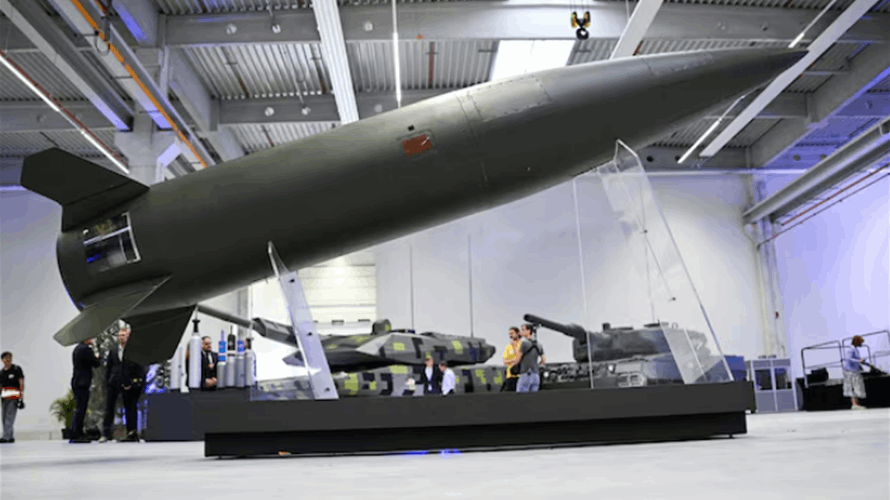
The U.S. The drawdown of ATACMS and Precision Strike Missiles has sparked internal administration concerns regarding military readiness for potential future conflicts with other adversaries.
Depleted Stockpiles of ATACMS and Precision Strike Missiles
The U.S. Army has burned through nearly its entire inventory of highly accurate long-range missiles during the ongoing conflict in the Middle East. According to individuals familiar with the data, the military has used virtually all
of these specific weapons.
This steep consumption rate has not been previously reported. The long-range munitions serve a vital function in the military arsenal by permitting accurate strikes from safe distances. Similar U.S.-supplied ATACMS have previously played an essential role for Ukrainian forces attacking targets inside Russia. Meanwhile, the PrSM represents a newer, advanced generation designed to replace the older systems, which carry a shorter range.
Strategic Debate and White House Response
President Donald Trump launched the conflict alongside Israel in February, anticipating a brief engagement. As the hostilities extended into a fifth month, administration sources expressed worry that falling missile supplies could restrict the ability of the United States to deter other adversaries, including Russia and China. Analysts note that these high-cost weapons—each valued at over $1 million—would prove critical in any future conflict involving strong air defenses.
A separate source familiar with the matter noted that while Central Command nearly exhausted its pre-war land-based missile inventory in the Middle East, forces were able to reload from stockpiles maintained elsewhere in the world. Tense internal discussions circulated across the federal government regarding how much longer strikes against Iran can continue without compromising readiness for crises in other regions.
In response to inquiries concerning the stockpile figures, the White House issued a statement from the President maintaining that the nation possesses far more munitions than anyone in the world
and far more than we need.
Pentagon Posture and Industrial Capacity
Defense analysts agree that industrial output for artillery shells and select missile varieties has reached record levels, but caution that current manufacturing may fall short during a prolonged war. Chief Pentagon spokesperson Sean Parnell addressed the readiness data directly.

“America’s military is the most powerful in the world and has everything it needs to execute at the time and place of the President’s choosing. We have executed multiple successful operations across combatant commands while ensuring the U.S. military possesses a deep arsenal of capabilities to protect our people and our interests.”
Sean Parnell, chief Pentagon spokesperson via CNBC
The drawdown of surface-to-surface missile stockpiles partly stems from a strategic choice by the administration to avoid riskier tactical methods, such as deploying piloted aircraft to drop bombs into heavily defended airspace. Beyond surface weapons, military leaders have repeatedly warned the administration that defensive inventories—including Patriot interceptors effective against ballistic threats—are also running low.
Future Procurement and Regional Pressures
According to a March report from the Center for Strategic and International Studies, PrSM stockpiles started at low levels due to the weapon’s recent introduction, though the military has placed substantial orders for future delivery. The Army has formally noted that ATACMS are being phased out in favor of the newer Precision Strike Missiles.
While military advisers previously flagged dwindling missile reserves as a factor against launching another massive offensive inside Iran, a U.S. official disputed those accounts, asserting that the decision to halt further large-scale strikes stemmed from diplomatic pressure originating from Gulf states rather than supply constraints.
Worth a look

Singapore Airlines Named World’s Best Airline for 2026
Singapore Airlines has claimed the title of the world's best airline for 2026 in the annual Skytrax World...

Pakistan Taliban Faction Claims Suicide Bombing at Kohat Police Mosque
A suicide bomb attack and subsequent gun battle at a mosque located at a police headquarters in northwestern...

Sikh Truck Driver Stabbed 17 Times at Wyoming Rest Stop
A 28-year-old Sikh truck driver from Sacramento, California, was stabbed 17 times at a Wyoming rest stop early...

Salman Rushdie and Rachel Eliza Griffiths Document Recovery in New Film
Following the August 2022 stabbing that left Sir Salman Rushdie fighting for his life in upstate New York,...