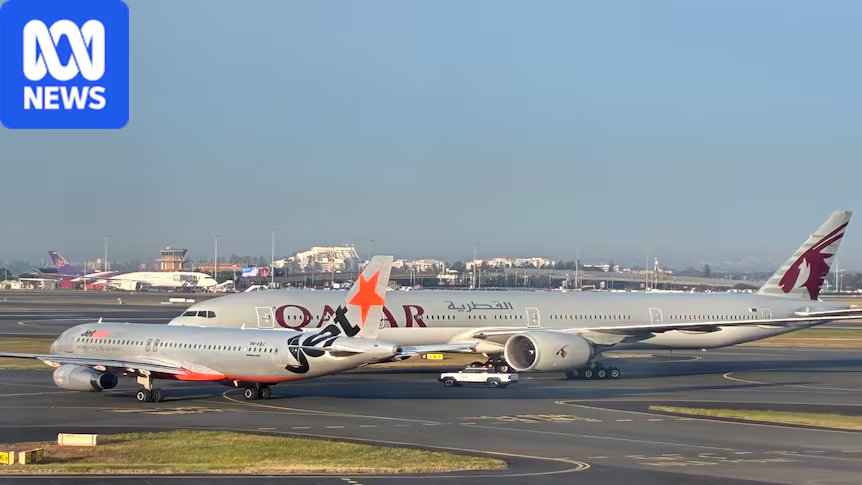
Two passenger aircraft narrowly avoided a serious ground collision at Sydney Airport when an Airbus A320 was forced to brake firmly as a Boeing 777 was towed across its path. The incident left a cabin crew member injured, damaged the towing connection, and intensified scrutiny over ongoing air traffic control staffing shortages.
The Tarmac Near-Miss at Sydney Airport
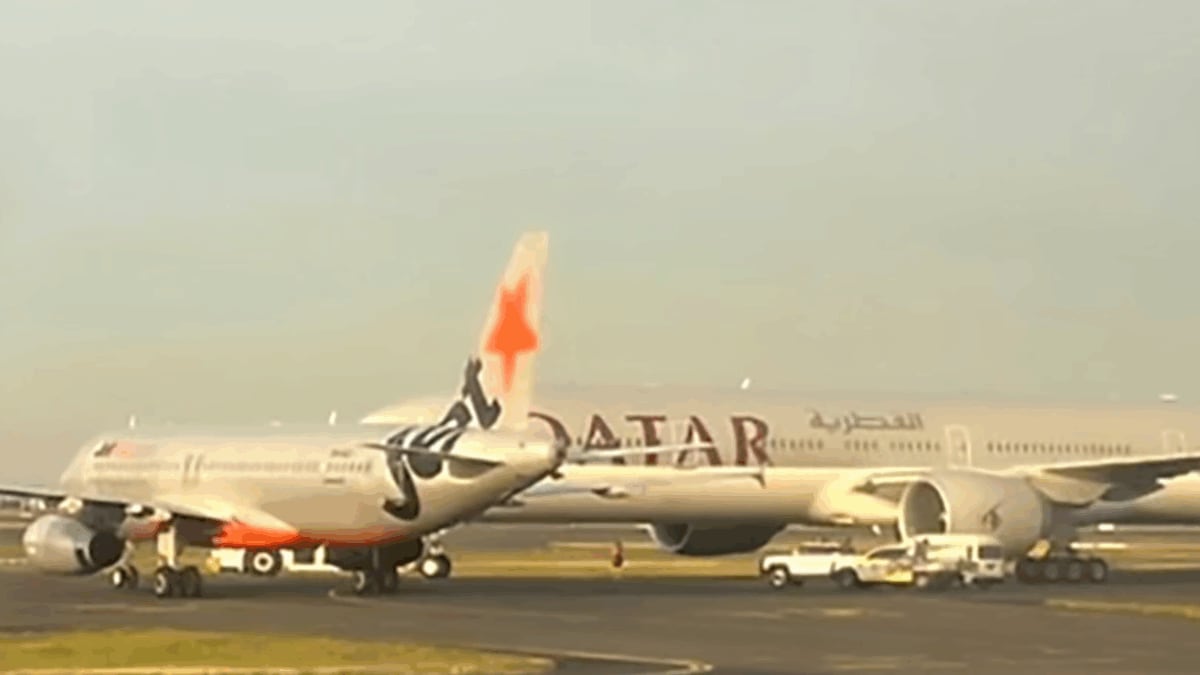
A routine morning departure turned hazardous at Sydney Airport when a Jetstar aircraft and a Qatar Airways plane came into dangerous proximity on the tarmac. The near-miss unfolded around 7 a.m. as Jetstar flight JQ402, an Airbus A320 preparing for a flight to the Gold Coast, was taxiing along the airport’s taxiways. Simultaneously, a Qatar Airways Boeing 777 being moved by a tug crossed directly into its path, according to Australia’s Transport Safety Bureau.
Both aircraft were forced to stop abruptly to avert a severe collision. While investigators have not yet disclosed the exact separation distance, the sudden braking caused tangible damage. A cabin crew member aboard the Jetstar flight sustained injuries requiring medical assessment by paramedics, though no passengers were harmed. Meanwhile, the Qatar Airways aircraft suffered physical damage to the connection between the 777 nose gear and aircraft tug.
Investigation Underway Into Conflicting Instructions
Federal transport safety investigators have launched a formal inquiry to untangle the breakdown in communication and coordination on the tarmac. Initial inquiries suggest that the tug pulling the wide-body Boeing may not have followed instructions, but safety officials caution that it remains too early to assign definitive blame. Investigators plan to interview flight crews, tug operators, and air traffic controllers, alongside gathering witness testimony and examining airport closed-circuit television footage.
Chief Commissioner Angus Mitchell emphasized the methodical scope of the inquiry, noting that authorities will collect available data from both planes and air traffic control systems. At this stage we don’t know what were all the instructions, we’ll get that from some of the recorded devices and from interviews to understand what went wrong and why they came so close, and to make sure that this doesn’t happen again,
Angus Mitchell said.
Staffing Strains and Operating Restrictions
The runway close call arrives amid severe operational headwinds at Sydney Airport, where Airservices Australia has struggled with roster constraints and controller staffing. The morning incident coincided with active operating restrictions put in place between 6 a.m. and 8 a.m., designed to limit flight volumes during peak hours. Air Traffic Flow Management measures, including departure spacing, were subsequently deployed to safely manage projected airborne and departure demands.
The airport grounds have seen mounting friction over consecutive days. More than 150 flights experienced delays due to ongoing roster limitations. Airservices Australia stated that it is actively working with airlines to reduce delays and the impact on passenger travel as much as possible.
Broader Safety Concerns and Prior Runway Incidents
Sunday’s near-miss is part of a troubling sequence of runway safety events at the facility. Just a week prior, another close encounter unfolded due to what the safety bureau characterized as a breakdown of coordination involving a QantasLink turboprop from Canberra and a Qantas Boeing 737 arriving from Queenstown, New Zealand. In that instance, air traffic control cleared the 737 to cross a runway while the smaller DHC-8 was actively landing, though the conflict was detected in time to avert disaster.
New South Wales Premier Chris Minns warned that chronic controller shortages pose risks that extend well beyond scheduling delays. Describing the staffing situation as a critical infrastructure requirement rather than a secondary luxury, Minns pointed toward future regional demands—including the eventual opening of the Western Sydney airport—as an urgent prompt to stabilize the specialized aviation workforce.
Worth a look
Banco BPM Shares Rise on UniCredit and Credit Agricole Breakup Talks
UniCredit and Credit Agricole have discussed a potential joint breakup of Banco BPM, sparking a rise in bank...
High Street Savers Lose Over £300 a Year on £10,000 Deposits
Britons holding £10,000 in major high street banks are earning as little as £116 a year in interest,...


Libya Hosts International Exhibition to Boost Agricultural Development
Libya’s Ministry of Agriculture and Animal Resources inaugurated the third edition of the Libya International Exhibition for Agricultural...