Researchers at the University of California, Davis, have identified the single gene responsible for the daily opening and closing rhythm of avocado flowers. Published in the Proceedings of the National Academy of Sciences, the discovery unlocks a genetic marker to sort A- and B-type seedlings, eliminating years of breeding guesswork.
Solving a Century-Old Pollination Mystery
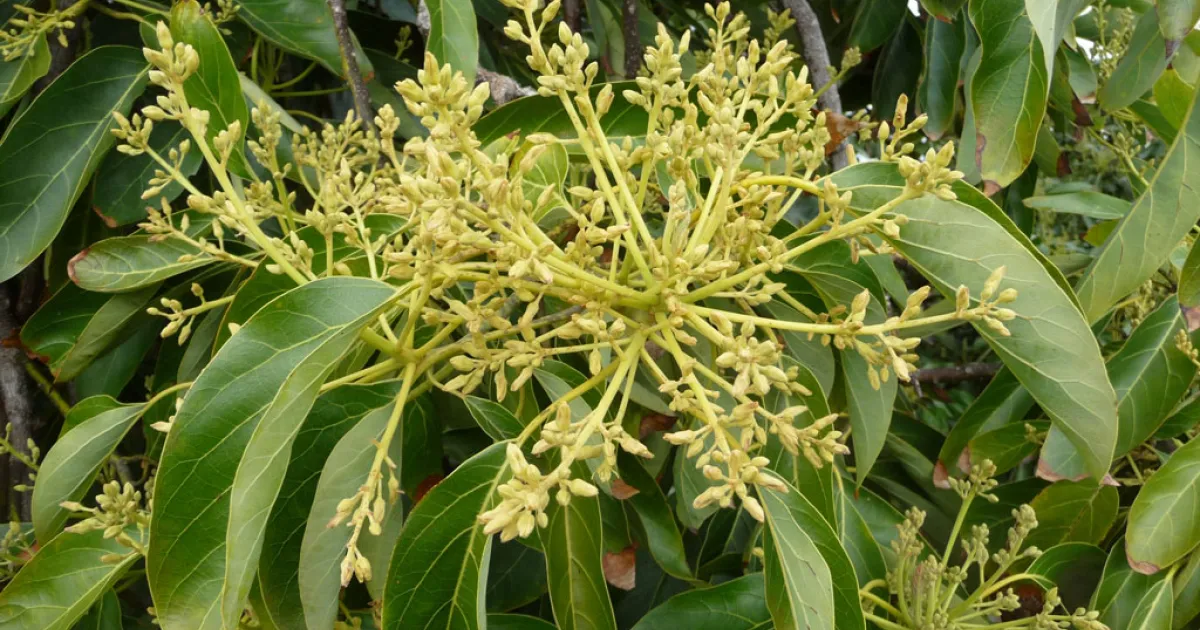
All avocado trees are hermaphrodites, but individual flowers operate strictly as male by releasing pollen or as female by receiving pollen at different times of day. To prevent inbreeding, the trees split into two distinct schedules. Approximately half of all trees are classified as A-type plants, opening their flowers as female in the morning and male in the afternoon. B-type trees follow the exact opposite pattern, opening as female in the afternoon and male the following morning. Some avocados are female in the morning and male in the afternoon, while others are on the opposite schedule. Until now, the mechanism behind this has been unclear.
Avocado breeders have understood this pollination dance for over a hundred years. Because the two varieties easily pollinate one another, commercial farmers usually try to plant a mixture of A- and B-type trees in the same orchard. Without this dual setup, synchronous flowering would leave an orchard without a viable source of pollen to exchange throughout the whole day.
“If every plant was male at the same time, and then female at the same time, there’d be no exchange of pollen,” said Graham Coop, UC Davis professor of evolution and ecology and a senior author on the paper. “Having these two types that reciprocally and synchronously flower male and female allows avocados to exchange and use pollen throughout the whole day.”
Groh noted that flowers function as highly dynamic structures rather than static decorations. By analyzing plant genomes, researchers found traces of this daily opening and closing rhythm that evolved about 42 million years ago.
“Our study provides a genetic explanation for a century-old mystery of avocado pollination,” said Jeffrey Groh, who led the project as a PhD student at UC Davis and is now a postdoctoral fellow at UC Berkeley. “Flowers are not just static decorations; they are highly evolved and dynamic structures. We can see this in the pulsating rhythm of avocado flowers opening and closing throughout the day. Through the power of genetics, we can detect traces of this rhythm far into the ancient past.”
Pinpointing the SDMYB Gene in Genomic Data
To uncover the biological switch behind the schedule, a research team led by scientists at the University of California, Davis, analyzed the genomes of hundreds of avocado trees. Collaborating researchers at the University of California, Riverside, supplied the trees for the project. By comparing genomic variations against recorded flowering behavior, the team isolated a single gene called SDMYB that was associated with the tree’s A- or B-type schedule.
This genetic variation dictates whether a specific tree adheres to an A-type or B-type schedule. Publishing their findings in the Proceedings of the National Academy of Sciences, the researchers established a direct genetic framework that links the DNA variation to the physical flowering schedule observed in orchards, allowing researchers to easily categorise A- and B-type plants at the seedling stage – something previously only possible in mature, flowering plants.
Cutting Years Off the Breeding Timeline
The discovery directly addresses a major bottleneck in agricultural development. Historically, identifying a seedling’s flower type required waiting for the tree to mature and bloom, a process that can take up to 10 or 15 years to flower in the first place. Breeders had no way of knowing whether a young plant was an A- or B-type beforehand.
“These genetic markers will greatly speed up avocado breeding and research,” said Coop. “This has been a major impediment for avocado breeders. Previously, you could not tell whether a plant was an A- or a B- type until it flowered, and avocado plants may take up to 10 or 15 years to flower in the first place.”
Instead of planting hundreds of seedlings and waiting years to see which flower type they become, cultivators can apply the genetic screen immediately.
Immediate Application for Orchard Management
Commercial nurseries and researchers can implement the genetic test at the seedling stage, completely bypassing the decades-long waiting period previously required to evaluate breeding lines. By sorting young plants accurately before committing orchard space, growers can quickly sort seedlings to maximise yield and develop new varieties faster than ever before.
Worth a look

NASA Names Four Astronauts for SpaceX Crew-14 Mission to ISS
NASA has assigned four astronauts from three space agencies to the SpaceX Crew-14 mission, targeting a Falcon 9...

Black Hole Shock Waves Spark Star Formation in Nearby Galaxies
Astronomers studying nine local galaxies have discovered that shock waves from active supermassive black holes consistently travel perpendicular...
UBC Researchers Discover Two New Sea Spider Species in the Salish Sea
Researchers at the University of British Columbia have discovered two new species of sea spiders, Callipallene pilosuspedes and...

Climate Impact Lab Projects 450,000 Heat Deaths From Super El Niño
A newly released Climate Impact Lab report projects that more than 450,000 people worldwide could die from excessive...