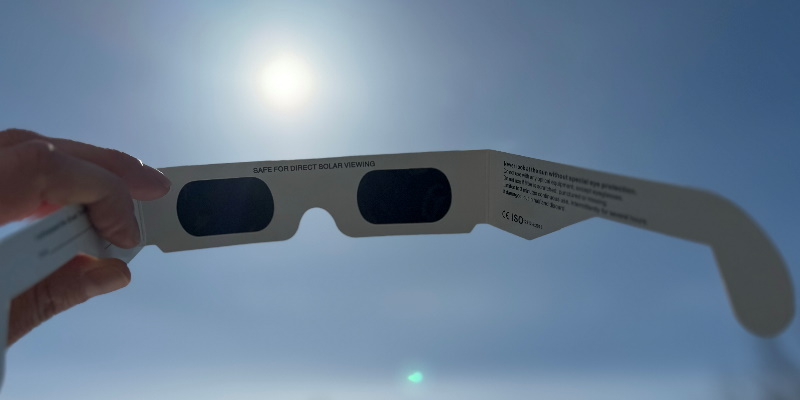
Sky watchers across various regions of Canada are preparing for a partial solar eclipse on Wednesday, accompanied by favorable conditions for viewing the Perseid meteor shower. While regions such as parts of Spain, Iceland, and Greenland experience a total solar eclipse where the moon completely covers the solar disc, observers in Canada will see a partial eclipse.
Partial Solar Eclipse Crosses Canada
According to science experts, the alignment involves the moon covering a portion of the sun. In Alberta, viewing times vary by location. In Edmonton, the partial eclipse begins at approximately 10:02 a.m., reaches a mid-eclipse peak at 10:58 a.m. with about 14 per cent of the sun obscured, and ends around 11:16 a.m. In Calgary, the event starts at 10:11 a.m., peaks at 10:36 a.m. with roughly seven per cent obstruction, and concludes near 11:03 a.m. Further north in Grande Prairie, the eclipse begins around 9:54 a.m., reaches a peak of 18 per cent obscuration at 10:33 a.m., and runs for over an hour.
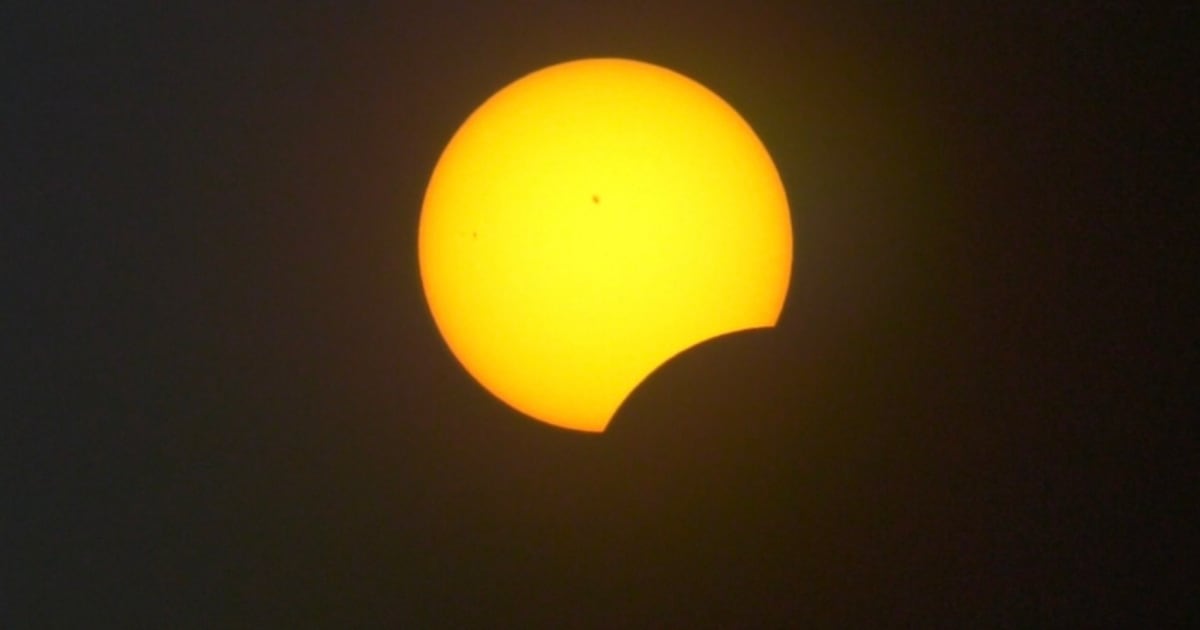
Other areas in the province will see varying degrees of coverage, such as 24 per cent in Quebec City and Saguenay, 31 per cent in Rimouski, 33 per cent in Baie Comeau, and 37.5 per cent in Gaspé.
In Atlantic Canada, the partial eclipse is expected to reach its maximum around 3:30 p.m., with coverage reaching up to 40 per cent in some Cape Breton communities and roughly 53 per cent in parts of Atlantic Canada, according to reports from CTV News and VOCM.
Essential Safety Guidelines for Solar Viewing
Experts heavily emphasize the necessity of proper eye protection when observing a solar eclipse. Looking directly at the sun can cause severe eye damage.
Safe viewing requires certified solar-viewing equipment, such as glasses bearing the ISO 12312-2 safety mark. Regular sunglasses do not provide adequate protection. Telescopes, binoculars, and cameras must also be outfitted with certified safe solar-viewing filters.
Public viewing opportunities are being organized by various scientific institutions. In Edmonton, the TELUS World of Science observatory and members of the Royal Astronomical Society of Canada will provide specially equipped telescopes starting at 9:30 a.m. In Montreal, while the planetarium is not organizing a formal public gathering, telescopes fitted with special filters will be available to the public. Additionally, the Astrolab astronomy center at Mont-Mégantic provincial park is hosting daytime and nighttime activities.
Perseid Meteor Shower Peaks Under Clear Skies
Following the afternoon solar eclipse, the peak of the Perseid meteor shower is scheduled for late Wednesday night into the early morning hours of Thursday.

The Perseids consist of debris from the comet Swift-Tuttle, a icy body that orbits the sun every 133 years with a next return not expected until 2125. Sébastien Giguère, scientific coordinator at the Astrolab, explained that Earth’s passage through a cosmic dust trail left by the comet causes an increase in shooting stars. While an ordinary night might feature about five shooting stars per hour, the Perseids at peak can produce anywhere from 50 to 100 meteors per hour.
Favorable viewing conditions are aided by a New Moon with near-zero per cent illumination, ensuring that moonlight will not create light interference. Weather forecasts indicate mostly clear skies in the Maritimes and favorable conditions in Quebec, where provincial park management notes that the new moon will diffuse no light. Observers are advised to travel to dark areas away from community lights, allow their eyes time to adjust without looking at bright phone screens, lie flat on a surface, and gaze toward the north and northeast.
Additional Astronomical Events Later in August
Astronomy enthusiasts will have another celestial event later in the month. A partial lunar eclipse is scheduled to be visible across Quebec and other regions on the night of August 27 to 28.
During this event, the Earth will position itself between the sun and the moon, causing about 93 per cent of the moon to be covered in shadow. Because the Earth blocks direct sunlight, filtered rays passing through the Earth’s atmospheric periphery will give the moon a red or orange hue, similar to a sunset. Unlike solar eclipses, lunar eclipses are completely safe to view with the naked eye without any protective equipment.
Keep reading
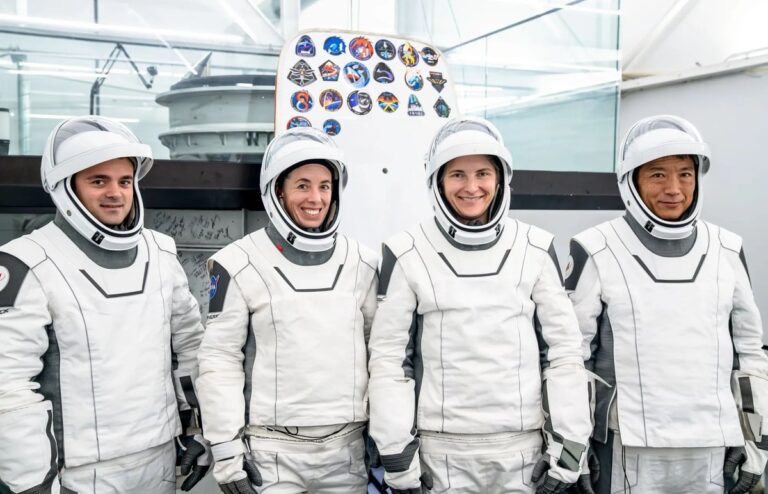
NASA Names Four Astronauts for SpaceX Crew-14 Mission to ISS
NASA has assigned four astronauts from three space agencies to the SpaceX Crew-14 mission, targeting a Falcon 9...
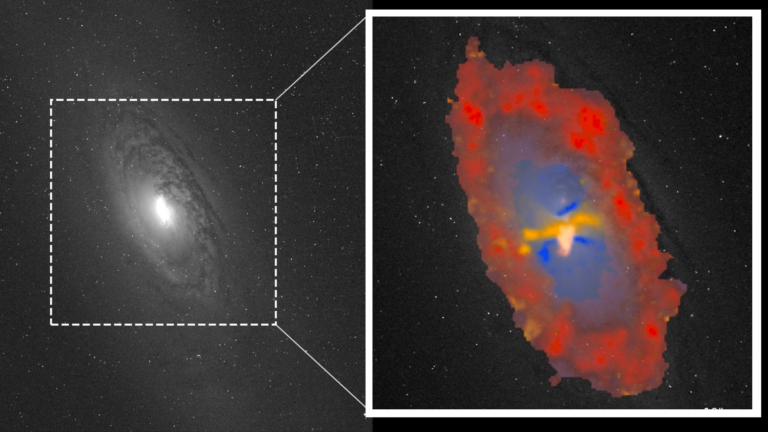
Black Hole Shock Waves Spark Star Formation in Nearby Galaxies
Astronomers studying nine local galaxies have discovered that shock waves from active supermassive black holes consistently travel perpendicular...
UBC Researchers Discover Two New Sea Spider Species in the Salish Sea
Researchers at the University of British Columbia have discovered two new species of sea spiders, Callipallene pilosuspedes and...
Climate Impact Lab Projects 450,000 Heat Deaths From Super El Niño
A newly released Climate Impact Lab report projects that more than 450,000 people worldwide could die from excessive...