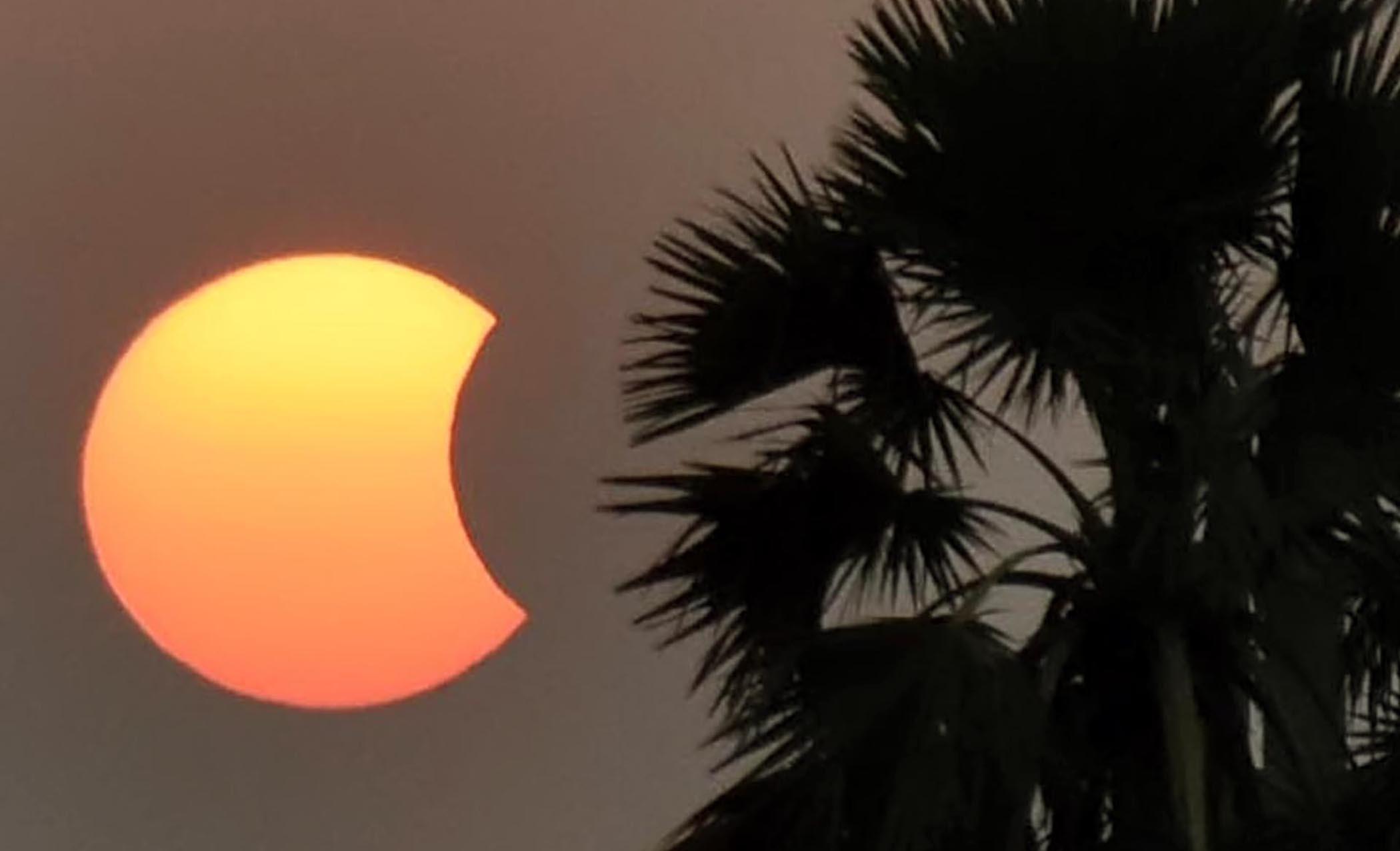
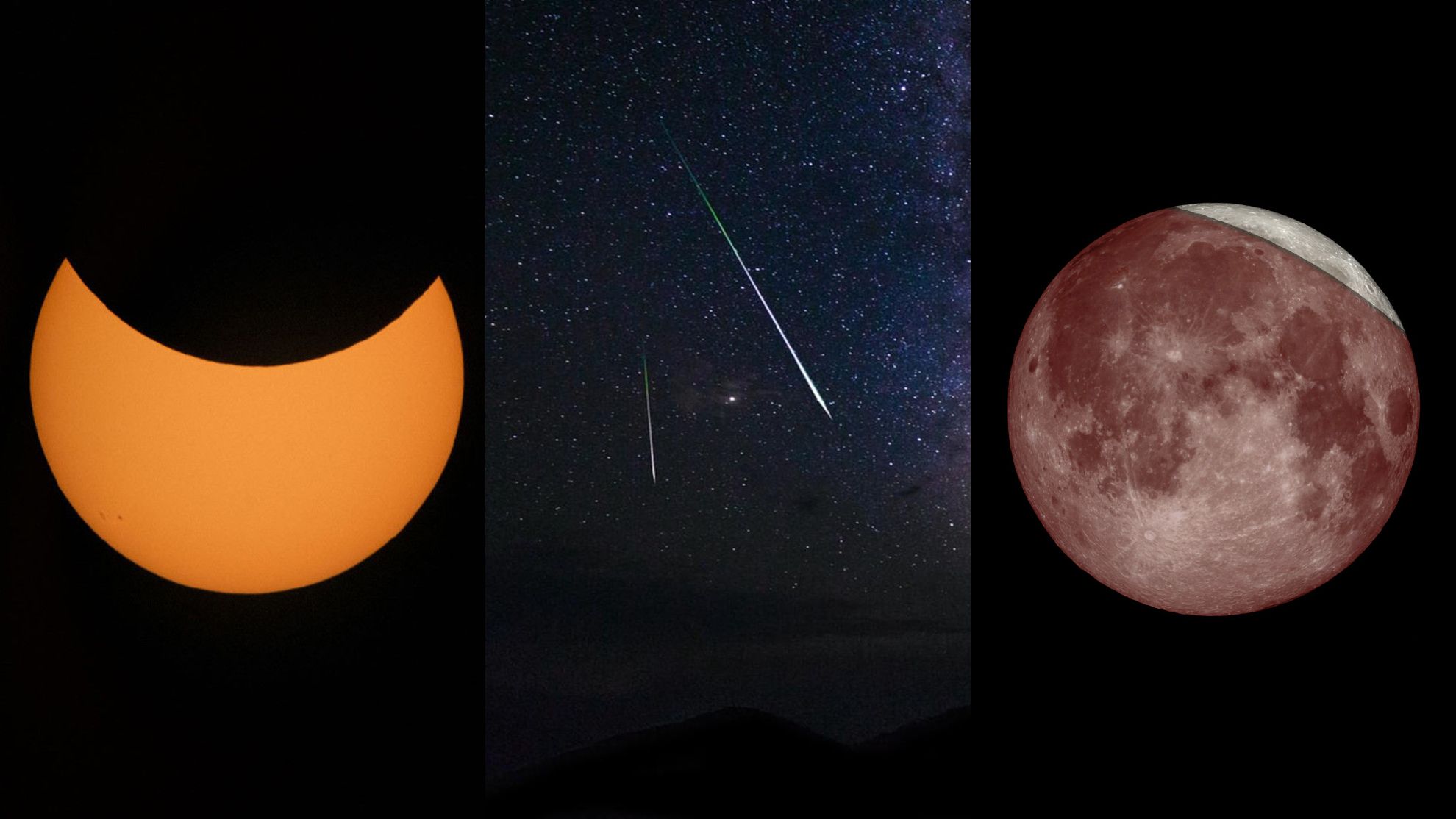
Skywatchers across North America and Europe can witness a rare double feature on Wednesday, Aug. 12, 2026, pairing a daytime partial solar eclipse across 26 U.S. states, Alaska, and eastern Canada with the overnight peak of the Perseid meteor shower under a dark, moonless new moon sky.
Observers willing to spend both day and night outdoors will experience two distinct astronomical phenomena separated by just a few hours.
Daytime Partial Solar Eclipse Across North America and Europe
While the Moon’s dark umbral shadow misses the North American mainland, millions of residents will see the lunar disk take a noticeable bite out of the sun.
The event spans vast geographic boundaries, though the experience varies sharply by location. A narrow path of totality crosses eastern Greenland, western Iceland, and northern Spain, treating observers there to a total solar eclipse where the moon completely covers the sun for up to 2 minutes and 18 seconds. Across the Atlantic, European cities will experience a deep partial eclipse, with London seeing roughly 91 percent of the sun covered and Paris reaching 92 percent coverage.
In North America, the eclipse is visible across Alaska, eastern Canada, and 26 U.S. states. Viewers in Fairbanks will watch about 37 percent of the sun eclipsed at approximately 8:27 a.m. AKDT. In the contiguous United States, Maine catches the largest partial phase, with Presque Isle reaching about 28 percent coverage around 1:50 p.m. EDT. Further south and west, Boston hits roughly 16 percent at 1:53 p.m. EDT, and New York City records about 10 percent coverage at approximately 1:54 p.m. EDT. Across Canada, the magnitude is greatest in northern and eastern regions, including Ellesmere Island, Baffin Island, Labrador, and Newfoundland. Meanwhile, observers in southwestern British Columbia miss out on the event entirely due to their distance from the path.
Essential Safety and Viewing Guidelines for August 12
Because the sun remains visible as a partial crescent throughout the daylight event, safety precautions are mandatory. Certified eclipse glasses meeting the ISO 12312-2 standard are required for every stage of the partial eclipse. Observers can safely reuse eclipse glasses left over from the April 8, 2024, total solar eclipse across North America, provided they inspect the lenses carefully for pinpricks or scratches by shining a flashlight through them. Any compromised viewers should be discarded and replaced exclusively through reputable manufacturers listed on the American Astronomical Society’s Suppliers of Safe Solar Viewers & Filters webpage. Additionally, binoculars, cameras, and telescopes require securely mounted solar filters over the front of their optics at all times.
Overnight Perseid Meteor Shower Peak Under Dark Skies
The celestial show continues long after sunset. The exact same new moon responsible for creating the daytime solar eclipse leaves the night sky entirely free of moonlight just as the Perseid meteor shower reaches its annual maximum on the night of August 12 to 13. Astronomers note that this fortunate timing sets up exceptionally dark viewing conditions.
The radiant of the Perseid meteor shower — the point in the night sky from which the meteors appear to originate — lies between the constellations of Perseus, Camelopardalis, and Cassiopeia in the northeast sky. Observers positioned under exceptionally dark rural skies, national parks, Dark Sky Places, or rural coastlines may catch 60 to 100 meteors per hour after midnight, when Earth turns directly into the stream of debris left behind by Comet 109P/Swift-Tuttle. Even suburban observers can expect a steady stream of shooting stars, provided they step away from intense local light pollution.

NASA Discovers Massive McGetchin Crater on Moon Formed in 2024
NASA researcher Robert Wagner has discovered a massive, 730-foot-wide lunar crater named McGetchin.
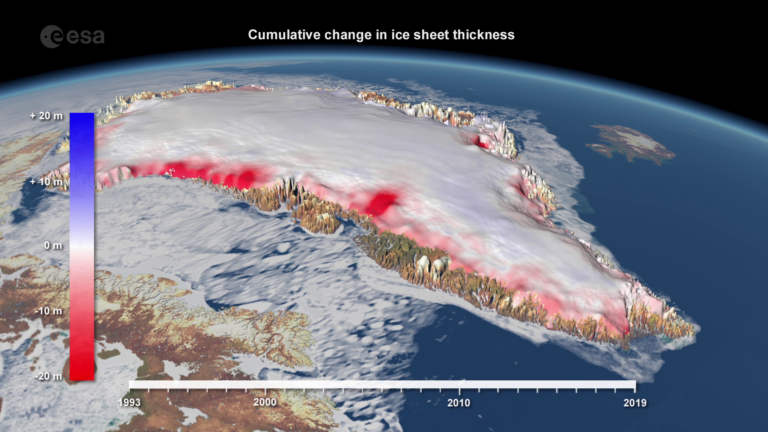
Greenland And Antarctica Lost Over 12 Trillion Tons Of Ice Since 1979
Satellite observations reveal that Greenland and Antarctica have shed massive amounts of ice since 1979.
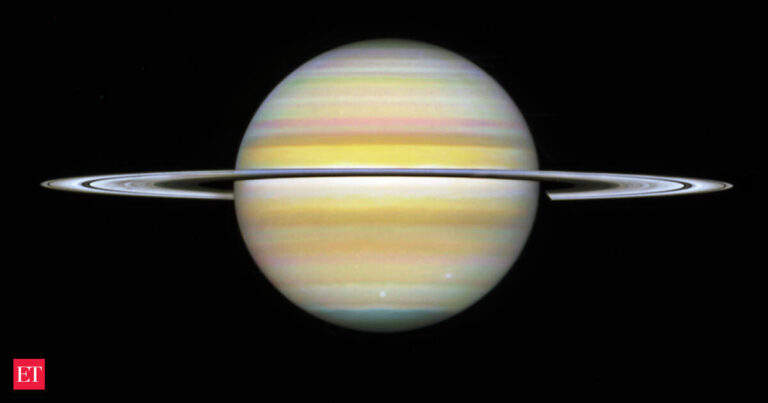
Hubble Telescope Discovers Massive Decagon Wave at Saturn’s South Pole
Astronomers using the Hubble Space Telescope have discovered a massive, 10-sided atmospheric wave pattern encircling Saturn’s south pole.

Antarctic Krill Discovered Feeding at Deep-Sea Hydrothermal Vents
In a first for scientific history, researchers have discovered Antarctic krill utilizing deep-sea hydrothermal vents as a habitat,...