
As Wall Street awaits Nvidia’s fiscal second-quarter financial results on Wednesday, August 26, 2026, analysts expect revenue to reach $92.17 billion. The upcoming report serves as a major trade barometer for the artificial intelligence sector, signaling whether infrastructure spending by big tech is accelerating or stabilizing.
Earnings Expectations and Financial Targets for Q2
Nvidia is scheduled to report its fiscal second-quarter numbers after the market close. According to consensus estimates compiled by LSEG, analysts project earnings per share of $2.10 on revenue of $92.17 billion according to analyst estimates compiled by LSEG.
The company is seeing massive growth compared to previous periods, with revenue in the latest quarter expected to almost double from $46.7 billion a year earlier.
Nvidia as the Ultimate Barometer for AI Spending
Beyond the raw financials, market participants are treating the earnings release as a referendum on the broader trade. Financial institutions and portfolio managers view the chip maker’s results as an indicator of corporate commitment to infrastructure.
“Nvidia is the best barometer for AI spending,” said Rob Conzo, chief executive officer of the Wealth Alliance, which owns Nvidia shares in several portfolios. “It will help determine if hyperscalers are still accelerating, from an infrastructure perspective, or if they’re becoming more disciplined.”
Rob Conzo, Chief Executive Officer of the Wealth Alliance
That sentiment underscores why Wall Street is focused less on whether the company beats consensus estimates and more on what the guidance reveals about customer demand. Following a historic three-year rally, investors have cooled somewhat on the stock this year, sending shares up just 14% as of Tuesday’s close. Even so, the equity continues to slightly outperform the Nasdaq as the business hums along.
Product Cycles, Supply Pressures, and Future Guidance
The company is currently navigating a major product transition. Its new Vera Rubin AI systems have started shipping to major customers including Microsoft and OpenAI, leaving investors eager to hear how sales are ramping up and whether supply constraints are easing as the new Vera Rubin AI systems begin shipping.
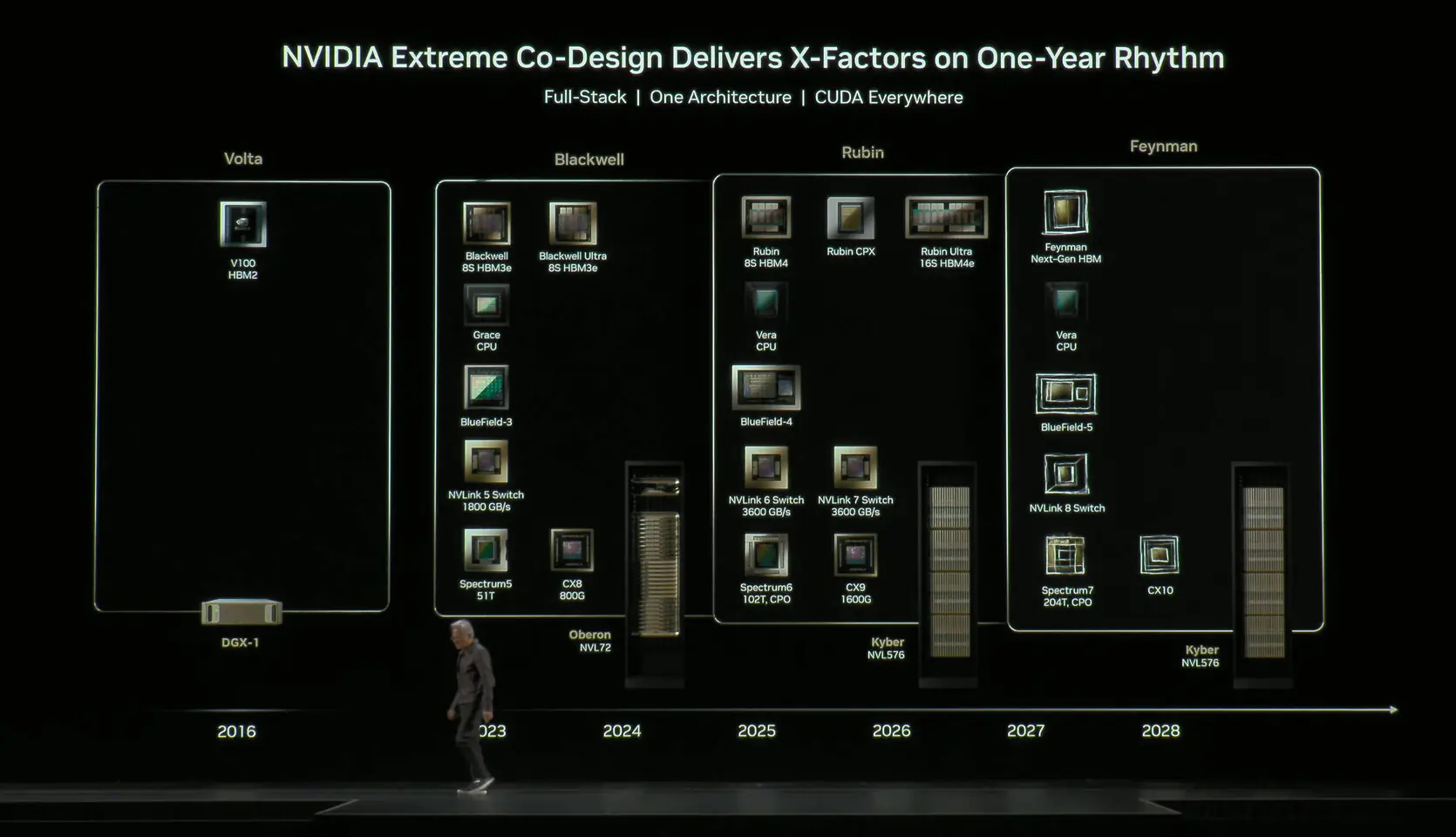
At the company’s GTC conference earlier this year, leadership told attendees to expect $1 trillion in sales through 2027 spanning both current-generation Blackwell chips and Vera Rubin hardware. Yet this expansion arrives alongside mounting market pressures. The business faces rising competition from Advanced Micro Devices, Google, and others, while managing soaring memory costs amid a worldwide shortage that shows no signs of abating.
Following the earnings release, the company’s conference call with investors is scheduled for 5 p.m. ET, followed by an appearance by CEO Jensen Huang on CNBC’s Mad Money
at 6 p.m. ET to discuss the quarterly results with Jim Cramer.
Keep reading
TCL Note A1 Nxtpaper Tablet Drops 17% in Amazon Deal
As of August 26, 2026, the TCL Note A1 Nxtpaper Tablet is on sale at Amazon for $499.98,...
Scalper Bots Outnumber Human Shoppers 10-to-1 on DDR5 RAM Retail Pages
Automated scalper bots outnumber real human DDR5 RAM shoppers by up to 10-to-1 on online retail pages.

Android Pulse App Appears in Google Play Updates As System Diagnostic Tool
An unfamiliar system tool called Android Pulse has recently appeared in the Google Play updates list for many...

Rosalyn Bird Resigns From BC Conservative Caucus Amid Leadership Friction
Rosalyn Bird, the MLA for Prince George-Valemount and a former caucus whip, has resigned from the British Columbia...