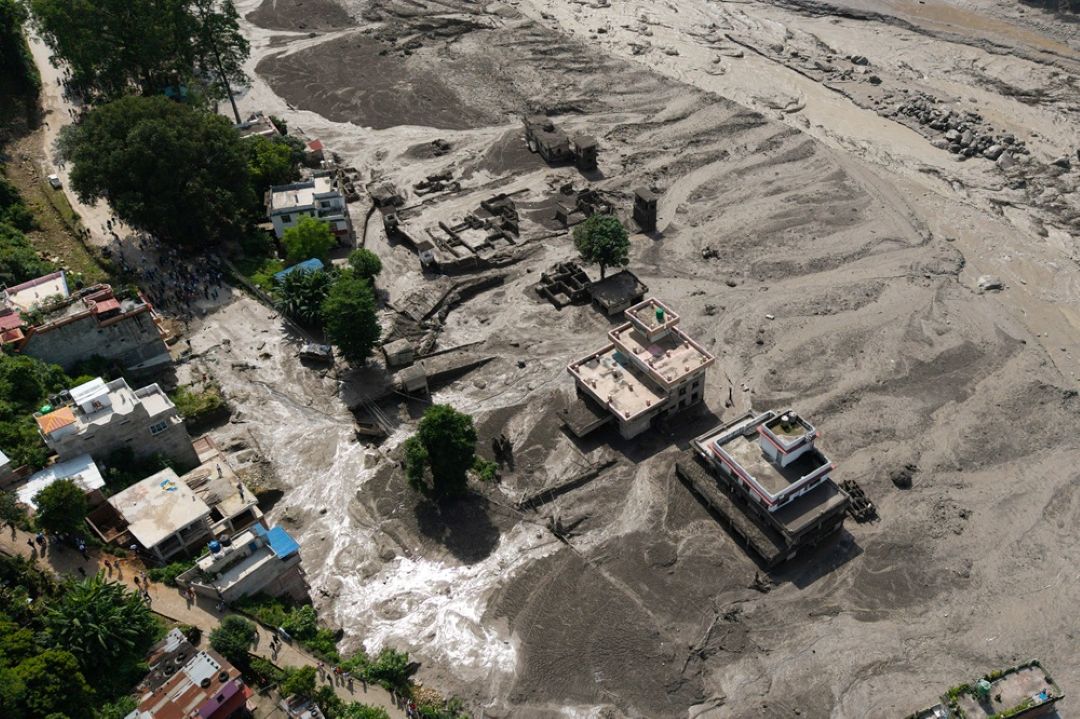
Catastrophic flash floods along the Nepal-China border have left at least 157 people dead and hundreds missing, including dozens of foreign nationals and pilgrims.
A sudden and violent surge of mud, rock, and freezing water tore through the Himalayan border region, catching travelers, residents, and workers entirely unawares. Initial reports from regional authorities pointed toward seismic activity, but the U.S. Geological Survey later clarified that the tremor recorded in the area was generated by the catastrophic collapse itself rather than an earthquake.
Scientists and disaster specialists point to glacial instability as the underlying catalyst.
Rasuwa District Devastation and the Missing Pilgrims
The mountainous district of Rasuwa bore the brunt of the disaster on the Nepali side, where rising river levels prevented rescue helicopters from landing in affected mountain settlements like Syapru Besi and Timure. Witnesses described apocalyptic scenes as entire communities vanished beneath heavy gray torrents.
“It was a huge gush of mud coming straight towards us. As it got closer, it kept rising higher and higher. When I saw it enter our home, I tried to grab my wife’s hand and take her to the terrace. But she was swept away by the mud.”
Keshav Prasad Baral, via Star Advertiser
Mr. Baral later recounted that four or five hours later, a helicopter came to rescue me
while noting that my wife is still somewhere beneath the mud. She’s gone.
Health worker Tula Bahadur BK added from the Rasuwa valley that there is devastation everywhere we look,
noting that local settlements had been completely swept away.
The human toll spans multiple continents due to the timing of the disaster during peak pilgrimage and trekking season. According to figures provided by Nepal’s tourism board and compiled through local travel agencies, more than 400 travelers remain uncontactable, with over 340 of them holding foreign citizenship. Among the missing are 133 Indian nationals journeying toward the sacred Mount Kailash pilgrimage site in Tibet, alongside 47 Americans, 34 Australians, 33 Britons, and 24 Canadians. Authorities also confirmed that eight South Korean hydropower plant workers were missing.
Cross-Border Infrastructure Damage and Emergency Response
On the Chinese side of the Himalayas, the disaster struck Gyirong County in southwest Tibet. Chinese state media outlets reported at least three deaths and 265 missing individuals, with rescue operations hampered by severed communication lines and blocked roadways.

Infrastructure damage inside Nepal severely hobbled initial relief efforts. Government figures indicate that at least 19 road bridges were destroyed, cutting off remote mountain communities. Nepal’s energy ministry reported that 430 megawatts of electricity supplies were disrupted—representing more than 12 percent of the nation’s total national hydropower capacity.
International leaders responded swiftly as the full scope of the disaster emerged. Meanwhile, the U.S. State Department issued a brief statement confirming that federal officials were closely tracking the crisis and monitoring the status of affected American citizens.
Downstream Flood Alerts and Ongoing Recovery Operations
With rescue personnel facing near-impossible conditions in debris-choked river valleys, authorities turned their attention toward downstream safety.
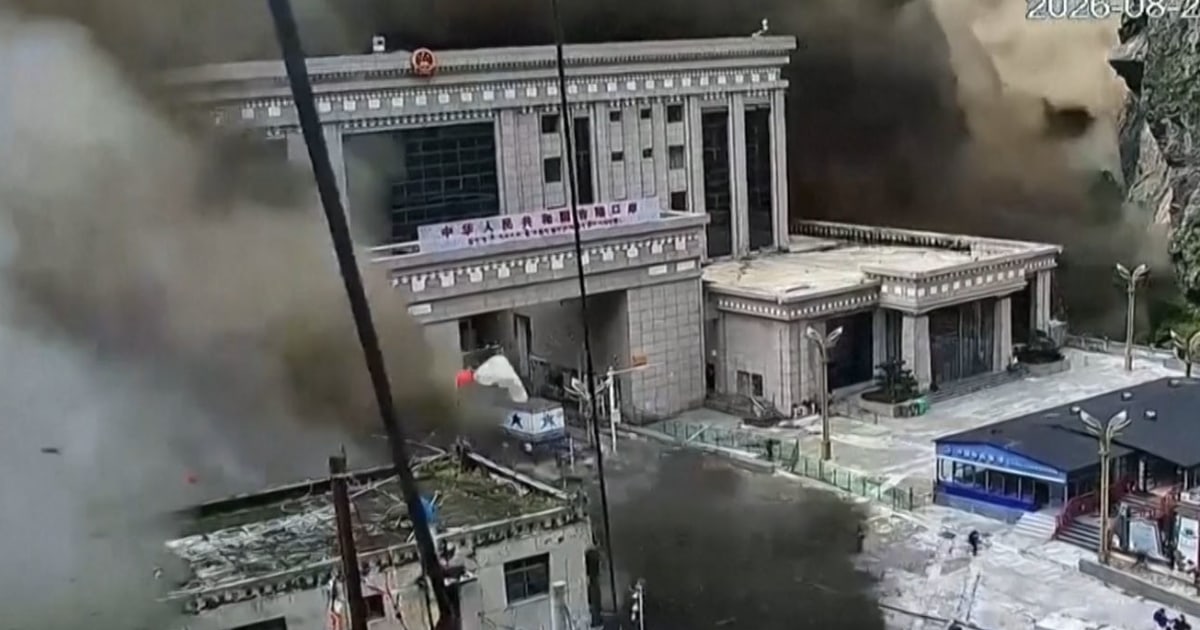
Compounding the immediate danger, environmental monitors warned that a secondary catastrophe remains possible. Scientists at the International Centre for Integrated Mountain Development cautioned that a substantial debris blockage remains lodged upstream along the border river, raising the specter of a secondary outburst should the temporary impoundment give way. As police and military units press forward with recovery work under mounting pressure, search teams continue combing through the mud and receding waters to account for the hundreds still missing.
Keep reading
UN Recognizes Sahel Integrated Resilience Initiative as Restoration Flagship
The Sahel Integrated Resilience Initiative was recognized as a World Restoration Flagship at UNCCD COP17 in Ulaanbaatar, Mongolia.

US Launches Operation Economic Outcast to Target Iran Trade Partners
The United States has widened its economic pressure campaign against Iran by launching Operation Economic Outcast, targeting nearly...

Kremlin Adviser Warns UK Drone Factories May Face Attacks
Following a high-profile visit to Kyiv by UK Prime Minister Andy Burnham, Kremlin advisor Andrei Fedorov warned that...

Trump Threatens 50% Tariffs on Canadian Vehicles and Steel
US President Donald Trump announced on Monday that United States tariffs on all Canadian cars, trucks, automotive parts,...