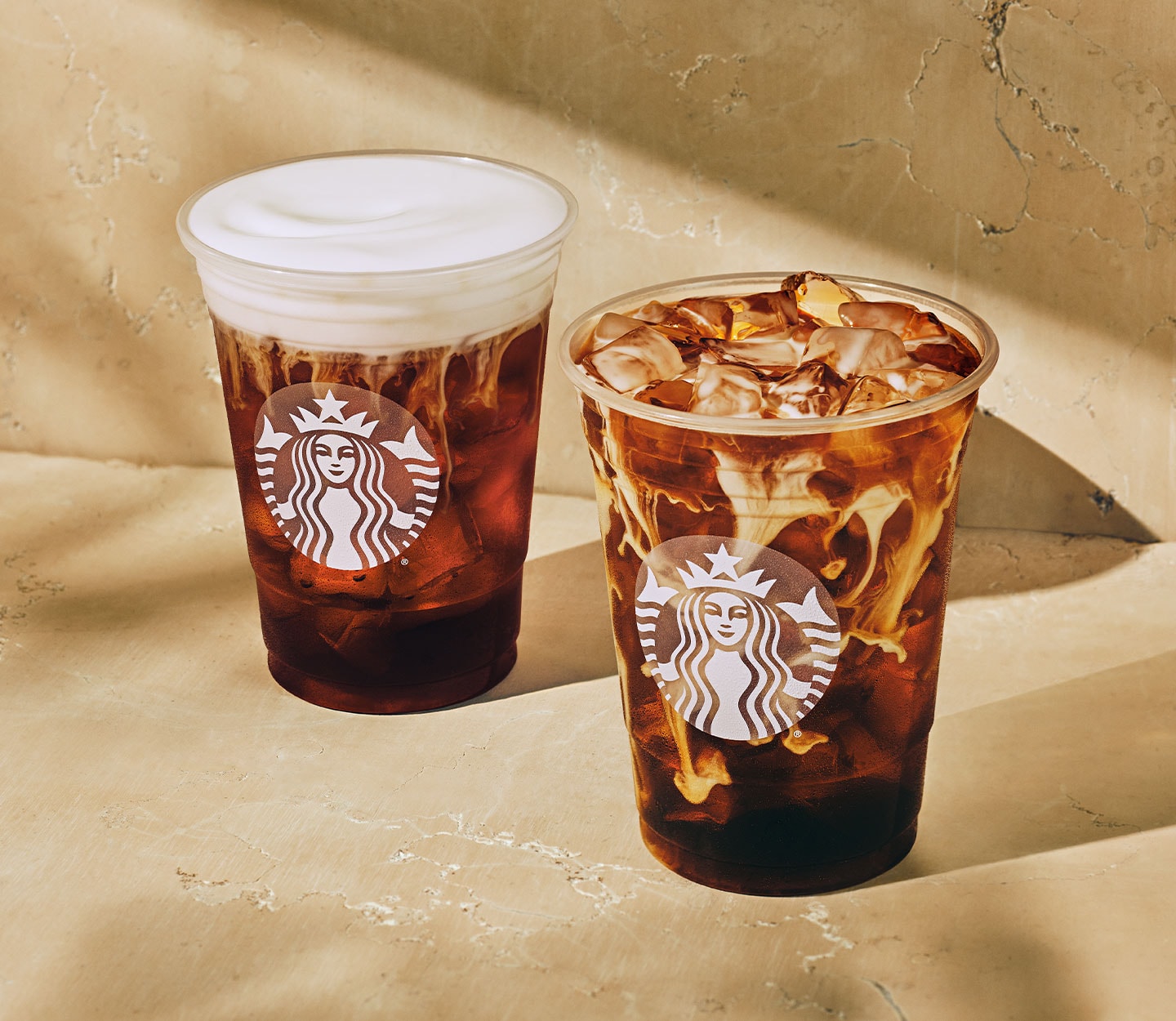
Starbucks is seeing a massive shift in customer habits as three out of four drink sales become cold beverages, fueled by younger buyers seeking customization and self-expression. While the coffee giant navigates falling same-store sales and rising competition, rival chains are seizing the seasonal spotlight.
The Cold Drink Revolution and Gen Z Customization Habits
Walk into a Starbucks today, and the drinks crossing the counter are far more likely to be iced than piping hot. Although the company built its empire on hot coffee more than five decades ago, corporate data reveals that three out of every four drinks sold now are cold.
For consumers born between 1997 and 2012, traditional hot coffee often takes a back seat to heavily customized iced refreshers, protein shakes, and dirty sodas—a concoction of foam, syrups, and juices. Elaine Ling, a 21-year-old who splits her time between New York and California, told the BBC:
Gen Z consumers are increasingly choosing cold drinks that they can customise themselves over traditional coffee. Tristan Höver, global insight manager for hot drinks at Euromonitor International, told the BBC that younger consumers increasingly see drinks as something they can tailor to a specific moment or need.
“Customisation gives them a sense of control,” Höver told the BBC.
He says Gen Z is price-sensitive but willing to pay more if the drink feels special, larger, or functional. With cold drinks, he says, size, layers, and visual appeal help justify the higher price. Jerry Sheldon, an analyst at IHL Group, sees these habits as part of a larger cultural shift, noting that cold drinks are a form of self-expression
and another way to signal identity, much like clothing or hair colour.
Financial Headwinds and Rising Rival Competition
This cultural pivot toward cold beverages arrives alongside challenging financial numbers for the coffee giant. Last week, Starbucks released results for its second quarter of fiscal 2024, ended March 31. Overall, the report didn’t leave much to be desired, and shares have cratered 14%.
Analyzing retail businesses can be daunting because revenue growth can be misleading when investors are not told how much growth is derived simply from price increases. Moreover, considering retail businesses are constantly opening and closing locations, it can be hard to assess a company’s organic growth trends.
For this reason, one of the most important metrics for retail businesses is same-store sales, which measures activity from stores that have been open for at least one year and provides an important view of foot traffic and potential expansion or closures. For the period ended March 31, same-store sales declined by 4% year over year, with comparable sales dropping both domestically in the U.S. and internationally.
International Surprises and Overseas Product Drops
Starbucks has started selling a natty, retro-styled compact camera with dual sensors for easy selfies, trendy filters, and more for the equivalent of $30, with the kicker being that you will need to be in China to get one.
The Starbucks Retro Digital Camera was recently released in China for the start of the 2025 holiday season, costing only 198 yuan—about $28 or £21. While the camera may be cheap, it definitely doesn’t look cheap and nasty. It features a leather finish and comes in burgundy gold or green silver.
The budget coffee companion includes a second sensor ingeniously placed where the viewfinder would usually sit, giving you a functional selfie camera. Simply frame yourself and your cup of morning Joe on the rear LCD, as you would with a smartphone, and you get a selfie. The front sensor is used for framing shots in the conventional way. Also available in the camera are nine nostalgic/Y2K photo frame overlays and retro filters to give your images a shot of extra caffeine, alongside a functional shutter button and a built-in flash, though the top dials appear to be purely decorative.
Seasonal Menus and the Battle for Dessert Drinks
Back in other markets, iced coffee is being cancelled as it’s all about drinks that double as dessert, and Starbucks are leading the way with its new range of Cloud Frappuccinos. There are three flavours landing in the UK—Strawberry Matcha, Brown Sugar, and Caramel Mocha—with the first featuring a matcha green base topped with an eye-catching thick layer of pink cold foam.
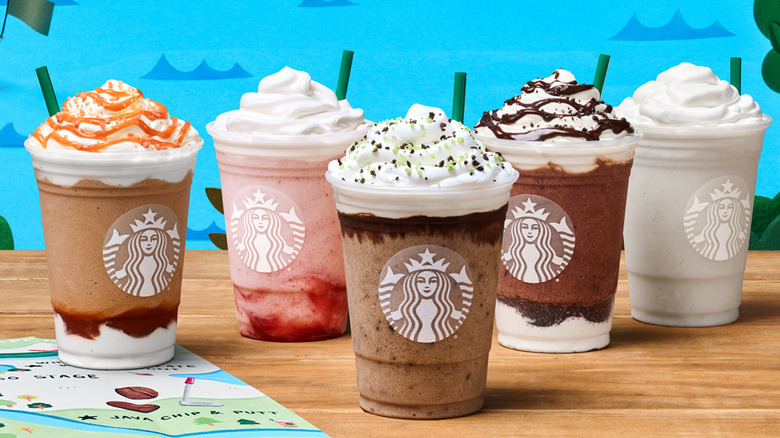
Starbucks aren’t the only ones to jump on the dessertification
of drinks. Costa recently launched a Jaffa Cake frappé, while Farmer J is adding an earthy-sweet hojicha and maple iced latte to its summer menu. Elsewhere, Grind reports pistachio lattes have surged by over 1,500% in the past year, while caramel has seen a 1,300%+ jump in revenue.

When Starbucks’ fall menu was leaked in July of this year, some customers were highly dismayed to learn that their favorite Apple Crisp coffees weren’t being brought back, getting banana bread-flavored drinks, matcha, and pecan instead. Canada-based Tim Hortons stepped in to fill those shoes by dropping a line of cinnamon caramel apple lattes along with pumpkin spice drinks, rolling out nationwide starting on August 12.
The news was shared via an Instagram post by food enthusiast @markiedevo, prompting customers to comment with praise such as:
“Thanks @timhortonsus for actually giving us apple unlike some coffee shops,” and “@timhortonsus thank you for thinking of the Apple lovers!! I am now a Timmies girl, I’m boycotting @starbucks because they don’t listen to us and didn’t give us Apple!”
Tim Hortons is really doing some heavy lifting, because so far this year, it seems it’s the biggest chain that is offering apple drinks, continuing a trend where Starbucks did not feature apple drinks last fall either.
Related reading
- Putin May Deploy Tactical Nuclear Weapons in Ukraine as Last Resort
- Baltic Sea Nations Plan Joint Task Force for Drone Defense and Infrastructure
- Why Tonight's Near-Total Lunar Eclipse Isn't a Monthly Event (daybreakwire.com)
- Türkiye: European Court Orders Rights Defender’s Immediate Release (newsarchyuk.com)

Putin May Deploy Tactical Nuclear Weapons in Ukraine as Last Resort
Russian President Vladimir Putin could deploy tactical nuclear weapons in Ukraine as a last resort as peace talks...

Baltic Sea Nations Plan Joint Task Force for Drone Defense and Infrastructure
Nations bordering the Baltic Sea plan to establish a joint rapid-response task force for drone defense and critical...
China Warns of High Risk of Barrier Lake Breaching Near Nepal-Tibet Border
Chinese authorities warn of a high risk of a barrier lake breaching near the Nepal-Tibet border, threatening a...

Israeli Military Launches Targeted Strikes in Southern Lebanon
The Israeli military launched targeted strikes in southern Lebanon on Wednesday following what it termed a blatant violation...