
Coinbase CEO Brian Armstrong predicts Bitcoin could reach between $300,000 and $400,000 by 2030, driven by regulatory progress and institutional adoption. Speaking on Fox Business following a White House meeting with President Donald Trump and top regulators, Armstrong’s outlook anchors a broader crypto market recovery as traders eye upcoming legislative milestones.
Cryptocurrency markets staged a sharp recovery this week, lifting Bitcoin past the $72,000 mark and triggering billions in short liquidations. Amid the renewed momentum, Coinbase Global CEO Brian Armstrong appeared on the Fox Business Network to outline an ambitious long-term valuation for the world’s largest digital asset, projecting a four-year path that could see prices quadruple from recent ranges.
The $300,000-to-$400,000 Forecast by 2030
While he stopped short of mapping out a month-by-month trajectory, he pointed directly to the end of the decade as a realistic window for unprecedented valuation milestones.

That projection represents a recalibration from previous expectations.
To reach the lower end of Armstrong’s target, Bitcoin would need to deliver a compound annual growth rate of roughly 31.6% from current levels near $78,000, while a move to $400,000 would require a CAGR of about 41.4%. Historical data indicates that Bitcoin has previously achieved a 33.6% CAGR between August 2017 and July 2026, a timeframe that includes severe historical drawdowns such as a 73% drop in 2018 and a 64% decline in 2022.
White House Meetings and the Push for the CLARITY Act
Armstrong’s bullish comments arrived a day after President Donald Trump hosted a high-profile White House gathering bringing together major cryptocurrency executives alongside traditional financial leaders, SEC Chairman Paul Atkins, and CFTC Chairman Michael Selig. During the event, the administration urged lawmakers to advance the CLARITY Act, a piece of legislation designed to establish clear federal regulatory boundaries between digital commodities and securities.

The legislative effort aims to place Bitcoin explicitly under the sole jurisdiction of the Commodity Futures Trading Commission, shielding the asset from overlapping regulatory disputes. Although a Senate vote on the bill was initially targeted for August, delays pushed the timeline to September. The framework has faced resistance from parts of the banking lobby over stablecoin yield provisions, but Armstrong dismissed those concerns during his Fox Business appearance.
“There’s actually a number of banks who’ve come out and endorsed the Clarity Act. Most banks recognize that it gives them new powers that allow them to grow their business with this new technology, which is great. There’s still a few holdout banks, I would say, that are against it.”
Brian Armstrong, CEO of Coinbase, via Fox Business Network
Supply Dynamics and Institutional Capital Inflows
Beyond regulatory changes, the structural bull case relies heavily on the intersection of institutional demand and fixed supply. With more than 20 million of Bitcoin’s maximum 21 million supply already mined, the network’s upcoming halving cycles will continue to throttle new issuance.
Market infrastructure has evolved to absorb this demand through regulated investment vehicles. U.S. spot Bitcoin ETFs have provided pension funds, wealth managers, and institutional investors with compliant access channels that bypass the operational hurdles of direct custody.
Macroeconomic Pressures and Sovereign Debt
The broader economic environment also provides a supportive backdrop for hard-cap assets.
With a fully diluted market capitalization of $6.3 trillion at a $300,000 price point and $8.4 trillion at $400,000, Bitcoin would still trail the valuation of physical gold, which currently stands at roughly $31.5 trillion.
Worth a look

FCA Expands Misconduct Rules to 40,000 British Financial Firms
Nearly 40,000 financial firms are racing to overhaul internal reporting frameworks before a September expansion by the Financial...

DRC Grants Mota-Engil 30-Year Railway Concession in $1.25B Deal
The Democratic Republic of Congo has granted Mota-Engil a 30-year concession to rehabilitate and operate the Dilolo-Sakania railway.
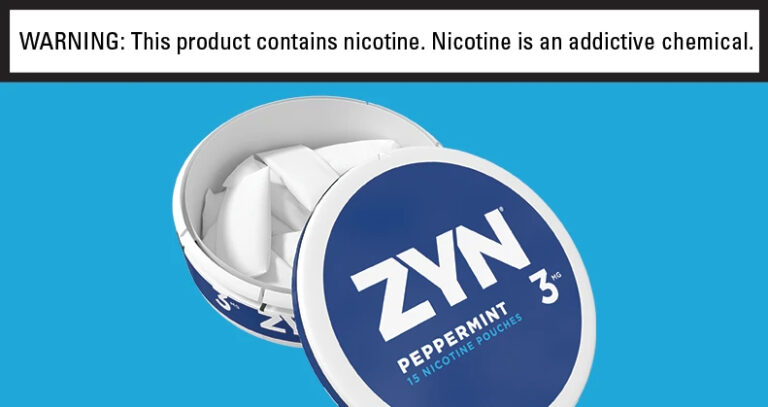
Big Tobacco Drives Nicotine Pouches as Cigarette Sales Decline
Nicotine pouches have quickly become one of Big Tobacco's most significant bets on a future beyond traditional cigarettes,...

East African Health Leaders Push to Position Region as Medical Tourism Hub
East African countries are actively seeking to position the region as a medical tourism destination by linking healthcare...