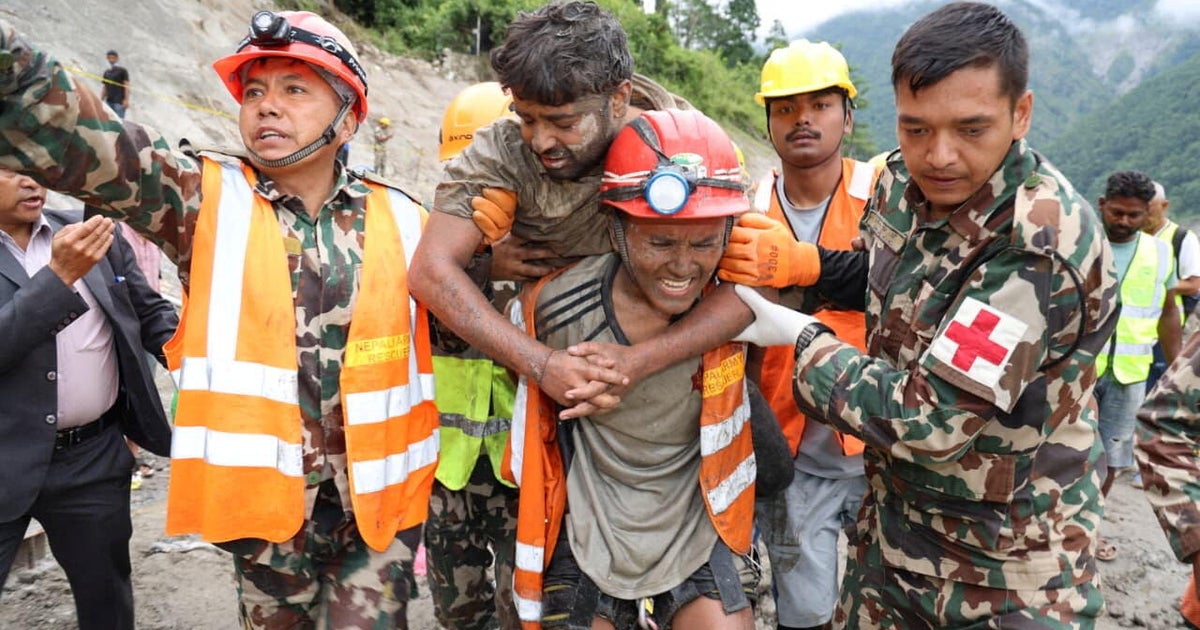
Rescuers in Nepal pulled two workers alive on Friday from a tunnel at the Trishuli 3A Hydropower Station, nine days after a devastating glacier collapse and mudslide. Sanjay Sah and Kabir Maharjan were recovered after emergency teams heard voices from inside, offering a breakthrough amid thousands still missing.
The Rescue at Trishuli 3A Hydropower Station
Emergency crews working along the Trishuli River reached a milestone on Friday when mechanical foreman Sanjay Sah and mechanical supervisor Kabir Maharjan were extracted from a blocked subterranean passage. The two men had been trapped since an ice, rock, and mud slide swept through the valley on August 26. Nepal army spokesperson Brig. Gen. Raja Ram Basnet confirmed the first trapped worker’s rescue, while Nepalese lawmaker Shri Ram Neupane shared updates of the second extraction on social media.
Rescue personnel first detected faint sounds emerging from the depths of the infrastructure early Friday morning. When search teams called out to inquire if anyone was inside, they received a brief, exhausted response confirming survivors remained underground. Television broadcasts captured footage of Sah and Maharjan emerging covered in dirt, with Sah carried on a worker’s back to a triage tent while Maharjan was lifted out on a stretcher.
Army medical personnel administered oxygen and evaluated vital parameters at a makeshift site near the mouth of the tunnel. Officials confirmed that both men sustained injuries to their hands and legs, likely from navigating the wreckage, alongside oxygen deprivation during their ordeal. Both survivors were subsequently airlifted to a hospital in Kathmandu for specialized medical care.
Family Relief and Relentless Search Operations
The successful extraction brought immediate relief to families enduring more than a week of agonizing uncertainty. Amir Maharjan, brother of the rescued supervisor, learned of the breakthrough through broadcast reports before receiving official confirmation. I can’t explain what we are feeling at the moment.

Scale of the Disaster Across the Himalayan Region
The disaster that trapped Sah and Maharjan stems from a massive environmental collapse on the upper reaches of the Trishuli River. According to Energy Minister Biraj Bhakta Shrestha’s office, the August 26 glacier collapse unleashed flash floods that destroyed towns, roadways, and schools near the border with China’s Tibet region. The disaster has claimed at least 1,259 lives in Nepal alone, according to the country’s disaster management agency.
The subterranean infrastructure along the river remains a critical hazard zone. Local authorities report that approximately 900 workers remain unaccounted for across 12 hydropower projects in Nepal, with roughly 500 believed to be trapped inside various tunnels. At the Trishuli 3A project specifically, the Independent Power Producers Association of Nepal notes that 557 workers are missing, with an estimated 115 trapped inside the main passage.
International Impact and Ongoing Rescue Hopes
The tragedy’s reach extends far beyond local communities. Australian authorities reported that 36 nationals remain missing in Nepal following the floods, a figure adjusted downward after two individuals were located safely overnight. Across the northern border, Chinese officials confirmed that the death toll in Tibet reached 21, with 541 individuals still listed as missing.
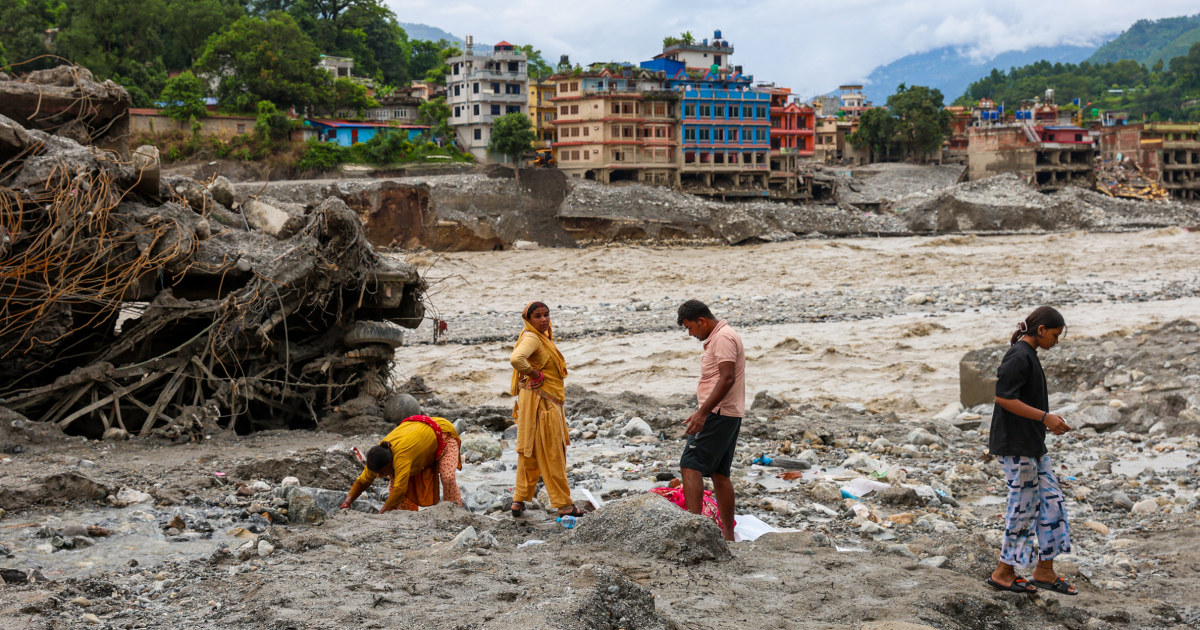
Despite the steep passage of time since the initial flooding, government officials maintain that survival remains possible for others trapped in air pockets within the tunnel networks. Nepal’s Communication Minister Bikram Timilsina emphasized that rescue teams are pressing forward with the operation. We are waiting for the rescue of more and more people,
wrote in a social media update.
Related reading
Oil Surpasses $97 Per Barrel as U.S. Diesel Prices Hit Highest Level Since 2022
Global crude oil surpassed $97 per barrel on Thursday, driving U.S. diesel fuel to $5.78 per gallon—a 53%...

Anthony Joshua Injured, Two Friends Die in Nigeria Car Crash
Two-time heavyweight boxing champion Anthony Joshua was injured and two of his close friends died in a Monday...
Iran Warned US That Israeli Attack on Ali al-Taher Ridge Would Trigger Response
Iran has delivered a warning to the United States indicating that any full-scale Israeli offensive targeting the Ali...
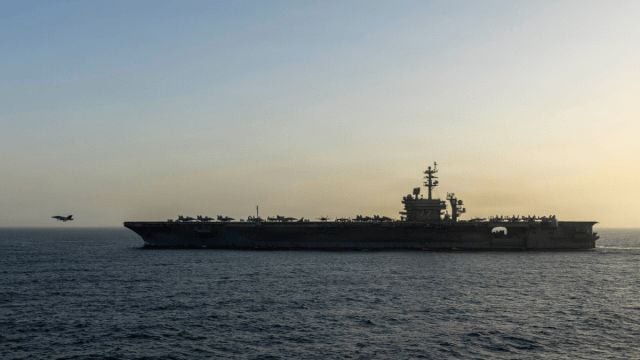
USS Abraham Lincoln Sailors Dock in Thailand After 286-Day Deployment
Thousands of sailors aboard the USS Abraham Lincoln docked at Thailand's Laem Chabang Port on Wednesday for a...