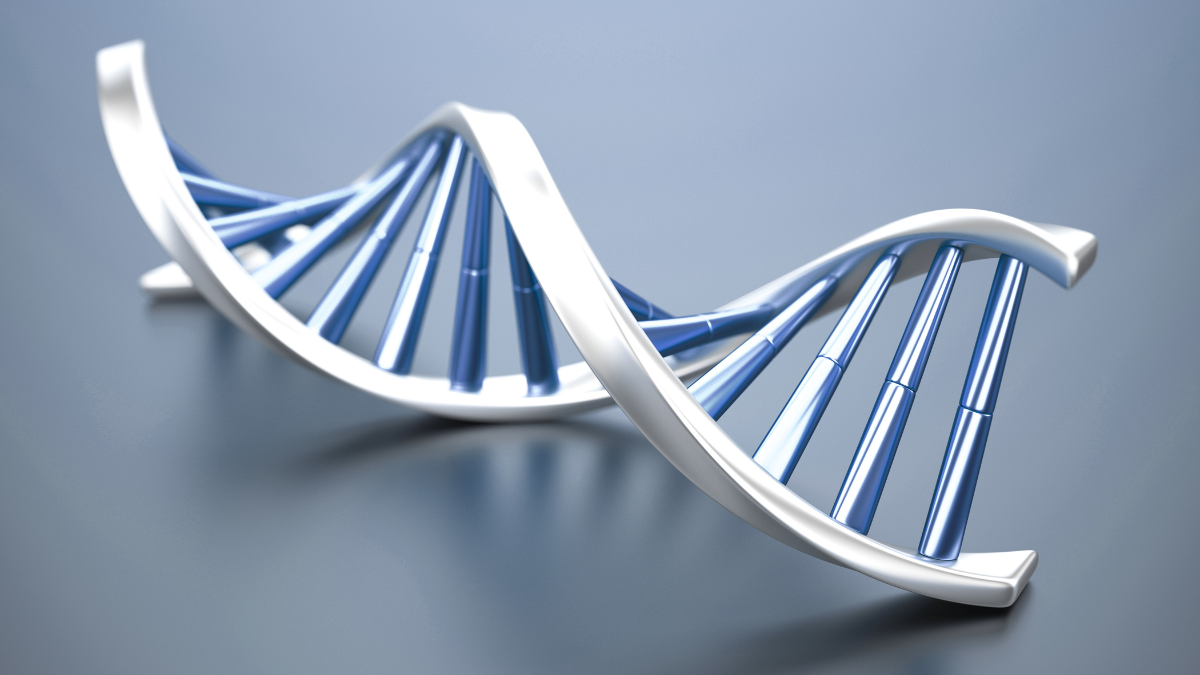
Published in Nature on September 2, 2026, a sweeping study pooling data from over one million people has identified more than 1,260 common genetic variants tied to the Big Five personality traits, challenging long-held assumptions about human psychology and biology.
For decades, behavioral science has wrestled with a fundamental question: how much of an individual’s psychological makeup stems from innate biology rather than lived environment? Psychologists have long mapped human character using the Big Five
traits—openness to experience, conscientiousness, extroversion, agreeableness, and neuroticism. Yet, while twin and family studies consistently indicate that personality is moderately heritable, pinpointing the actual DNA instructions behind those traits proved extraordinarily difficult.
Genome-Wide Association Studies Reveal Thousands of Tiny Genetic Effects
To break through previous statistical dead ends, a large consortium pooled 46 study cohorts incorporating between 611,000 and 1.14 million participants who provided DNA samples and answered standardized questionnaires. The resulting meta-analysis scanned complete sets of genetic instructions across diverse populations, uncovering 1,260 common genetic variants associated with at least one Big Five trait. More than 800 of these variants had never been identified before.
Despite the high tally, researchers emphasize that the results debunk any notion of a straightforward genetic blueprint for human behavior. Ted Schwaba of Michigan State University led the analysis, noting that the influence of individual DNA locations is remarkably modest. On his team’s numbers, the typical genetic variant identified for extraversion shifts a person by a tiny fraction of a percentile.
“There is no single ‘personality gene,’” said Schwaba. “Personality traits are associated with many genetic variants, but even the largest effects of individual genetic variants are still very small.”
Ted Schwaba, Michigan State University
Statistically, the identified common variants account for roughly 4.8 percent of the variation in agreeableness scores and 9.3 percent in extraversion scores, rising to 9.3 percent and 13.3 percent respectively when researchers utilized longer, highly reliable questionnaires. Across all measurements, genetics accounts for between 5 and 13 percent of total personality variance from person to person, leaving the vast majority to environment, experience, and life events.
Challenging Assumptions About Neuroticism and Serotonin
Beyond mapping basic behavioral tendencies, the discovered variants tracked directly with real-world health outcomes and life paths across whole populations. Individuals carrying variants linked to extroversion were more likely to contract Covid-19 early in the pandemic, a pattern epidemiologists attribute to socially outgoing individuals eagerly taking advantage of loosened interaction rules when restrictions began to lift. Conversely, genetic markers for high conscientiousness correlated with reduced substance use, more frequent sports participation, fewer hospital stays, and healthier aging overall.

One of the study’s most provocative implications centers on neuroticism. Dalton Conley, a sociologist at Princeton University who was independent of the research, pointed out that the findings directly challenge long-standing psychiatric models linking neuroticism primarily to serotonin levels in the brain—the chemical messenger targeted by many standard antidepressant medications. The genomic data revealed no strong, direct connection between the mood-related chemical and the genetic variants driving neuroticism.
“I wouldn’t say it’s slaying that theory forever, but it’s definitely casting doubt.”
Dalton Conley, Princeton University
Holding Up Against Family Confounders and Spousal Matching
Behavioral geneticists often face a persistent analytical hurdle: separating true genetic signals from the socioeconomic advantages and behavioral patterns passed down within families. To test whether shared family environments skewed the data, the research team ran targeted checks inside households, comparing genetic differences between non-identical twins raised in the same home and evaluating 34,506 parents and children in Iceland. Holding upbringing constant barely altered the statistical outcomes.
/https://tf-cmsv2-smithsonianmag-media.s3.amazonaws.com/filer_public/34/5d/345da7bc-77c2-4e35-af89-ccc2662f78c5/dna-personality.jpg "Photo: Smithsonian Magazine")
As Elliot Tucker-Drob, a psychologist at the University of Texas at Austin, noted to reporting outlets, the expanding catalogue of genetic markers gives scientists unprecedented analytical power to investigate how individual character traits intersect with broader population health.
Worth a look

Katalyst Space Abandons LINK Capture Attempt for Swift Observatory
NASA’s Neil Gehrels Swift Observatory will not receive its planned orbital boost after flight controllers abandoned the capture...

KAIST Identifies Surface Height Artifacts in Nanoscale Battery Analysis
Researchers at the Korea Advanced Institute of Science and Technology announced on September 7 that nanoscale battery analysis...

Hubble Space Telescope Reveals Giant Superbubble in Large Magellanic Cloud
Astronomers using the NASA/ESA Hubble Space Telescope have revealed a vast cosmic superbubble within nebula N44, located 160,000...

Hawaii Students Name Interacting Galaxies Nā ʻUhane Māhoe Huki Pū i ke Ola
Captured by the 8.1-meter Gemini North telescope on Maunakea, a striking pair of interacting spiral galaxies designated NGC...