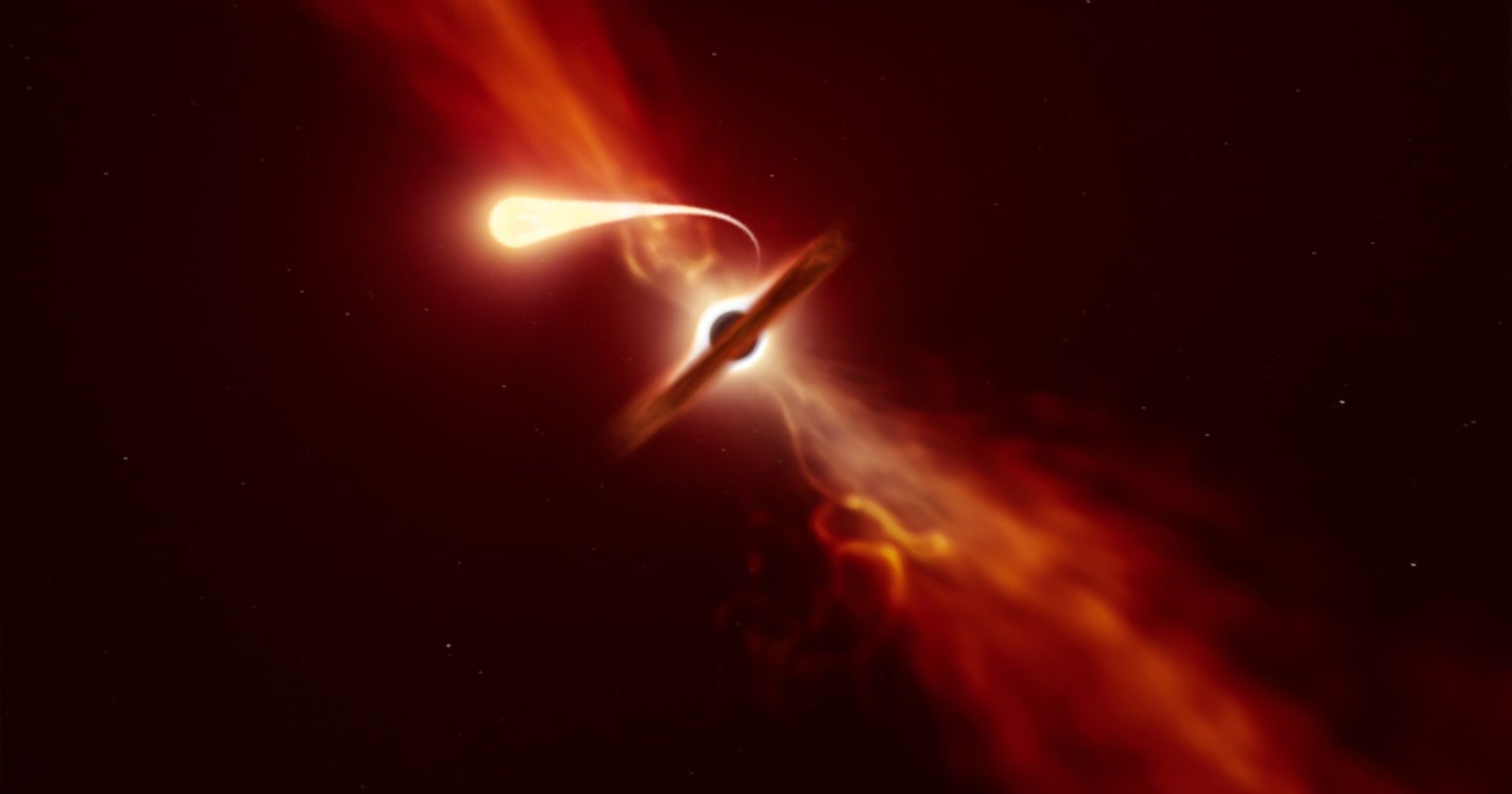
Astronomers have discovered a wandering supermassive black hole shredding a star approximately 30,000 light-years away from its host galaxy’s center. The discovery marks the first optical tidal disruption event found in the outskirts of a host galaxy, challenging long-held theories about where these cosmic phenomena occur.
Astronomers Detect First Peripheral Tidal Disruption Event
The phenomenon, catalogued as TDE 2025abcr, was identified in the galaxy WISEA J014656.04-152214.7. The host galaxy is located at a redshift of 0.0498, placing it roughly 720 million light-years away according to the cosmology assumed in the study, while separate estimates place the distance around 750 million light-years.
The black hole responsible for the blast weighs in at about a million times the mass of the Sun. It lies 9.5 arcseconds from the galaxy’s center, translating to a projected separation of 9.3 kiloparsecs, or about 30,000 light-years, on the plane of the sky. A separate team working from later observations by the James Webb Space Telescope and Keck Observatory measured the same separation as 9.08 kiloparsecs. Because this measurement is a projected separation, the true distance between the black hole and the galaxy center can only be larger.
Artificial Intelligence and the Hunt for Orphan Black Holes
Nearly every galaxy in the universe is anchored by a supermassive black hole sitting in its center, where approximately once every 100,000 years a star will drift too close and trigger a tidal disruption event. Astronomical surveys typically spot about 30 tidal disruption events per year somewhere in the universe, but prior to 2024, they had only ever been detected in galaxy cores because astronomers primarily looked for them where known supermassive black holes reside.
The existence of this off-center event was first flagged in November 2025 as an unusual brightening captured by the Zwicky Transient Facility, a survey conducted by the Palomar Observatory in Southern California. An artificial intelligence algorithm automatically recognized a flare that resembled a tidal disruption event despite its unusual location.
Stein noted that this discovery validates a new technique that can be used to hunt for more wandering black holes.
Observational Confirmation and Flare Characteristics
Because a flare in a galaxy’s outskirts resembles where a supernova would be expected, researchers conducted extensive follow-up observations to confirm the classification. Nine spectra were taken over six weeks across six facilities, ranging from the Palomar 60-inch telescope, the 4.1-metre SOAR telescope, and the Nordic Optical Telescope to the 10-metre Keck I telescope.
The spectra revealed a blue continuum with broad hydrogen and helium emission lines at the galaxy’s redshift, categorizing the object as a TDE-H+He class. The lines measure around 2,500 kilometers per second, which is narrower than the median of roughly 10,000 kilometers per second seen in a 16-object comparison sample.
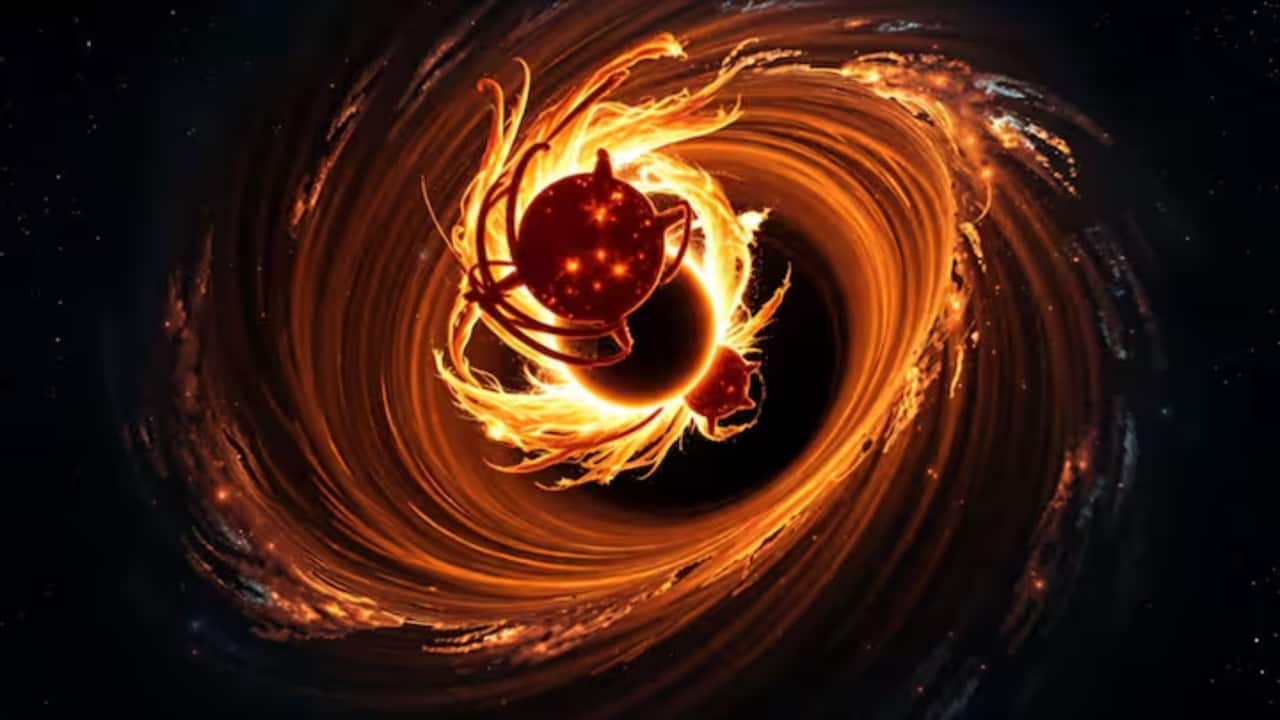
Observations confirmed unambiguously that the source is a tidal disruption event rather than an active galactic nucleus flare or a supernova, while luminous fast blue optical transients were excluded because the flare runs an order of magnitude fainter than known examples and evolves more slowly. The flare rose over about four weeks to a peak on November 14, 2025, and has been fading slowly since. With a peak absolute magnitude of minus 17.6, the event is fainter than 93 percent of the comparison sample. Researchers note that this dimness aligns with expectations for a lighter black hole located in the suburbs of a galaxy.
Origins of the Wandering Black Hole
The discovery raises fundamental questions about how supermassive black holes can travel so far from galactic centers. Researchers have outlined two primary possibilities for how the newfound black hole became off-kilter.
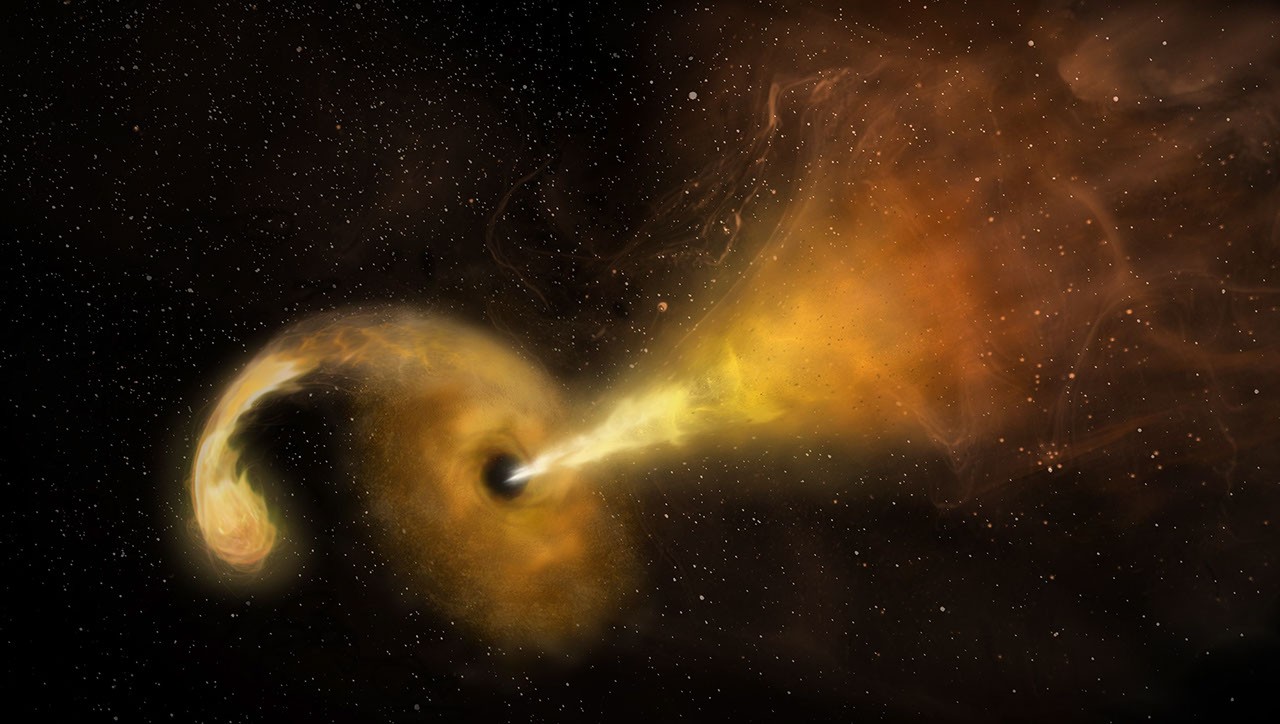
Scientists believe that while the host galaxy’s main supermassive black hole remains at its core, the black hole eating the star could have started off in a small galaxy that eventually merged with the larger host galaxy. Alternatively, the black hole may have been flung to its current position. At present, astronomers cannot yet say definitively whether the black hole was flung there or represents the last dense trace of a swallowed galaxy.
Meanwhile, pointed science observations using NASA’s Neil Gehrels Swift Observatory and its UVOT and X-Ray Telescope instruments have been temporarily suspended as the mission awaits an orbit boost planned for the summer.
Worth a look
- Ancient rocks from Western Australia suggest Earth was already dragging surface water into its mantle and using it to generate volcanoes 3.1 billion years ago — through a primitive recycling process that may have preceded modern plate tectonics
- NASA’s Roman Space Telescope Captures First Starlight Test Image
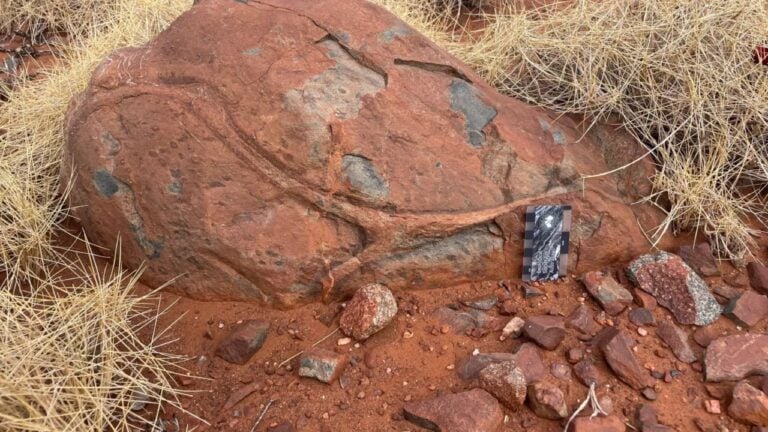
Ancient rocks from Western Australia suggest Earth was already dragging surface water into its mantle and using it to generate volcanoes 3.1 billion years ago — through a primitive recycling process that may have preceded modern plate tectonics
Geologists examining ancient volcanic formations in Western Australia have discovered evidence that water was influencing Earth's interior and...
NASA’s Roman Space Telescope Captures First Starlight Test Image
NASA’s Nancy Grace Roman Space Telescope has activated its 300-megapixel Wide Field Instrument and captured its first starlight...
NASA Researchers Identify Largest Newly Formed Impact Crater in Solar System
What began as a routine data-quality check on a computer screen ended with the identification of a record-breaking...
Scientists Name New Genus of Australian Plant Bugs After Taylor Swift
Scientists have named a newly described genus of Australian plant bugs Swiftiephylus in honor of Taylor Swift, drawing...