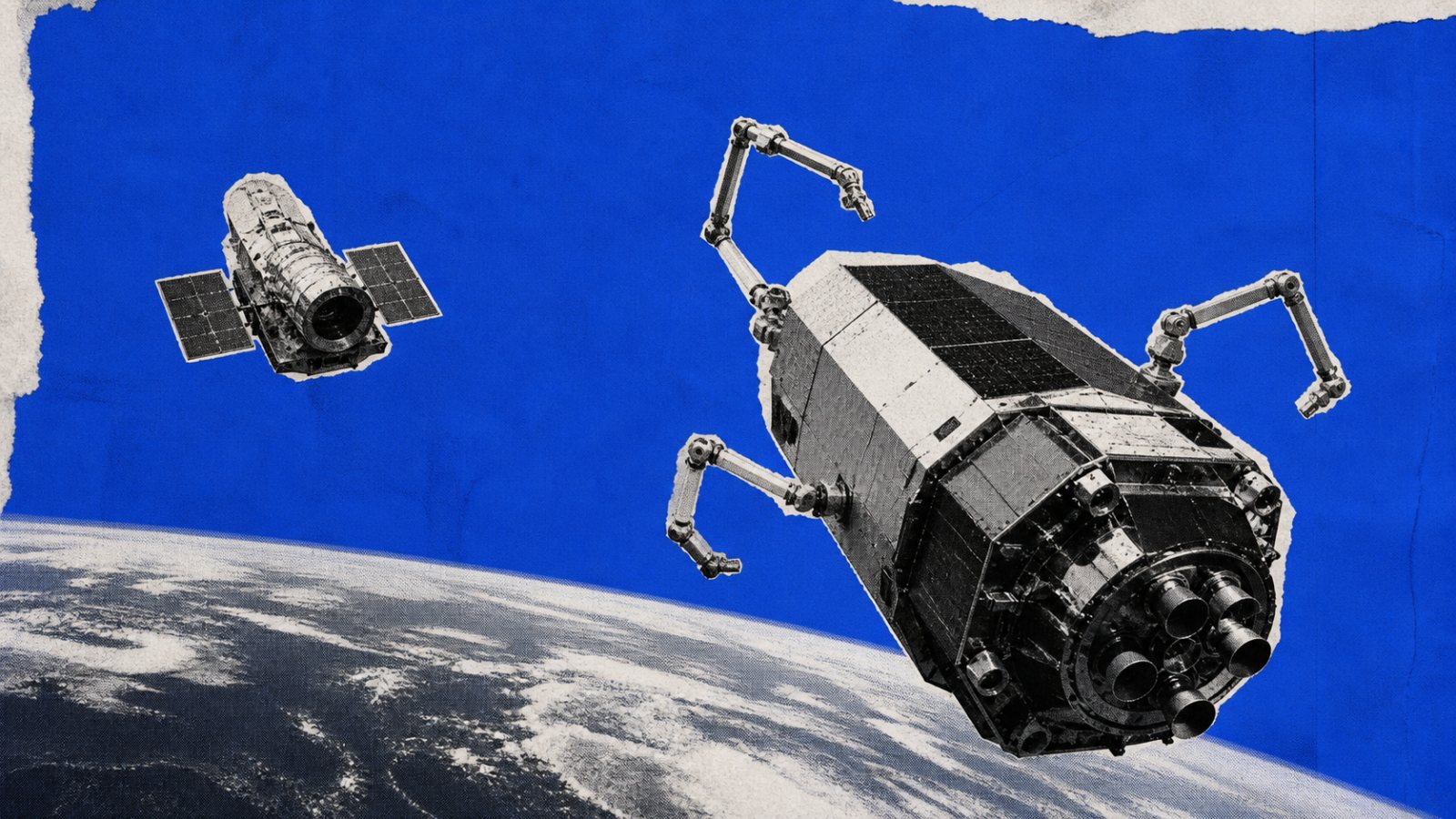
NASA’s Neil Gehrels Swift Observatory will not receive its planned orbital boost after flight controllers abandoned the capture attempt due to fuel consumption during recovery from an uncontrolled spin, though the servicing spacecraft recently came within 12 to 15 kilometers of the aging telescope to test its onboard systems.
Technical Failures Derail the $30 Million Swift Boost Mission
The $30 million rescue effort encountered serious setbacks when the servicing spacecraft, known as LINK, began spinning on its way to the target telescope. Katalyst Space managed to reduce the spin rate, but lingering control issues ultimately forced mission planners to scrap the primary intervention. As documented in NASA’s July 28 technical update, the decisive failure occurred before LINK entered the observatory’s vicinity, stemming from sporadic communications, two inoperable reaction wheels, and reduced functionality in the cold-gas thruster system.
Reaction wheels allow a spacecraft to change and hold its orientation without continuously expending propellant, while thrusters can provide control authority when wheels are unavailable or insufficient. Losing most of the wheel capacity therefore shifted more of the recovery burden onto systems with finite fuel. Flight controllers used LINK’s electric propulsion to slow the motion and worked around the degraded hardware. That recovery kept the spacecraft operable, but it consumed the reserve needed for the mission’s central task: reaching Swift, controlling the final approach, capturing the observatory and adding enough orbital energy to raise it.
According to NASA, the compressed development schedule sharpened that trade-off. Katalyst built the mission quickly because Swift was already losing altitude, but the rush limited the time available to obtain preferred components and complete a conventional development cycle. Speed created a chance to reach the telescope in time; it also left less room to absorb an on-orbit control failure.
Orbital Proximity Demonstrations Near the Observatory
With the boost maneuver removed from the plan, LINK’s objective changed from intervention to stand-off testing. Katalyst raised and adjusted its own orbit to align more closely with Swift, bringing the two vehicles within 7.5 to 9 miles (12 to 15 kilometers) of each other, and used its sensors near the observatory without beginning the final contact sequence. A separation of 12 to 15 kilometers is close in orbital terms but still leaves the spacecraft physically far apart. Operating near the telescope, the team deployed all three of LINK’s robotic arms and fired all three of the electric propulsion thrusters at the same time.
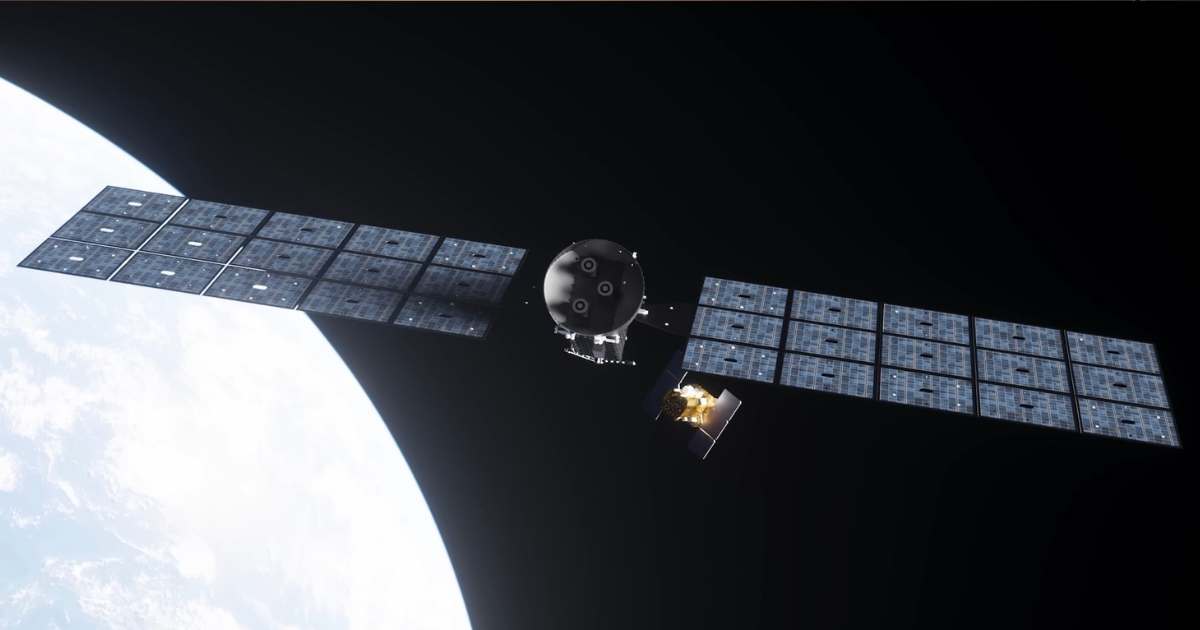
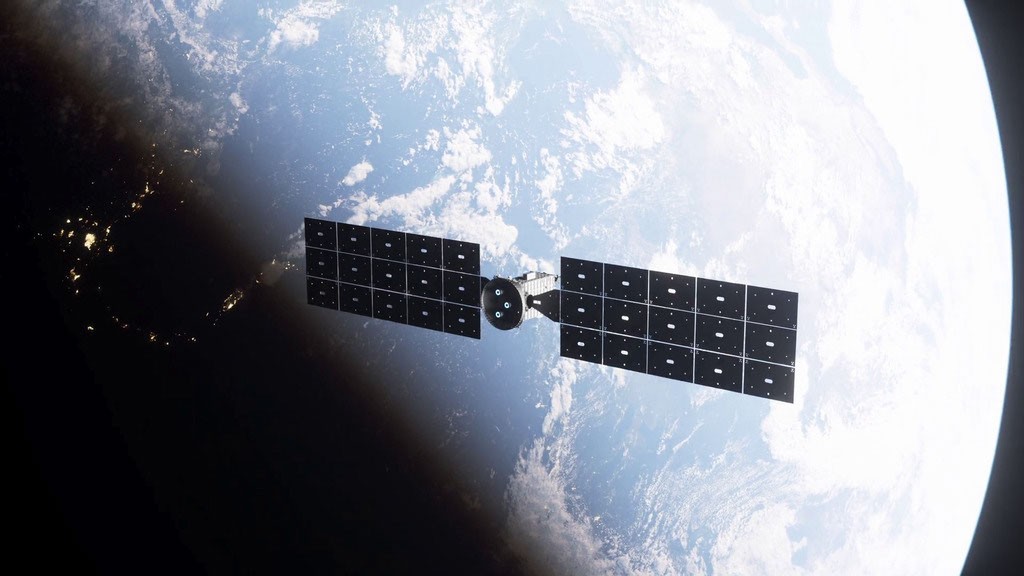
LINK’s deployed arms never touched Swift. Their operation demonstrated that the mechanisms could move in orbit, but it did not test grappling, securing the telescope or controlling the combined vehicles. Ending the approach preserved separation when limited fuel and degraded attitude control had reduced the available response to a navigation or pointing error. NASA confirmed that LINK will not make any closer approach to Swift throughout its remaining operations in orbit, serving out a secondary mission focused purely on proximity operations that are gathering data to inform future spacecraft servicing missions.
High-Risk Strategy and Institutional Outlook
Dr. Shawn Domagal-Goldman, Director of NASA’s Astrophysics Division in Washington, was upbeat about the outcome of the Swift rescue attempt.
acknowledging that it had always been a ‘high-risk, high-reward’ mission
Dr. Shawn Domagal-Goldman, Director of NASA’s Astrophysics Division in Washington
The data gathered from operating degraded hardware and managing orbital proximity will directly inform future spacecraft servicing technology and operations.
Remaining Lifespan for the Neil Gehrels Swift Observatory
While the Katalyst team estimates LINK will deorbit after another 2 to 3 weeks, Swift will continue along its orbit for at least another month or two before dipping below a critical threshold of 185 miles above Earth. Once under this altitude, Swift will be difficult to operate and will begin to descend faster, burning up in the atmosphere in the process.
With what remaining time is left, two of Swift’s science instruments have already been turned on, with the third likely to be restored to its data collection configuration soon. Meanwhile, NASA is scrambling to come up with ways to replace what was offered by Swift from an astronomy point of view, which was the unique capability to quickly turn towards gamma-ray bursts and other transient cosmic events in deep space. Their plan is to put existing space telescopes and observatories to use until a new mission can be launched.
Keep reading
Griffith University Researchers Map Growth Curves for Eastern Australian Humpback Whales
Eastern Australian humpback whales reach an average length of 10.9 meters by age five, according to new research...
NASA to Land Astronauts on Moon by 2028
NASA is adopting an urgent, streamlined approach to spaceflight, targeting the launch of Artemis III next summer for...

Laurentide Ice Sheet Expansion Began 2,000 Years Ago, But Stopped In The 1960s
Radiocarbon dating of dead moss preserved beneath the Barnes Ice Cap reveals that glacier expansion began around 2,000...

Egypt Uncovers Fossils of Five Extinct Shark Species in Western Desert
Fourteen shark teeth from at least five extinct species have been discovered in Egypt’s Western Desert.