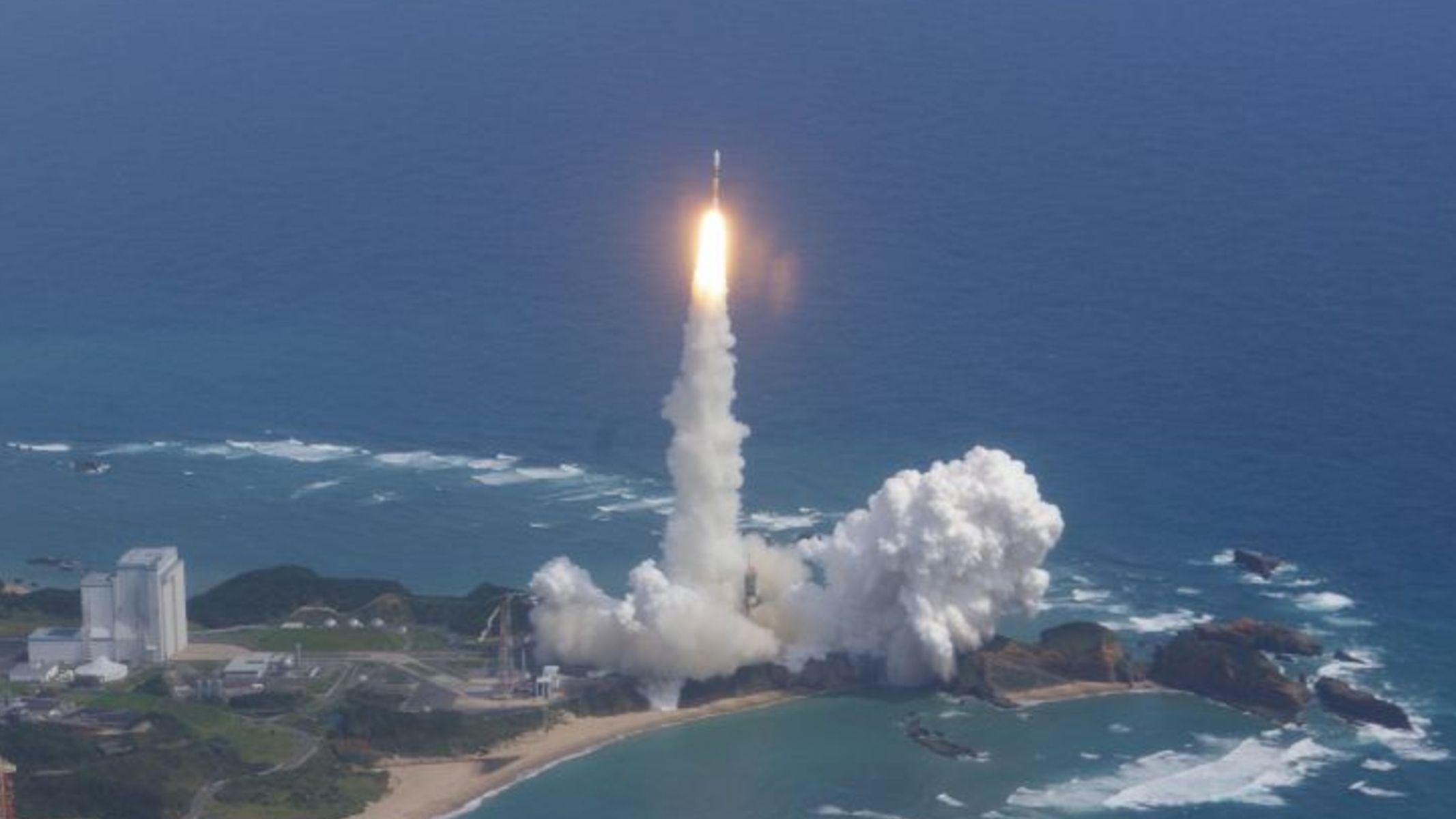
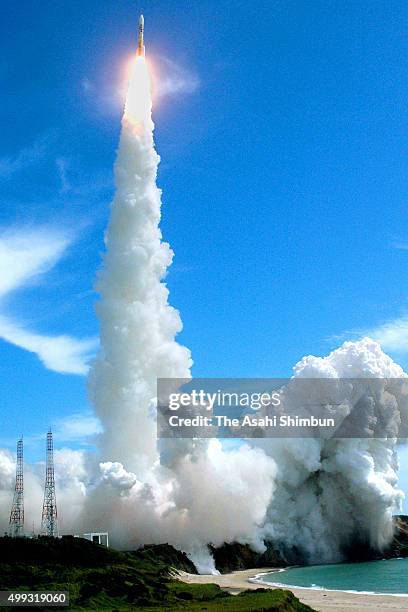
On September 13, 2007, Japan launched its advanced Kaguya spacecraft from the Tanegashima Space Centre aboard an H-IIA rocket. Formally designated SELENE, the mission deployed two microsatellites to map the Moon’s gravity field, topography, and mineral distribution in unprecedented detail.
Mission Architecture and the Three-Craft Array
Originally known as SELENE—an acronym for SELenological and ENgineering Explorer—the Kaguya spacecraft represented the most advanced lunar undertaking since the Apollo era. The primary orbiter traveled alongside two small satellite helpers, Okina and Ouna, designed to function as a relay station and a radio source experiment, respectively. Together, the trio executed a trajectory that included looping around Earth twice before heading toward the Moon. The spacecraft carried 14 science instruments and two tiny microsatellites to map the moon’s surface and study its gravitational field after a 20-day journey to the moon.
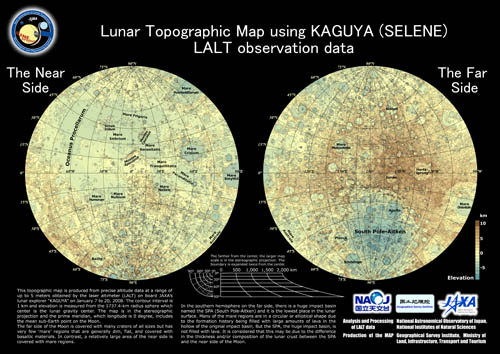
The main craft carried a suite of 14 science instruments, including ground-penetrating radar meant to investigate lunar subsurface structures down to a depth of several kilometers. Spectrometers mapped mineral distribution across the surface, a laser altimeter handled topography, and a high-resolution camera documented geographical features down to fine detail. While technical instruments gathered physical data, the mission also captured the public imagination by recording the first high-definition video of an Earthrise over the lunar horizon. The spacecraft also created a complete topographical map of the moon, detected gravity anomalies on the near and far side of the moon and captured the first optical observations of the permanently shadowed interior of Shackleton Crater near the moon’s south pole, according to a NASA review.
Unlocking Lunar Origins and Surface Asymmetry
Scientists utilized the mission data to evaluate the dominant scientific model of lunar genesis: that a Mars-sized body collided with Earth roughly 4.5 billion years ago, sending debris into orbit that eventually coalesced into the Moon. Researchers analyzed elemental compositions, internal construction, volcanic histories, and geographical differences between the near and far sides.
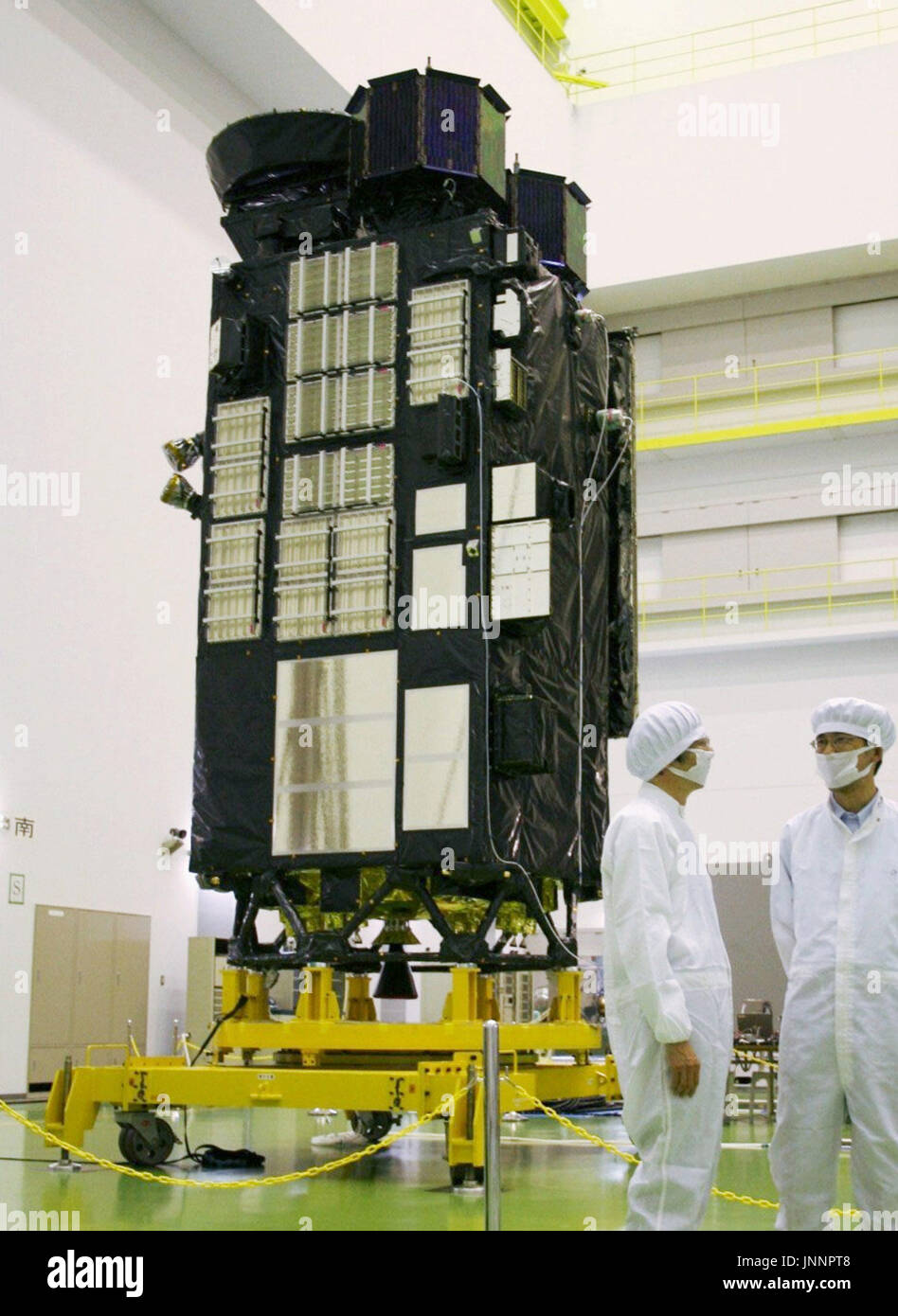
"elemental composition, internal construction, differences in geographical features on both sides, the transition from the molten state that is assumed to have happened after its birth, and its volcanic history . . ." says Kaguya project manager Yoshisada Takizawa.
The measurements gathered by the main orbiter and its microsatellites provided crucial clues regarding why the lunar crust is thicker on the far side. By measuring trajectory alterations across all three craft, researchers built a detailed gravity map that exposed hidden mass concentrations and gravitational variations. Paul Spudis of the Johns Hopkins University Applied Physics Laboratory in Laurel, Maryland, US, adds that by working together, the spacecraft can relay signals from the far side of the Moon to Earth – providing the first measurements of the gravity field of the far side.
Navigating Gravitational Anomalies and Stable Orbits
Mapping the Moon’s gravitational field serves a practical engineering purpose beyond academic curiosity. Because the lunar body exhibits pronounced local gravity anomalies, future robotic and crewed spacecraft face complex orbital mechanics.
"The Moon has much higher variations in its local gravity field [than Earth]" Spudis told New Scientist, adding that the origin of the lumps is not clear.
Understanding these gravitational tugs prevents future spacecraft from drifting out of alignment. As experts note, the better you know the gravity field, the better you can find stable orbits, making the gravitational data gathered by the mission an essential reference for subsequent lunar architecture.
Historical Precedent in Japanese Lunar Exploration
Kaguya marked a major technological maturation for Japan’s space program. While the nation had previously dispatched the Hiten spacecraft in 1990, that earlier mission functioned primarily as a navigation testbed that completed ten lunar flybys before intentionally crashing into the surface in 1993, alongside its small Hagoromo probe released near the moon.
Whereas Hiten and Hagoromo demonstrated preliminary flight systems, Kaguya put those technologies into full operational practice as Japan’s first dedicated lunar orbiter. Following its successful deployment, the spacecraft was officially renamed after the moon princess Kaguya-hime from a Japanese folktale shortly after launch as a result of a public poll.
Conclusion of Operations and the International Lunar Fleet
Kaguya completed its primary mission in October 2008 and JAXA mission planners had hoped to extend its moon flight through early 2009, but a faulty reaction wheel forced them to call off the extended mission early. They ultimately directed Kaguya to crash into the moon on Feb. 12, 2009, with the impact occurring near Gill Crater.
The mission operated amidst an international surge of robotic exploration, alongside a crowded field of robotic craft set to fly to the moon within the next year, including China’s Chang’e 1 lunar orbiter expected to launch in late 2007, India’s Chandrayaan-1 lunar orbiter scheduled to launch in May 2008, and NASA’s Lunar Reconnaissance Orbiter scheduled to launch in October 2008.
Related reading

Astronomers Identify Eos, a Massive Molecular-Hydrogen Cloud Near the Sun
Astronomers have identified Eos, a massive molecular-hydrogen cloud located roughly 300 light-years away and spanning 40 full-Moon widths...
Researchers Find Diamond Melting Point Is Lower Than Previously Measured
Researchers zapping synthetic diamond plates with a powerful ultraviolet laser discovered the mineral's melting point is more than...
NASA and IBM Launch AI Model to Analyze 17 Years of Lunar Data
NASA and IBM released the NASA-IBM Lunar Foundation Model on Thursday, September 10.

Astronomers Release Unite Supernova Catalogue to Test Dark Energy Constant
Astronomers releasing a unified catalogue of 2,884 exploding stars have added fresh weight to signs that dark energy...