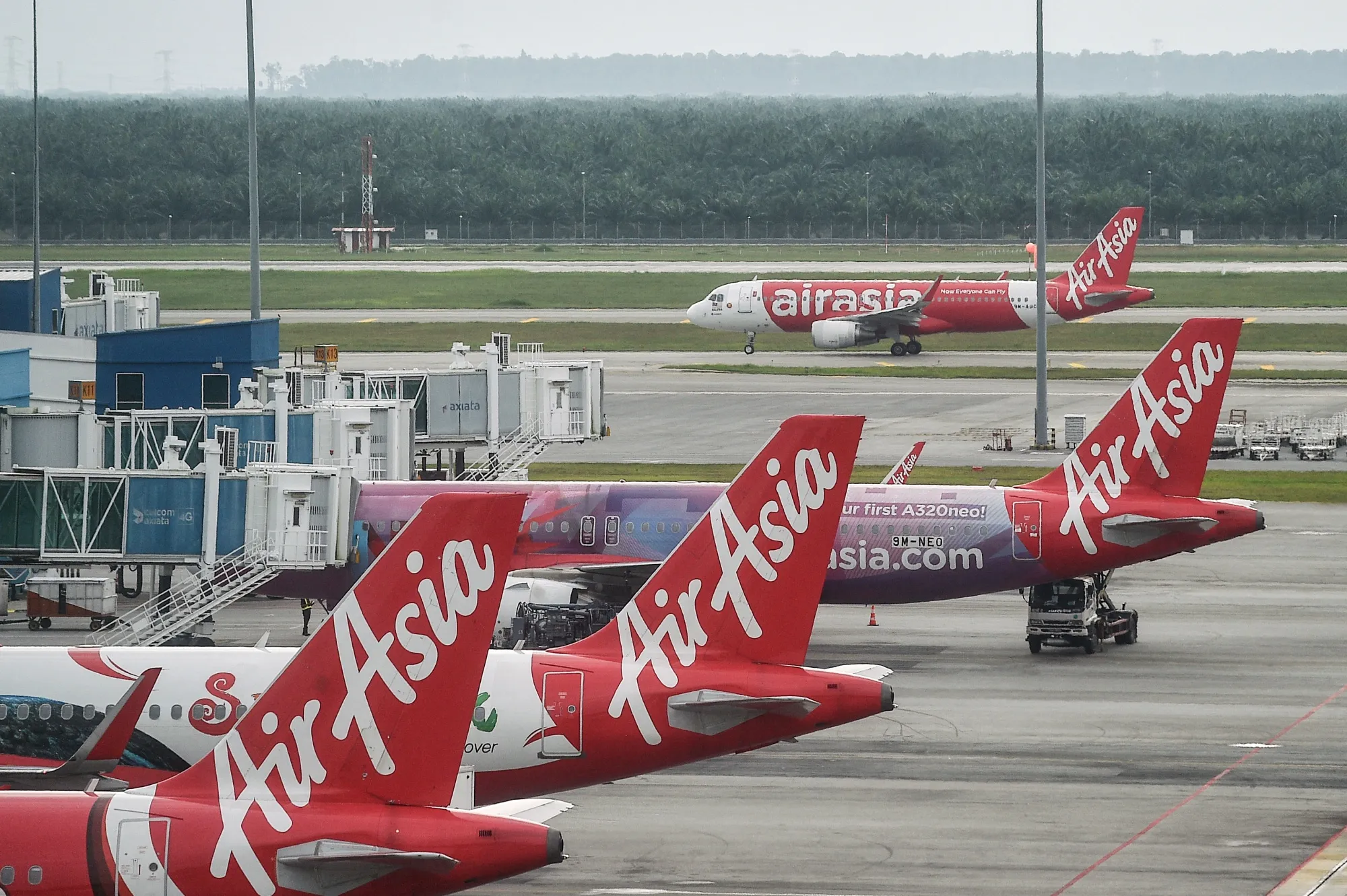
AirAsia is seeking over $1 billion in fresh capital amid severe financial pressures driven by soaring jet fuel costs.
Southeast Asia’s largest low-cost airline is facing renewed financial friction as jet fuel prices surge in the wake of Middle Eastern conflict.
Government Scenario Planning and Rival Airline Discussions
Malaysia’s government has initiated talks with Malaysia Airlines and Batik Air to explore whether those carriers could absorb AirAsia’s domestic market share if financial pressures compromise operations. Government involvement includes the finance ministry and state-linked airport operator Malaysia Airports Holdings Berhad (MAHB), according to sources familiar with the discussions.
Neither rival carrier is interested in a wholesale acquisition of the troubled airline. Both Malaysia Airlines and Batik Air told the government they would prefer to expand organically, taking over routes and passengers only if they could also secure the necessary aircraft leases. Batik Air Malaysia CEO Chandran Rama Muthy noted that his airline was equipped to bring in aircraft quickly to absorb or help with domestic market share if required
.
Fuel Price Surges and Outstanding Liabilities
The carrier’s financial strain has intensified due to skyrocketing fuel expenditures. Jet fuel prices surged 66% in the second quarter compared to the prior period, hitting an average of $183 a barrel.
Beyond fuel, AirAsia’s balance sheet reflects significant obligations. As of June 30, the carrier reported current liabilities of 18.4 billion ringgit, equivalent to $4.51 billion. Sources indicate the airline also owes MAHB at least 500 million ringgit for landing, parking, and other airport services, though the airport operator has extended repayment terms.
Fundraising Strategy and Leadership Rebuttals
AirAsia is actively pursuing more than $1 billion in fresh capital. In a September 2 statement, the airline clarified that its planned fundraising efforts—comprising up to US$1 billion in international debt markets and RM700 million in local credit facilities—are primarily targeted at debt restructuring, refinancing and balance sheet consolidation, rather than purely funding operational shortfalls
.
Market Reaction and Historical Vulnerability
Investors have reacted sharply to the financial disclosures. Shares in AirAsia dropped as much as 21% following the reports, hitting their lowest level since December 2022, while affiliated entity Capital A saw shares fall up to 18%. The group is no stranger to deep restructuring; pandemic-era disruptions previously pushed both AirAsia X and Capital A into Malaysia’s PN17 financially distressed categories before recent recovery and consolidation efforts.

Controlling roughly 40% of Malaysia’s total aviation market and 60% of its domestic flying routes, AirAsia commands a systemic footprint that leaves regulators little choice but to monitor its survival closely.
Keep reading
Newcore Gold Hits High-Grade Gold Intervals at Enchi Gold Project in Ghana
Newcore Gold intersected 2.59 grams per tonne gold over 69.0 metres, including 6.41 grams per tonne over 24.0...

Warren Buffett Steps Down As Berkshire Hathaway Chairman
Warren Buffett is stepping down as chairman of Berkshire Hathaway, capping six decades at the helm of the...

Chiltern Railways Nationalised Under Great British Railways to Boost Capacity
Chiltern Railways will become the tenth rail company nationalised under Great British Railways on Sunday, bringing the operator...
Vodacom, Kenya government appeal ruling threatening $1.6 billion Safaricom stake deal
Kenya's government and South Africa's Vodacom Group announced plans to appeal a High Court ruling on September 15,...