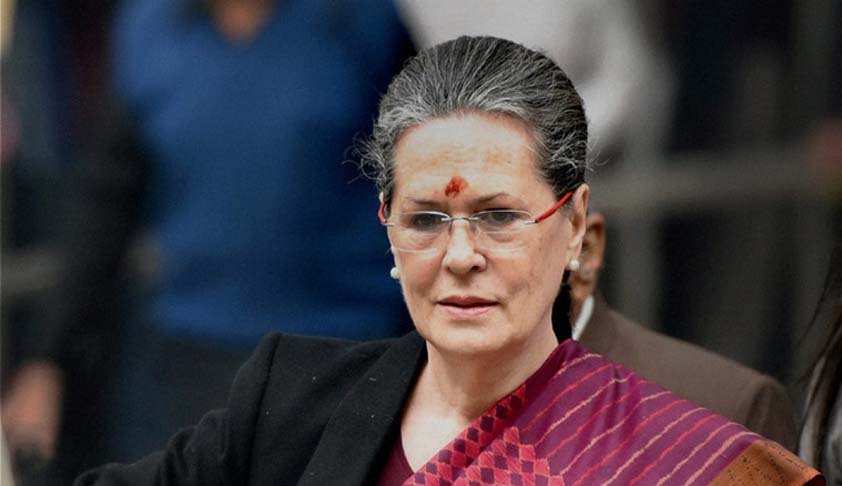
A Delhi court on Monday set aside a magisterial ruling that had refused to order a police investigation into allegations that Congress leader Sonia Gandhi added her name to electoral rolls in 1980, three years before acquiring Indian citizenship. The case has been remanded back to the magistrate for a fresh hearing.
Revisional Ruling at Dwarka Courts
Special Judge Vishal Gogne of Dwarka Courts on September 21, 2026, quashed a September 11, 2025, magistrate order that had dismissed a complaint seeking a First Information Report (FIR) against the veteran Congress leader. The revision plea was filed by Vikas Tripathi, vice-president of the Central Delhi Court Bar Association of the Rouse Avenue courts, who was represented by senior advocate Pavan Narang.
The sessions court ruled that the earlier magistrate’s decision was a non speaking
order lacking appropriate reasoning. According to the court, the magistrate failed to consider the twin options available under the law: either directing the registration of an FIR or conducting proceedings under the Bharatiya Nagarik Suraksha Sanhita (BNSS). The judge observed that the lower court digressed into the broader issue of citizenship instead of focusing on the core question of whether the complaint disclosed a cognizable offense.
Judge Gogne emphasized that any allegation of fraudulent inclusion in electoral rolls warrants a reasoned examination of whether forgery or cheating has been established. The court has now remanded the matter back with instructions to render a proper, speaking order after conducting an inquiry, hearing both parties, and reviewing submissions from the local police station.
Origins of the Electoral Roll Dispute
The underlying legal challenge centers on a timeline involving voter registration records and citizenship documents. The complainant alleged that Sonia Gandhi’s name appeared in the electoral rolls of the New Delhi constituency in 1980, even though she officially acquired Indian citizenship in April 1983.

Legal counsel for the petitioner argued that the electoral records showed a specific sequence. The complainant maintained that forged documents were utilized to secure the pre-citizenship voter registration.
In the initial September 2025 proceedings, the magistrate court dismissed the application under Section 175(4) of the BNSS. That court held that the authority to include or exclude voters rests solely with the Election Commission of India and characterized the dispute as a civil matter improperly cast as a criminal action. The lower court also noted that the complainant relied on uncertified photocopies of electoral extracts rather than foundational records.
Defense Arguments and Next Judicial Steps
Responding to the allegations, Sonia Gandhi refuted the claims through a short reply filed before the court, describing the litigation as wholly misconceived, frivolous, politically motivated, and an abuse of the process of law.

The defense argued that the complaint relied entirely on speculation, media reports, and unwarranted assumptions without placing any authentic citizenship documents, voter application copies, or forged records on the judicial record.
While setting aside the unreasoned magistrate order, the revisional court clarified its own jurisdictional limits. Judge Gogne noted that a sessions court cannot step into the shoes of a judicial magistrate to directly order an FIR under Section 175(3) of the BNSS, as that evaluation belongs exclusively to the magistrate’s domain.
The case returns to the Additional Chief Judicial Magistrate Court for fresh arguments and a reasoned order, with proceedings scheduled for September 29.

Remco Evenepoel Wins Fourth World Time-Trial Title to Tie All-Time Record
The 26-year-old reigning Olympic champion delivered a masterclass on the Canadian circuit, asserting his dominance from the opening...
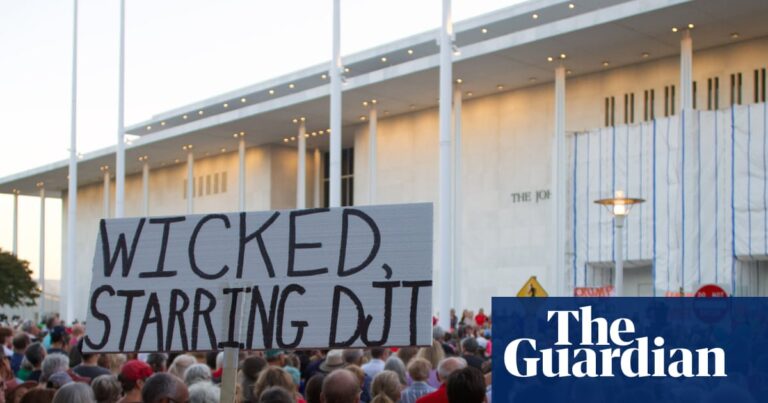
Kennedy Center Board Votes Indefinitely to Close Facility Amid Protests
Kennedy Center for the Performing Arts on Friday evening amid an escalating legal and political showdown.

Three Die in Taman Desa Tambun Fire as Grille Blocks Rescue Attempt
A pre-dawn fire in Taman Desa Tambun killed three family members early Sunday, leaving a son unable to...

Pope Leo XIV Announces Official Apostolic Journey to France
Pope Leo XIV is scheduled to undertake an official apostolic journey to France from September 25 to 28,...