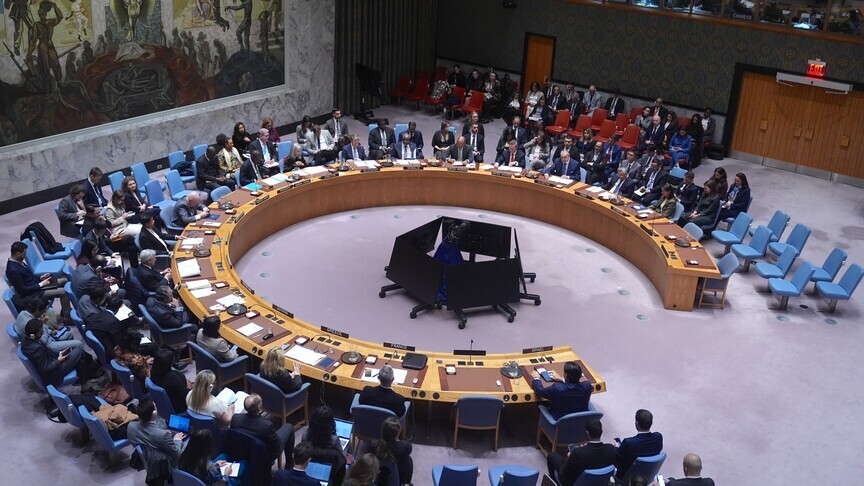
Nigeria’s Vice President Kashim Shettima joined other African leaders at the 81st United Nations General Assembly in New York to demand at least two permanent Security Council seats for Africa, complete with veto power, arguing that the global governance system cannot remain tied to post-World War II power structures.
The push for structural overhaul of the United Nations Security Council dominated discussions as heads of state gathered in New York for the high-level global summit during the 81st session. Africa remains the only continent without a permanent presence on the 15-member council, an omission that leaders and international officials increasingly describe as an unacceptable historical imbalance.
Why Leaders Say the 1945 Power Structure Must Fall
Delegates argued that the council's current architecture reflects an outdated geopolitical order established more than 80 years ago. The body currently counts five permanent members holding veto authority—China, France, Russia, the United Kingdom, and the United States—alongside 10 rotating members elected for two-year terms.
Representing President Bola Tinubu at the global gathering, Vice President Kashim Shettima delivered a blunt assessment of the current international order, telling delegates that the world of 2026 cannot remain captive to decisions made at the end of the Second World War.
“Mr President, the reform of this institution must begin with the reconstitution of the Security Council, for the world of 2026 cannot remain captive to distribution of power in 1945,”
Kashim Shettima, Vice President of Nigeria
UN Secretary-General António Guterres reinforced that sentiment during his final address before stepping down later this year. He told the assembly that a Security Council without a permanent African seat is unjust and indefensible. Ghana’s President John Dramani Mahama echoed the urgency, pointing out that Africa comprises roughly 1.5 billion people—representing over 18 per cent of humanity—and forms the largest regional voting bloc in the UN General Assembly while possessing zero permanent influence over global peace mandates.
Nigeria and Kenya Lead Unified Continental Demands
The demands presented in New York are anchored in the Ezulwini Consensus and the Sirte Declaration, the official African Union common positions on global governance reform. Kenya’s President William Ruto also pressed the issue during his address, arguing that the continent deserves equitable permanent membership alongside the same rights and privileges enjoyed by existing permanent states.

Nigeria’s specific formula calls for at least two permanent African seats equipped with full veto capabilities for as long as the veto exists, supplemented by five non-permanent seats for a total continental footprint of seven positions. Abuja emphasized that Africa cannot continue to fill the Council’s agenda with its conflicts and humanitarian emergencies while remaining entirely absent from the permanent membership table.
The Diplomatic Hurdles Ahead for Continental Representation
Kenya maintains that individual country selection must remain strictly an African Union responsibility, ensuring regional bodies guide the transition rather than external actors.

Security Contributions and Peacekeeping Records
To justify its readiness for permanent global leadership, Abuja highlighted its decades of operational sacrifices in international security. Shettima pointed to deployments of personnel and resources across multiple regional missions, including operations in Liberia, Sierra Leone, Darfur, Mali, and The Gambia.
Worth a look

Netanyahu Attacks Mayor Zohran Mamdani During UN General Assembly Address
Israeli Prime Minister Benjamin Netanyahu launched a sharp attack on New York City Mayor Zohran Mamdani during his...

Western European Societies Unwilling to Fight Russia Directly
As military tensions rise, Eastern European governments face an increasingly stark contradiction as they manage security guarantees, the...

Global Theatrical and Digital Release Announced for NAZA
The acclaimed documentary NAZA is scheduled for theatrical distribution in cinemas across more than 50 countries, followed by...

US Mortgage Rates Top 7% For First Time in 20 Months
U.S. mortgage rates have climbed above 7 percent for the first time in 20 months, driven by surging...