
France’s prestigious Prix Goncourt removed Thélyson Orélien’s critically acclaimed novel C’était ça ou mourir from its longlist on September 25, 2026, following anonymous online allegations that artificial intelligence generated the text, alongside separate accusations of plagiarism in the author’s previous work.
The Anonymous Accusation and the Rise of “Balance ton Claude”
The controversy began on September 21, 2026, the exact same day Thélyson Orélien’s novel secured the Prix du roman Fnac. An anonymous X account operating under the name Balance ton Claude—a reference to Anthropic’s AI agent—asserted that it had fed the manuscript into the AI detection software Pangram, claiming the book was almost entirely
written by artificial intelligence.
French media outlets subsequently examined the claims, noting questions surrounding the precision of Pangram while pointing out that alternative AI detection programs categorized the novel as very probably written by a human.
Unmasking the Critic and the Ideological Stakes
The identity behind the anonymous X account did not remain hidden for long. Pages of the centre-right newspaper Le Figaro revealed that the account was managed by one of its own columnists, Samuel Fitoussi, known for writing an essay against cultural “wokeism” on film and television.
Fitoussi later confirmed his involvement, explaining that he acted as part of a collective out of fear that technology would eradicate traditional literature. After several millennia of civilization founded on writing, AI will cause the disappearance of reading and writing
, Fitoussi told France24, adding that future authors using automated copy-paste text betray their readership.
Plagiarism Allegations Compound the Controversy
While the Académie Goncourt’s president initially urged caution regarding the automated text claims, the situation shifted drastically when separate plagiarism accusations emerged in French media. Reports indicated that Orélien had plagiarized material in earlier works, including a 2012 short story that copied passages from Louis Pauwels’ book The Morning of the Magicians, originally published in 1960, and a 2013 opinion piece that copied from The Philippine Star newspaper.
Facing these converging pressures, the Paris-based literary institution announced its definitive decision to withdraw the novel.
“to preserve the integrity of the Goncourt Prize and that of the Academie, whose central role is to promote and honour literature written by women and men.”
The Academie Goncourt, via Globalbankingandfinance
Author Denial and Publisher Response
Thélyson Orélien firmly rejected the artificial intelligence allegations, characterizing them as racially motivated attempts to silence his voice. Speaking at Les Correspondances literary festival in Manosque, southern France, the 38-year-old author defended his artistic style.

Orélien explained to the daily newspaper Libération that his writing relies on traditional Haitian and Caribbean rhythms, stating that the imagery, repetition and rhythm are a living language, they are mine
. He noted that he was assembling a defense file alongside his publishers, though he declined to comment further on the subsequent plagiarism allegations.
Meanwhile, the author’s Canada-based publisher, Boréal, announced the suspension of all promotional activities for the novel to protect Orélien’s well-being. The publisher noted that verifying the complex allegations remains impossible at this stage, while also condemning the personal attacks directed at the writer.
The Road Ahead for the Prix Goncourt
Published in France by Grasset in August, C’était ça ou mourir has sold about 35,000 copies, secured the Prix du roman Fnac, and arranged translation rights across more than 20 countries. The narrative itself follows a history and geography teacher escaping gang violence in his home country and traversing 12 nations before finding refuge in Canada.

With the novel now cleared from contention, the Académie Goncourt maintains that its removal serves as a clear message against automated writing assistance. The academy plans to narrow its remaining contenders to a shortlist on October 6, 2026, before announcing the ultimate winner of the literary prize on November 4, 2026.
Worth a look

Xiaomi 18 Pro Max and vivo X500 Pro Max Flagship Comparison
Xiaomi and vivo launched their flagship smartphones at an identical starting price.
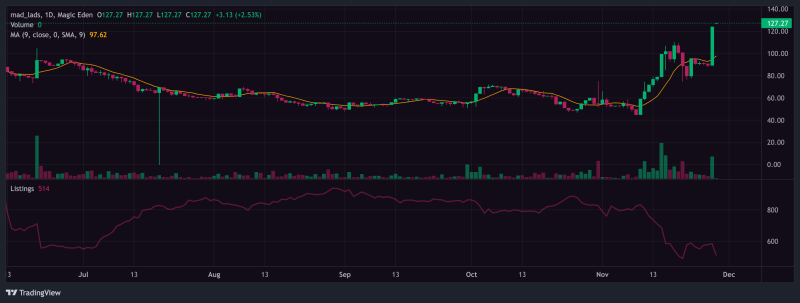
Mad Lads NFT Floor Price Reaches $1,538 With Strong Solana Volume
Mad Lads (MLADS) trades at a price floor of $1,538.29 with a 24-hour sales volume of 970.65 SOL.

Datadog Shares Rise 5.9% on Wall Street Broker Initiation and AI Observability Demand
Datadog Inc shares rose 5.9 percent on September 25, 2026, driven by a fresh Wall Street brokerage initiation...

Square Enix Releases Dragon Quest XI S for Nintendo Switch 2 With Upgrades
Square Enix released Dragon Quest XI S for the Nintendo Switch 2 on September 24, 2026, offering graphical...