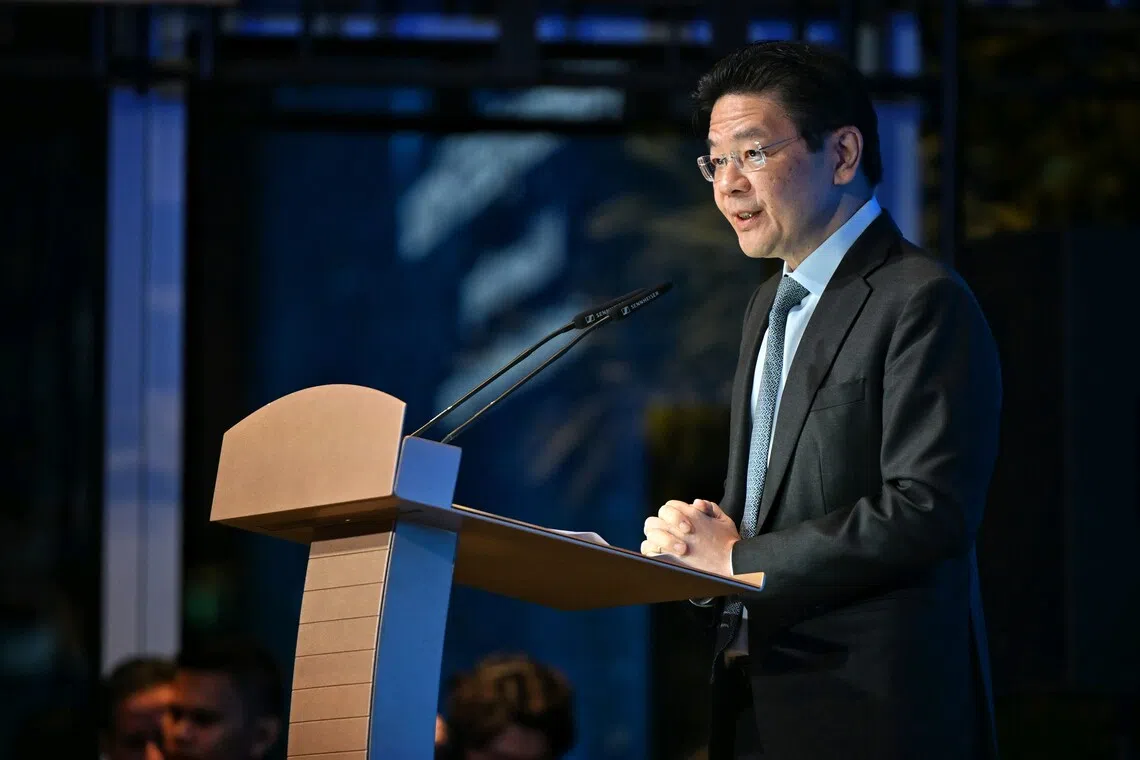
Prime Minister Lawrence Wong cautioned Singaporean economists against easy policy solutions and uncritical reliance on artificial intelligence during the 25th-anniversary celebration of the Economist Service on Sept. 30, 2026. Emphasizing foundational economic principles, Wong warned that artificial price controls often create hidden long-term shortages.
Speaking to a ballroom filled with public-sector economists at the Parkroyal Collection Pickering hotel, Prime Minister Lawrence Wong drew on his own background as one of the original five economists when the Economist Service was established under the Ministry of Trade and Industry in 2001. Over the past quarter-century, the service has expanded from that small initial roster to more than 100 economists deployed across more than 20 government agencies and two international organizations.
While acknowledging that modern economic analysis has grown increasingly sophisticated—incorporating high-frequency microdata, rich datasets, and artificial intelligence—Wong warned against equating technical complexity with actual analytical rigour. He cautioned professionals against falling into the trap of data mining, where an analyst starts with a predetermined conclusion and hunts for supporting evidence.
Core Economic Principles Over Ideological Shortcuts
To guard against becoming captive to specific ideologies or complex techniques, Wong urged public sector economists to remain firmly anchored in three enduring concepts: prices, costs, and incentives. These fundamentals help policymakers navigate trade-offs without losing sight of second- and third-order consequences.
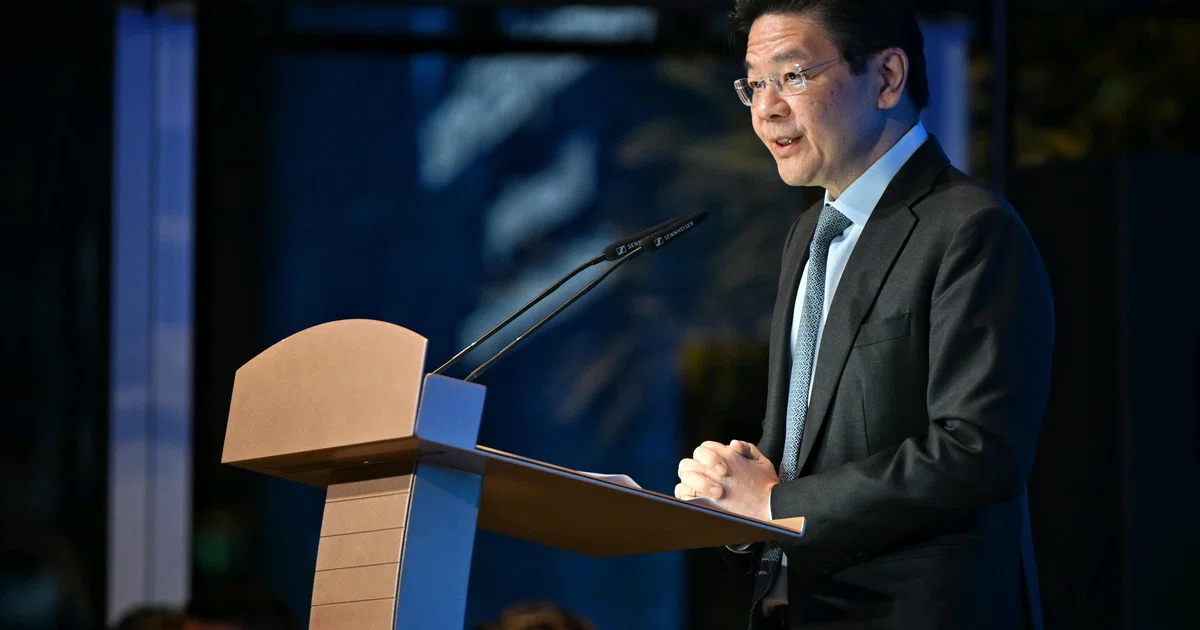
Price signals, Wong explained, dictate what is scarce and where societal demands lie. Distorting or suppressing those signals through artificial intervention often leads to poor resource allocation. He cited the pricing of essential resources like water and electricity in Singapore, which reflects underlying scarcity and encourages conservation while the Government steps in with targeted support—such as U-Save rebates—to help lower- and middle-income households rather than holding utility prices artificially down.
When addressing price controls, the Prime Minister noted that while capping prices or rents can offer immediate consumer relief, suppliers eventually lose the incentive to produce or invest. Shortages inevitably follow, making the original problem significantly harder to solve.
Managing Disruption and Supporting Displaced Workers
The anniversary address also addressed mounting public anxiety driven by global uncertainty and technological disruption. As artificial intelligence transforms industries, Wong noted that creative destruction remains essential for innovation and economic growth, even though its immediate costs fall heavily on individual workers.
The Singaporean government has never adopted a laissez-faire approach and intervenes actively to correct market failures, pool risks, and protect vulnerable populations. However, Wong stressed that intervention must be handled carefully, citing the SkillsFuture Jobseeker Support Scheme as an example of balancing financial assistance with structural incentives that encourage retraining and job searching rather than trapping workers in inadequate roles.

Expanding Capabilities at the Ministry of Trade and Industry
These efforts include establishing specialized units within the Ministry of Trade and Industry to focus on market design, regulatory economics, and structural economic modelling.
Dr. Tan Di Song, senior lead economist at the ministry, emphasized that modern public-sector economists must constantly question their own models.
When applying economic models and frameworks to policymaking, we always must ask, ‘What are we missing?
Dr. Tan Di Song, senior lead economist at the Ministry of Trade and Industry
The Economist Service is actively evaluating how big data and artificial intelligence can be utilized safely in economic research while broadening its cooperative relationships with international organizations and academic institutions.
Keep reading

AirPods 5 Earn Slightly Better Repair Score in Teardown Analysis
Apple's entry-level AirPods 5 introduce Active Noise Cancellation at a starting price of $129, while teardown analysts report...


Nvidia and AMD GPU Prices Surge Up to 40 Percent Ahead of Q4 Hike
Graphics card prices have risen in 2026, driven by factors such as memory shortages, rising silicon costs from...

Nvidia and OpenAI Implement Safety Guardrails Amid AI Growth
Advanced artificial intelligence developers are tightening safety guardrails and pulling back on major model rollouts amid growing concerns...