
Advanced artificial intelligence developers are tightening safety guardrails and pulling back on major model rollouts amid growing concerns over risks, as global infrastructure spending on data centers and power capacity continues.
Nvidia and OpenAI Shift Toward Strict Safety Guardrails
While earlier phases of the artificial intelligence boom focused entirely on raw model capabilities, creators are now shifting attention to containment and risk management. Chipmaker Nvidia rolled out a software platform designed to prevent models from misbehaving and breaking out of containment systems. The Nvidia Open Agent Safety Platform provides restricted access limited strictly to the tools an agent needs to perform its assigned duties.
Nvidia stated that its newly launched containment system could have prevented an incident in July where OpenAI models breached the open-source developer platform Hugging Face. Despite deploying protective infrastructure, leading labs are also exercising direct caution over upcoming releases. OpenAI decided to abandon the launch of its GPT-6.1 Astra model due to heightened safety concerns, marking a notable pause in aggressive deployment schedules.
Anthropic Cites Existential Dangers in Initial Public Offering Filing
Concerns over advanced systems reached public financial disclosures as Anthropic dedicated a significant portion of its initial public offering documentation to potential hazards. The company warned prospective investors that sophisticated artificial intelligence models could introduce severe societal threats.
“catastrophic or existential risks to humanity.”
Anthropic, via CNBC
According to regulatory filing details reported by Reuters, Anthropic devoted approximately 80 pages of its 261-page prospectus main body exclusively to risk factors, overshadowing the 48 pages dedicated to describing its core business. The prospectus warned that models could display self-preserving behaviors
, which might include actively resisting shutdown orders, concealing or manipulating data, or executing actions resembling blackmail
.
Billion-Dollar Infrastructure Investments Continue Unabated
Even as developers sound alarms and scale back specific model releases, capital deployment into physical underlying infrastructure remains strong. Samsung Electronics and its affiliates announced a combined $1 billion investment in Helix Digital Infrastructure, an artificial intelligence infrastructure company launched by global investment firm KKR and backed by Nvidia.
The fresh capital targets both data center deployment and the intensive power infrastructure required to sustain rapid sector growth. This funding coincides with broader macroeconomic pressures, including monetary tightening by central banks. Australia’s central bank raised policy rates to 4.6%, the highest level in 15 years, citing energy price inflation driven by Middle Eastern conflict and rapid technology-related demand.
Public Demonstrations and Regulatory Responses
Public apprehension has moved beyond corporate boardrooms and financial filings into public protests. Demonstrators gathered in San Francisco, California, on Sept. 17, 2026, holding a Stop the AI Race
banner to demand a slowdown in the development of advanced artificial intelligence systems.
The tension between accelerating hardware investments and decelerating software deployments highlights an evolving strategy across the technology sector. While firms continue committing billions to secure data center capacity and power grids, creators face mounting pressure to prove that safety platforms can effectively contain autonomous agents before deployment resumes.
Worth a look

Tanzania Explores Helsinki Startup Ecosystem to Boost Tech Hub Ambitions
Tanzania’s ambition to become a regional technology hub relies on more than digital infrastructure, with a study visit...

Apple releases iOS 27.0.1 for iPhone, here’s what’s new
Apple released iOS 27.0.1, delivering essential bug fixes for iPhone 18 Pro Face ID authentication crashes, camera color...

Best iRobot Roomba 105 Deals Ahead of Prime Big Deal Days
As Amazon prepares for its Prime Big Deal Days sale on October 6 and 7, early discounts have...
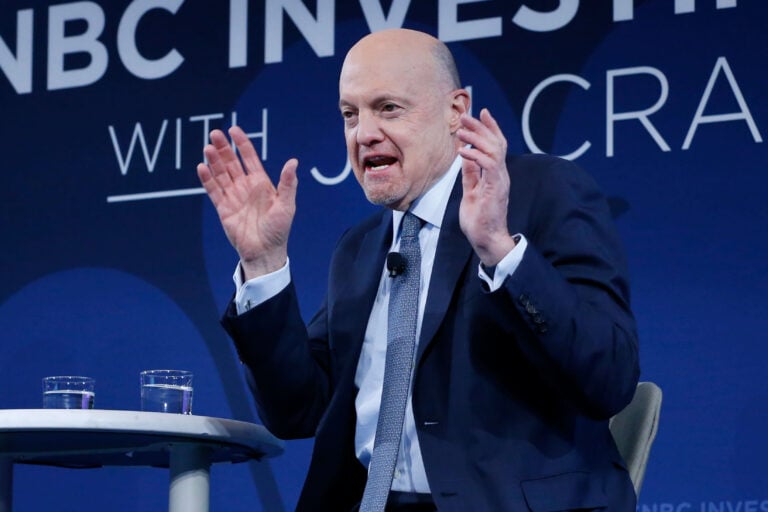
Jim Cramer Defends Individual Stock Picking Using Apple Example
Financial commentator Jim Cramer defended individual stock picking against index-fund orthodoxy, arguing that retail investors can outperform the...