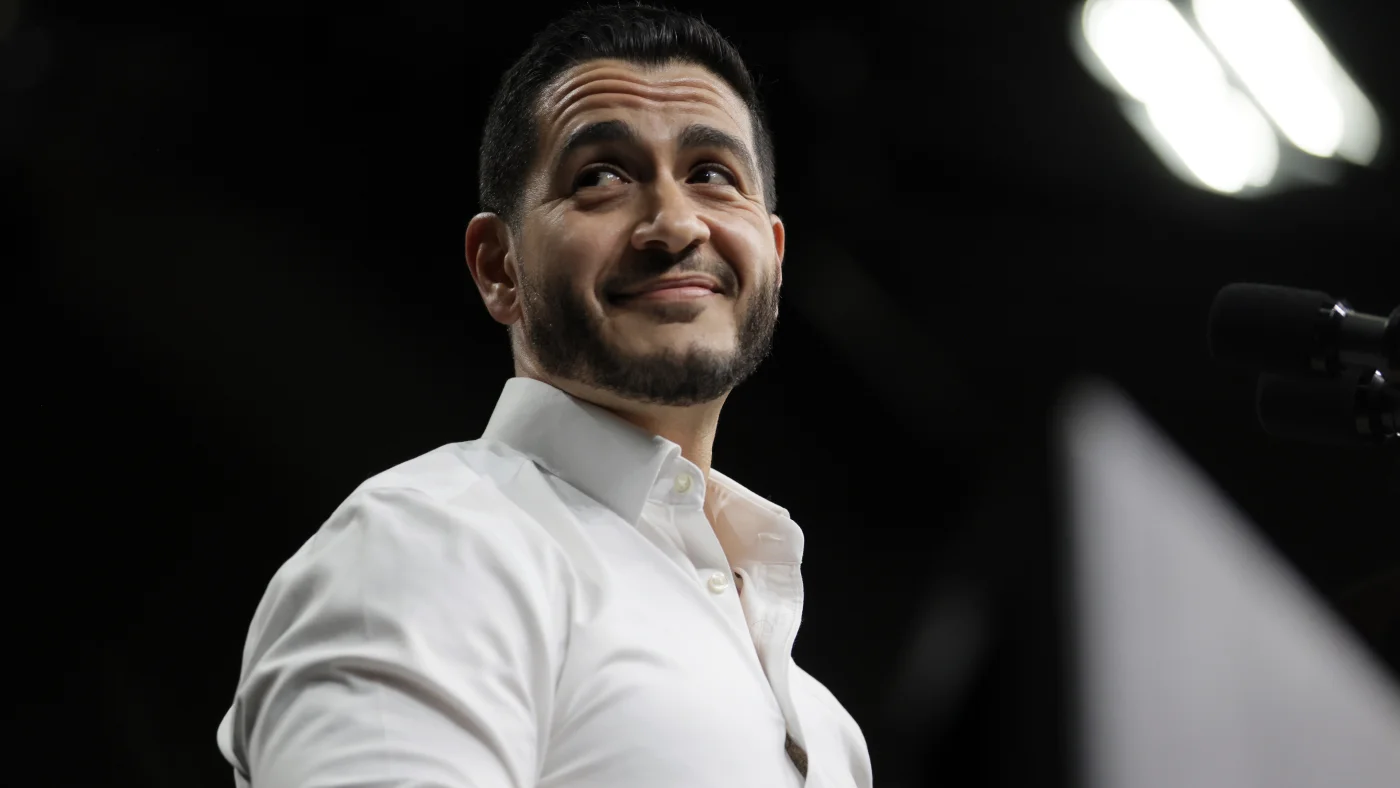
DETROIT — Democrat Abdul El-Sayed has secured a win in the U.S. Senate election in Michigan, as reported by the Associated Press, marking an essential triumph for his party’s objective to recapture the Senate majority. El-Sayed will be the first Muslim American to serve in the Senate. The 42-year-old former public health official defeated former Republican Rep. Mike Rogers in one of the most closely watched elections in the U.S.
The race tested how an antiestablishment candidate on the left would fare in a perennial Midwest battleground. Capitalizing on widespread frustration regarding living expenses and political corruption, El-Sayed successfully mobilized young and infrequent voters through an emphasis on enacting single-payer healthcare and reducing the impact of corporate funds in elections. El-Sayed ran on a progressive platform centered on Medicare for All, taxing billionaires, and reducing corporate influence, while Rogers emphasized tax cuts, expanding domestic manufacturing, and more transparent health care prices, as well as stronger border security and immigration enforcement.
A Rocky Path Through Primaries and General Campaign Dynamics
El-Sayed’s path to Washington was defined by fierce internal party battles. In the primary, El-Sayed narrowly defeated Rep. Haley Stevens by about 1 percentage point, despite Michigan heavyweights like Gov. Gretchen Whitmer and retiring Sen. Gary Peters backing his opponent. The general contest took a dramatic turn near its conclusion when Stevens shifted her stance to endorse Rogers, triggering intense anger among Democrats and leading multiple staff members under Stevens, including her chief of staff, to step down.
Throughout the campaign, El-Sayed faced intense scrutiny over his positions on Israel, including comments following a truck-ramming attack at a synagogue preschool in metro Detroit for which he later offered an apology, as well as campaigning during the primary with controversial left-wing streamer Hasan Piker. Rogers, a former congressman and FBI agent who narrowly lost his first bid for the Senate in 2024, sought to portray El-Sayed as too extreme for Michigan. Meanwhile, El-Sayed cast Rogers as a Washington insider aligned with President Trump.

National Implications and the Road to 2028
Rogers secured an early endorsement from Trump, having previously spoken out against the president’s unverified assertions regarding widespread voter fraud—such as after the Jan. 6, 2021, attack on the U.S. Capitol—only to later adopt some of those same claims. As November approached, Rogers sought to distance himself from specific administration directives, such as the conflict involving Iran. During the race, El-Sayed rebuked his rival and other GOP members, including President Trump, for subjecting him to Islamophobic rhetoric, drawing attention to comments from Trump that questioned his allegiance to America alongside unverified claims of extremist associations.
The victory offers progressives a powerful new argument in the Democratic Party’s ongoing debate over how to win back voters after two years in the political wilderness. Amidst ongoing discussions within the party regarding its core identity, El-Sayed has indicated that he plans to maintain a prominent voice, particularly given Michigan’s pivotal status in the upcoming 2028 presidential primary cycle.
More on Mike Rogers
Keep reading
Oldest Louisiana Creole recordings found in Indiana archive
Rediscovered Aluminum Discs Yield Oldest Known Recordings of Louisiana Creole More than 90 years after a linguist carried...

No. 11 Louisville wins 84-70 over Chattanooga in Flory Bidunga debut
Flory Bidunga dominates debut as No. 11 Louisville holds off Chattanooga 84-70 Flory Bidunga scored 16 points in...
Adam Hamilton elected as first Democratic Kansas Senator in Nearly a Century
Kansas Elects Adam Hamilton as First Democratic Senator in Nearly a Century Kansans have broken a 94-year political...
Iowa Secretary of Agriculture Race: Water Quality and Regulation Take Center Stage
Water Quality Takes Center Stage in Iowa Agriculture Race Iowa’s water quality has become a defining flashpoint in...