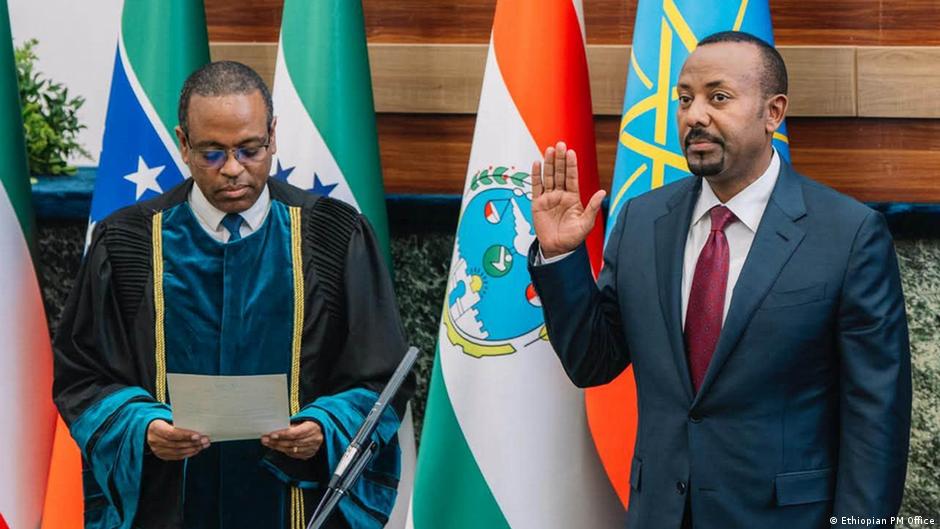
Prime Minister Abiy Ahmed was sworn into a new five-year term on Monday, October 5, 2026, following his re-election in Ethiopia’s June 2026 general election, quickly reiterating plans for Red Sea access while his newly approved 23-member cabinet faces regional friction and internal security challenges.
Abiy Ahmed Secures New Term With Red Sea Policy Push
Based on the principle of give and take, we will work diligently to ensure that Ethiopia has an outlet to the sea,
Abiy stated during the swearing-in ceremony in Addis Ababa. Ethiopia entered a new political chapter as Prime Minister Abiy Ahmed took the oath of office for another five-year term following the Prosperity Party’s victory in the June general election, where the ruling party secured 512 of the 547 seats in the House of Peoples’ Representatives. Shortly after taking the oath on Monday afternoon, October 5, 2026, Abiy addressed Parliament and reiterated his administration’s intention to pursue maritime access.
The push for sovereign access to the sea—particularly through the Eritrean port of Assab—has caused diplomatic friction across the Horn of Africa. Ethiopia has been landlocked since Eritrea’s independence in 1993, and Addis Ababa maintains that reliable Red Sea access is vital for long-term economic growth. Neighboring governments, however, have raised sharp objections to the strategy. Researchers focusing on the region note that Abiy’s reappointment highlights national resilience, with sea access placed at the center of the country’s strategic outlook for the next five years. Analysts note that the renewed mandate grants the prime minister stronger political authority, though complex internal and regional pressures remain.
Parliament Approves 23-Member Cabinet Following Intelligence Vetting
The House of Peoples’ Representatives approved a newly restructured 23-member Council of Ministers proposed by the prime minister, featuring 11 new entrants and nine women ministers. According to the Prime Minister’s Office, the executive lineup includes Gedion Timotheos retaining his role as Minister of Foreign Affairs, Fitsum Assefa taking over as Minister of Finance, and Mohammed Idris stepping in as Minister of Defense. Hana Arayaselassie remains at the Ministry of Justice, while Mekdes Daba continues as Minister of Health. The approved structure also includes Addisu Arega as Minister of Agriculture, Habtamu Itefa as Minister of Water and Energy, and Aynalem Niguse as Minister of Revenues. Additional appointments comprise Yasmin Wohabrebbi leading Trade and Regional Integration, Feseha Yetagessu heading Industry, Awelu Abdi directing Labor, and Bereket Fesehatsion overseeing National Strategy. Selamawit Kassa takes charge of Culture and Tourism, Alemtsehay Paulos leads the Ministry of Mines, Sadat Nesha heads Logistics, Shewit Shanka runs Women and Social Affairs, and Mussa Adem serves as Minister of Peace. Frehiwot Tamiru assumes the Innovation and Technology portfolio, Mohammed Abdurahman takes charge of Urban Planning and Infrastructure, and Aklilu Tadesse occupies the Ministry of Youth and Sports.
We did not appoint anyone with any suspicious tendencies—or with suspicious circles—as cabinet members,
Abiy told parliamentarians, adding that underperforming ministers would face swift replacement. During the parliamentary session, Abiy disclosed that outgoing officials and cabinet nominees had undergone a strict, covert intelligence surveillance process over the past year. The vetting examined not only the nominees but also their associates, family members, and financial circles. The prime minister noted that balancing ethnic, religious, and gender representation proved challenging during the selection process.
Eritrea Urges UN Security Council to Deter Ethiopia
The political transition coincides with a sharp deterioration in relations between Addis Ababa and Asmara. Eritrean Foreign Minister Osman Saleh sent a letter to the UN Security Council urging member states to adopt deterrent measures under Chapter VII of the UN Charter.
In response, Ethiopia asserted its position against alleged Eritrean incursions and the support provided to armed groups opposed to the federal government. The diplomatic confrontation unfolded just as regional leaders discussed wider matters, while Ethiopia pursued its regional policy priorities.
Government Announces Key Structural Appointments
Alongside the cabinet approval, the government announced several key structural appointments. Ambassador Betre Mengistu was named Head of the Prime Minister’s Office and Minister of Cabinet Affairs, while Adem Farah retained his position as Deputy Prime Minister responsible for coordinating democratic system building. Fikadu Tessema took over as Government Chief Whip, succeeding Tesfaye Beljige following his appointment as President of the South Ethiopia Regional State, and Enatalem Meles was appointed Minister of Government Communication Service.
Finance Minister Fitsum Assefa steps into her new portfolio inheriting a $3.4bn IMF programme and ongoing debt negotiations. The administration enters its new five-year mandate managing a 2.34 trillion birr national budget for the 2026/27 fiscal year while continuing major foreign-exchange liberalisation and economic reforms initiated under prior policy frameworks.
More on Abiy Ahmed
Worth a look
Pope Leo XIV Rejects Death Penalty as Attack on Human Dignity
Pope Leo XIV has rejected the death penalty as an attack on human dignity, posting on X that...

SpaceX Launches 21 U.S. Space Force Satellites After Delay
Following a five-day delay from an earlier countdown abort, a SpaceX Falcon 9 rocket successfully launched 21 data...

Queen Camilla Recalls Secret Teenage Reading of Lady Chatterley’s Lover
Queen Camilla has revealed she secretly read Lady Chatterley's Lover under her pillow by torchlight as a teenager...

US Military to Execute Nidal Malik Hasan; Livestreaming Still Being Determined
Defense officials confirmed Thursday that the United States military will livestream the upcoming firing squad execution of former...