“Imagine if we could start to treat the neurodegenerative changes at the 2, 3 or 4-year point rather than after 15 years when the changes are manifesting in memory symptoms,” said Miller.
Advanced chronic liver disease declined among people who inject drugs in Australia between 2018 and 2025, according to observational findings published in Liver International.
Researchers associated this reduction with unrestricted access to hepatitis C virus treatment and increased treatment uptake. The observational cohort study assessed liver disease using vibration-controlled transient elastography across drug treatment clinics and needle and syringe programmes.
Participants were enrolled across three recruitment waves from 2018 to 2025. Among 3,093 participants with liver stiffness measurements, 9.1% had advanced chronic liver disease, with the proportion declining from 12.0% in the first wave to 7.9% in the second and 6.4% in the third.
Current hepatitis C virus infection declined from 24% in the first recruitment wave to 10% in the third. Among participants eligible for treatment, reported coverage increased from 64% in 2018–2019 to 87% in 2023–2025.
Longitudinal analysis also examined participants with liver stiffness measurements across multiple waves. Out of 44 individuals who had a current infection at their initial assessment but not during their second, the prevalence of advanced chronic liver disease dropped from 19% down to 5%.
Conversely, among 20 participants with current infection at both visits, advanced chronic liver disease remained at 5%. Researchers also identified age and infection status as factors associated with advanced chronic liver disease.

In a separate line of research published in Science Advances, scientists developed the Alzheimer’s Resilience-Vulnerability Connectome, or ARC, to help assess the risk of cognitive decline before clinical symptoms appear. Stanford Medicine analyzed resting-state functional MRI brain scans of 180 superagers and 110 people of the same age with diagnosed Alzheimer’s disease.
“This suggests that Alzheimer’s vulnerability may be reflected in how the brain functions as an interconnected system,” said Kanhao (Alex) Zhao, the lead author of the study and a postdoctoral researcher at Stanford Medicine who focuses on computational neuroscience, in an interview with ScienceAlert.
The brain areas linked in this identified connectivity network included the prefrontal, temporal, insular, and parietal regions, which are known to play roles in memory, emotional regulation, and executive functions. The indicator distinguished between the two groups with an accuracy of about 80% in the initial sample, and 71% in an independent group of 143 people.

“The ARC score summarizes whether an individual’s brain connectivity more closely resembles that of SuperAgers, who maintain exceptional memory into old age, or individuals with Alzheimer’s disease,” Zhao said.
ARC was then tested in 1,315 adults without cognitive impairment across main and independent samples. Over the course of the follow-up period, subjects exhibiting an Alzheimer’s-like pattern suffered accelerated cognitive decline, a greater buildup of amyloid plaques, and an elevated probability of developing Alzheimer’s disease or mild cognitive impairment.
“We would need larger prospective studies following cognitively healthy individuals over several years, with validation across diverse populations and MRI scanners,” Zhao told ScienceAlert.
Worth a look
- Astronomers Watch TOI-2535 b Vanish as Unseen Neighbor Pulls Orbit
- Marcos Calls for Stronger Government-Parliament Collaboration in ASEAN
- Mercedes-AMG GLC53 Launches in Australia With Inline-six Engine (world-today-news.com)
- FDA Orders Eye Stroke Warning on Ozempic, Wegovy and All GLP-1 Drugs (daybreakwire.com)

Astronomers Watch TOI-2535 b Vanish as Unseen Neighbor Pulls Orbit
Astronomers have watched a giant exoplanet vanish from view for the first time.

Marcos Calls for Stronger Government-Parliament Collaboration in ASEAN
“The commitments we make around the ASEAN table must eventually find expression in our national institutions, in the...

Predicting Head and Neck Cancer Swallowing Risks Over Time – EMJ
Head and neck cancer survivors face a complex recovery path where the very treatments designed to save their...
Climate Change and El Niño Drive Severe Indonesia Forest Fires
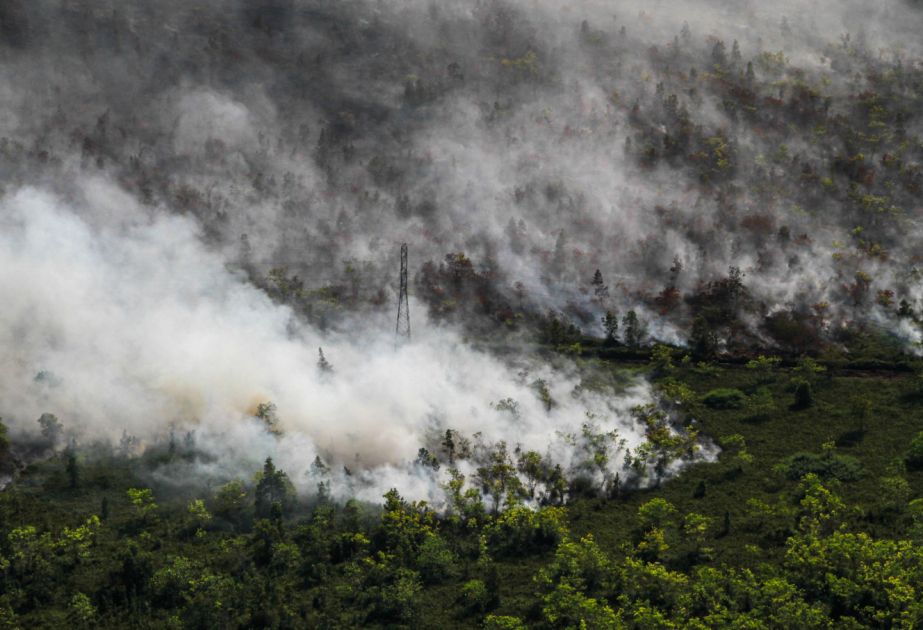
Fires in Indonesia, driven partly by a strong El Nino, have burned approximately 2.88 million hectares of land...